
Thoughts From the Frontline, Baby Boomers

6 posts tagged with “Baby Boomers”.

Boomers Are Breaking the Deal

August 25, 2012

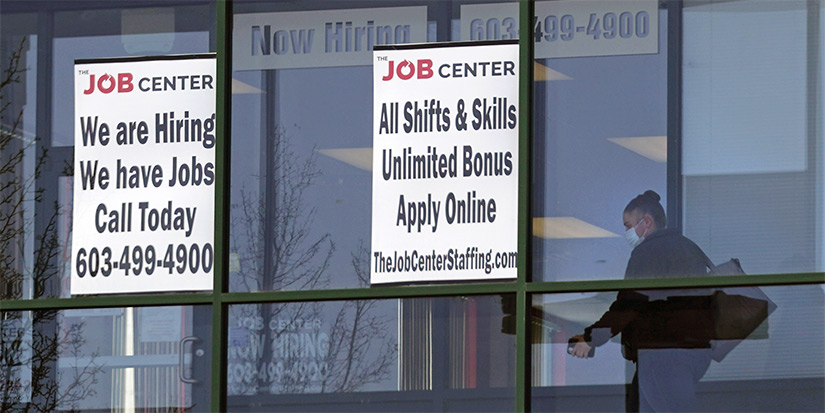
There is something missing from this thing we are calling a recovery. For most in the US it does not feel like a recovery, and for good reason: the jobs aren’t there. But for some groups it is a recovery, and more. And that reveals an even bigger problem. Today, in a summer-shortened Thoughts from the Frontline, we look at the trends in employment as well as take note of a signpost we passed on the way to finding out that we can’t pay for all the future entitlements we have been promised. It’s a short letter but hopefully thought-provoking. At the end, I note a webinar and a few speeches I’ll be giving in the near future.


The New, New Normal

June 5, 2009

We are coming to a critical inflection point, perhaps the most critical point that we have had in 70 years for the US and to a great extent the global economy. The choices we make (or that Congress and the Fed make for us) will affect not just our investment portfolios but business and our jobs for a very long time. Last week I talked about the three paths we face as a nation. I want to go back to that theme and expand upon it. You need to clearly understand what the risks are so that you can interpret the actions and data that will be coming at us in the next few quarters. I am feeling a little tired today, so I am going to take the liberty to reproduce Bill Gross's latest comments as well, which are somewhat in line with my own.

But before we jump into the letter, I want to acknowledge the very large response I got from readers about the cut and paste I did about the differences between the national health care systems of Canada and Great Britain the health care system of the US. To say that I touched a raw nerve is an understatement. I should also admit that I learned a great deal from some very cogent and thoughtful letters. I often write about the problems with using selective statistics in gauging the economy. I have learned that you can do the same with health care statistics.

There are many letters I could quote, but let me give you a counter for the statistics from last week from Raoul Pal of Spain. And of course, there are other statistics that can be brought in to make almost any case you want. But I found these to be very thought-provoking.


A New Asset Class, Part Two

August 8, 2008

Last week's letter was the first part of a speech I have been giving on what I think will be the rise of a new asset class. This week will be the second and final part. Let me set up this section with a few paragraphs from last week's letter and then a quick summary. If you want to read the entire letter from last week, you can go to the website archives.

But first, a quick note. George Friedman from Stratfor was at my daughter's wedding rehearsal dinner last night. He had just found out about the invasion of South Ossetia by Georgia and was keeping track of the events over his Blackberry from his correspondents on the ground in Georgia.

The media is not particularly excited over the events in Ossetia and Georgia, and the markets seem indifferent. It's much more important than it looks. This the first time since the fall of Communism that the Russians have directly and openly intervened in the former Soviet Union under the claim, made by Dmitri Medvedev, that Russia is the guarantor of security in the Caucasus. That's what the Russian Prime Minister Putin also said. Russia has claimed a sphere of influence in the Caucasus. And that is of historical importance. (Think Monroe Doctrine.)

This is payback for Kosovo. Putin didn't want an independent Kosovo and was ignored with contempt. Payback is an independent Ossetia, with Russian military intervention guaranteeing it. If it's good enough for the Americans and Europeans, it's good for the Russians too. Why the Georgians invaded Ossettia is opaque. For some reason they felt they had to move. The Russians were clearly ready and by dawn had armored formations in South Ossettia and air strikes in Georgia. (The Russian army is about 40 times the size of Georgia, and far better equipped.)


Muddle Through and Your Long Term Returns

March 14, 2008

Today we drop back to take a look at the economy and its long term effect on our portfolio returns. I am in Orlando this week, speaking at the Newport Advisor Conference sponsored by the Newport Group. The attendees are primarily investment advisors focused on larger retirement accounts and pensions. This week's letter is the gist of my speech I gave yesterday, as the entire speech would be way too long for a weekly letter. I want to thank the Newport Group for letting me do this, and thanks for the very kind way they have hosted me. Note: this week's letter will print a little longer as there are a lot of graphs. And next week I will address the housing market, as was my intention this week.

It is increasingly widely agreed that we are now in a recession as I predicted this time last year. The good news is that much of the underlying economy is not in that bad a shape, but it has had two serious body blows administered by the twin collapsing bubbles of the housing market and the credit crisis.

My position is that the recession will be rather long and relatively shallow, and the inevitable recovery will be longer and more drawn out than is typical, resulting in what I call The Muddle Through Economy for a period of several years. I define a Muddle Through Economy as one which grows below normal trend GDP growth of 3% for a period of time, typically in the 2% range.


The End of Medicine

July 7, 2006

This week we look at a very intriguing new book by good friend Andy Kessler called The End of Medicine , subtitled "How Silicon Valley (and Naked Mice) Will Reboot Your Doctor." As long-time readers know, Andy ran a high-tech hedge fund which went from $100 million to a $1 billion and got out more or less at the top with his client's money (and his) intact. Since then he has written a series of very fun books on the inside world of investing, all of which are on my recommended list.

But with The End of Medicine he turns his eye to trying to find the next new thing which will drive the markets, or at least a segment of them, to new highs. This is a very well-written story in Andy's sarcastic, witty, and easy-to-read style, but the message is also one of how fast the world of medicine is going to change in the next ten years. The changes are happening in labs and fabs all over the world, but under the radar screen of almost everyone. This is a story that we can analyze from two angles. First, there is the investment aspect to it. There is going to be a 1990s tech-size run in our future. Finding the right ways to play it will be as difficult and interesting, not to mention rewarding, as the last big tech run.

Secondly, this is going to dramatically change the way we approach our personal health care. In many ways, this is going to be a more profound, intensely personal change in lifestyle than anything the tech world has given us. Before we explore some of the implications, let's look at exactly what Andy has found. (You can get The End of Medicine at www.amazon.com.)


Kicks Just Keep Getting Harder to Find

May 20, 2005

"It seems like kicks just keep getting harder to find,
All your kicks ain't bringing you peace of mind,
Before you find out it's too late,
You'd better get straight," - The Monkees

Substitute the word "returns" for "kicks" in the classic Monkees hit and you get an updated boomer generation anthem. (Or maybe Peter, Paul and Mary singing "Where have all the returns gone? - a long time passing.") This week we look at issues involving pension funds, muse upon the size of the financial service industry (is it a bubble?) and speculate about Chinese currency manipulations. There's a lot of interesting ground to cover.