Thoughts From the Frontline, Government

6 posts tagged with “Government”.

The Future of Public Debt

April 30, 2010

Everyone and their brother intuitively knows that the current government fiscal deficits in the developed world are unsustainable. They have to be brought under control, but that requires some short-term pain. Today we look at a rather remarkable piece of research from the Bank of International Settlements (BIS) on what the fiscal crisis may morph into in the future, how much pain will be needed, and what will happen if various countries stay on their present courses. Some countries could end up paying north of 20% of GDP just on the interest to serve their debt, within just 30 years.

Of course, the markets will not allow that to happen, long before it ever gets to that level. And what makes this important is that this is not some wild-eyed blogger, it's the BIS, a fairly sober crowd of capable economists. We will pay some attention. Then I'll throw in another few paragraphs about Goldman.

But first, I want to bring a very worthy cause to your attention. For my Strategic Investment Conference last weekend, Jon Sundt and I bought some mighty fine wine for our guests. That of course, is to be expected. But each of those bottles also bought a wheelchair for someone in a most needy part of the world. Here's the story.

Gordon Homes at Lookout Ridge Winery in Napa Valley has gotten five cult winemakers to create special wines for him. These are winemakers whose production is sold out well in advance - they're the all-stars of wine (like Screaming Eagle). And while they can't sell them from their own wineries, they blend these special signature wines for Lookout Ridge.

Each bottle sells for $100, well below what it would take to get one of these cult artists' bottles - even if you could get them. And then Lookout Ridge donates the entire amount to buying a wheelchair for someone who can't afford one in a less-developed country. Attendees at our conference bought enough to send 200 chairs to people desperate for mobility all over the world. Part of it was, I am sure, that it is a very worthy cause, and part of it is that the wines are damn good.


Reform We Can Believe In

April 9, 2010

Casey Stengel, manager of the hapless 1962 New York Mets, once famously asked, after an especially dismal outing, "Can't anybody here play this game?" This week I ask, after months of worse than no progress, "Can't anybody here even spell financial reform, let alone get it done?" We are in danger of experiencing another credit crisis, but one that could be even worse, as the tools to fight it may be lacking when we need them. With attacks on the independence of the Fed, no regulation of derivatives, and allowing banks to be too big to fail, we risk a repeat of the credit crisis. The bank lobbyists are winning and it's time for those of us in the cheap seats to get outraged. (And while this letter focuses on the US and financial reform, the principles are the same in Europe and elsewhere, as I will note at the end. We are risking way too much in the name of allowing large private profits.) And with no "but first," let's jump right in.

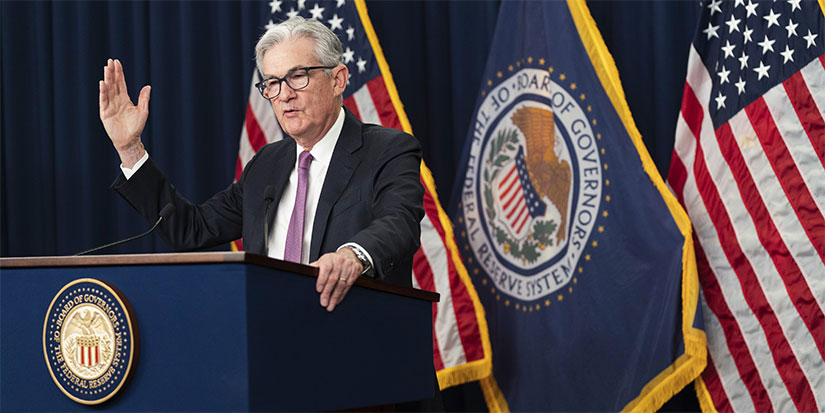
Last Monday I had lunch with Richard Fisher, president of the Federal Reserve Bank of Dallas. Mr. Fisher is a remarkably nice guy and is very clear about where he stands on the issues. My pressing question was whether the Fed would actually accommodate the federal government if it continued to run massive deficits and turn on the printing press. Fisher was clear that such a move would be a mistake, and he thought there would be little sentiment among the various branch presidents to become the enabler of a dysfunctional Congress.

But that brought up a topic that he was quite passionate about, and that is what he sees as an attack on the independence of the Fed. There are bills in Congress that would take away or threaten the current independence of the Fed.

I recognize that the Fed is not completely independent. Even Greenspan said so this past week: "There's a presumption that the Federal Reserve's an independent agency, and it is up to a point, but we are a creature of the Congress and if ... we had said we're running into a bubble and we need to retrench, the Congress would say 'We haven't a clue what you're talking about.'"

Long-time readers know I do not have much time for Senator Chris Dodd. He has threatened the viability of the Fed by holding up appointments, actually risking the ability of the Fed to get an emergency quorum if the need arose. His current proposal to give the President the ability to appoint the president of the New York Fed is likewise a wrong-headed political power grab. He has openly proposed to have the presidents of the local districts appointed by the board of governors. These presidents are the only real check on the board.


Thoughts on the Statistical Recovery

December 11, 2009

We are clearly starting to get some better data points here and there. But as I pointed out this summer, it is going to be a recovery in the statistics and not in the things that count, such as income and employment. This week we look at the nascent recovery (which could be at 3% this quarter) and try to peer out into the future to see what it means. We look at how recoveries come about, and why I am concerned that we will see a double-dip recession. Plus, I learned some new tricks courtesy of my new granddaughter, to whom Tiffani gave birth this week1 There is a lot to cover, but it should be interesting.

But first, a quick commercial nod to my subscription service, "Conversations with John." It was one year ago this week we launched the service, and we are pleased that so many of you have subscribed. As a bonus for renewing or subscribing, I am going to be doing a special predictions issue, where I will interview at least six analysts who have been right the past few years and ask for their specific predictions for the coming year.

For new readers, this is where I sit down with some of my friends and hold an in-depth conversation, generally 45 minutes to an hour, and post it on our web site, along with a transcript. We have had some fairly well-known names over the past year, and the reviews from subscribers have been excellent.

As a Holiday Special, we are offering a subscription at the special price of $129. Just click on the link and type in the code JM09 when asked to do so in the subscription process (at the conclusion of the process, not the beginning, but we're working on that.) This is a big savings over the regular $199 price.

Plus, when you subscribe you get access to the Conversation archives. That is worth the price of admission itself. And now, let's jump into The Statistical Recovery.


An Uncomfortable Choice

August 28, 2009

We have arrived at this particular economic moment in time by the choices we have made, which now leave us with choices in our future that will be neither easy, convenient, nor comfortable. Sometimes there are just no good choices, only less-bad ones. In this week's letter we look at what some of those choices might be, and ponder their possible consequences. Are we headed for a double-dip recession? Read on.

But first, I want to make a very important announcement. There are not many times in a career when you can say that something new has been created in the financial services industry and that you have been a part of it. But now I can say that and, I must admit, with a little pride in helping to bring a new creation into the world.

For years, Steve Blumenthal and I have shared a passion for bringing Absolute Return Strategies to all investors, not just the wealthy and institutional investors.

I want to introduce you to a new mutual fund, one that is different than the typical long-only equity mutual fund. My friends and partners at CMG have created a mutual fund that is comprised of 9 different trading strategies, a "fund of trading strategies," so to speak; and it's one that I believe will be strategically suitable for the economic environment that I think we face. And, as a mutual fund, it is open to all investors.

You can learn more about it by reading a report I have prepared, entitled "How to Deal with Volatility in Extraordinary Markets - Introducing the CMG Absolute Return Strategies Fund." Simply click here.

If you are an investment advisor or broker, you especially should read about this new fund and contact CMG directly for more information and reports. Full disclosure: as a consultant to the Advisor to the fund, my investment advisory firm does participate in the fees. And be sure and read all the disclosures and risk factors in the document.

And now, let's look at the choices we face.


The Great Reflation Experiment

July 31, 2009

The question we have been focused on for some time now is whether we end up with inflation, or deflation, and what that endgame looks like. It is one of the most important questions an investor must ask today, and getting the answer right is critical. This week, we have a guest writer who takes on the topic of the great experiment the Fed is now waging, which he calls The Great Reflation Experiment.

One of my favorite sources of information for decades has been and remains the Bank Credit Analyst. It has a long and storied reputation. One of their enduring themes has been the debt super cycle. Investors who have paid attention to it have been served well. I am taking a little R&R this weekend, but I have arranged for my friend Tony Boeckh to stand in for me. Tony was chairman, chief executive, and editor-in-chief of Montreal-based BCA Research, publisher of the highly regarded Bank Credit Analyst up until he retired in 2002. He still likes to write from time to time, and we are lucky enough to have him give us his views on where we are in the economic cycles. Gentle reader, we are all graced to learn from one of the great economists and analysts of our times. Pay attention. Central bankers do. You can read his extensive bio at www.boeckhinvestmentletter.com and I will tell you how to get his letter free of charge at the end of this letter. And, he told me to mention that his son Rob is now helping him write, so there is a double byline here. Now, let's just jump in.


The End of the Recession?

June 26, 2009

Last week we began a series on data abuse, about how various commentators twist and torture data to make it say what they want, or fail to look at the details underneath the headlines. Predictably, there is a lot of fodder this week as we forge ahead into this ripe territory. The headlines screamed that US income data went up unexpectedly. Green shoots were everywhere. But if you look at the actual data, you find something much different. And, I keep hearing the insistent refrain that the market is telling us that the recovery is around the corner. Well, the recovery may be, but can the market really tell us that? I have about 25 windows open in my computer, with tons of misleading data. Let's see how much we can cover in this week's letter.

But first, I want to focus your quick attention on a new "Conversation" I will have next Monday. (For those readers who are new, I have a subscription service where I hold conversations with friends on a variety of current topics. I am gratified that it's getting rave reviews.)

I have been writing about the New Normal of late, and for my next Conversation I have invited two of the sharpest analysts I know to talk about what the New Normal will look like.

What levels do we get to? What does the world economy look like? What will the path to recovery look like? And so on! David Rosenberg , former chief economist for Merrill Lynch, one of the few mainstream analysts who got it right (now with Gluskin Sheff in Toronto) and the brilliant Michael Lewitt of Harch Capital Management, someone who was writing about the credit crisis long before it happened, are both deep thinkers, and both have strong ideas about how our future will unfold. I can't wait to get them at the same table and see if we can flesh out a few concrete ideas.