Thoughts From the Frontline, Knightsbridge

9 posts tagged with “Knightsbridge”.

Between Dire and Disastrous

February 12, 2010

The news is somewhat "All Greece, All the Time," but most of the pieces miss the more critical elements, and in today's letter we will look at what I think those are, as well as at the important point that Greece is a precursor of a new era of sovereign risk. Plus, we glance at a few rather silly recent comments from economists. It will make for a very interesting discussion.

A few weeks ago I mentioned my friend Sir Walt Ratterman, who was in Haiti at the time of the earthquake. Long-time readers know that every Christmas I ask you to make a donation to Knightsbridge and projects that Walt runs. You have been very generous over the years. Tragically, they have found Walt's body. For those interested, I will provide a few details about this true hero, toward the conclusion of the letter.

Before we get into the meat of the letter, I want to give you a chance to register for my 6th (where do the years go?!) annual Strategic Investment Conference, cosponsored with my friends at Altegris Investments. The conference will be held April 22-24 and, as always, in La Jolla, California. The speaker lineup is powerful. Already committed are Dr. Gary Shilling, David Rosenberg, Dr. Lacy Hunt, Dr. Niall Ferguson, and George Friedman, as well as your humble analyst. We are talking with several other equally exciting speakers and expect those to firm up shortly.

Look at that lineup. These are the guys who got the calls right over the past few years. They called the housing crisis, the credit bubble, and the recession. And, in my opinion, these are some of the best in the world at giving us ideas about where we are headed.


When the Fed Stops the Music

January 15, 2010

Last week we delved into the uncertainties that face us and that make forecasting for 2010 problematical. Will the government actually increase taxes as much as they say, with unemployment still likely to be at 10%? Or will cooler heads prevail? Would such an increase cause a recession? Will the markets anticipate the effects of such a major increase in advance? How will the mortgage market react when the Fed stops buying mortgage securities at the end of March? There are so many things in the air, and today we explore more of them, as I continue (perhaps foolishly) to try and peer into what is a very cloudy crystal ball.

But first, and far more important, is the tragedy that is unfolding in Haiti. Long-time readers know that several times a year I mention in this letter my very good friend Walt Ratterman, who volunteers his time going all over the world to install solar-power systems for hospitals and clinics, along with other relief efforts. My readers have been very generous over the years to Knightsbridge and their relief efforts. Walt and other members of Knightsbridge literally go into places where if they were caught by the government they would simply be shot (as in Burma). In Afghanistan, before our troops went in, the Taliban put a very hefty price on his head as he brought food and medicine to the northern tribes. Pakistan, Sudan, Darfur, Sri Lanka after the tsunami, in rebel-held territory, to bring medicine when no one else could get through - the hell-holes of the world. He and I talk frequently about the wisdom of taking such risks, and he cheerfully replies that someone has to. There are people dying.

When we talked just a few weeks ago he mentioned he was going to Haiti. At least, I said, that was one place where no one would be shooting at him. He had been there several times. And then we find a different type of uncertainty rearing its head. After all the places he had been where the danger was fellow human beings, this occasion found him in the courtyard of the Hotel Montana, minutes before the earthquake hit. There were teams on the ground the next morning, specifically looking for him, but as of Friday evening he has not been found. We are hopeful, because they are still finding survivors at the hotel.

His friends from Knightsbridge will be going there to assist in the recovery. Medical teams from Knightsbridge are going in early next week, and another experienced team will follow later in the week. These are people who know what to do and how to get it done.

A few of you who have done this type of work may want to contact Ed Artis (see below) to see if you can be of service (especially medical). As I have often written, these are the good guys. They pay their own way and have no office overhead. It is a total volunteer effort. But they do need money for medicines, supplies, etc., and transport to get them there.


The Age of Deleveraging

December 18, 2009

This is the season when pundits feel compelled to make annual forecasts. I will make mine, as I traditionally do, in the first letter of January. But already we have seen a wide range of forecasted outcomes. Are we going to grow at 5-6% or at 1-2% or dip back into recession? Why such disparity? I think part of the reason is a basic disagreement on the nature of the just-lapsed recession. Today we explore that issue. Then I point you to a way to help those who are desperately in need and only wish they had our problems. For those interested, I enclose a picture of my new granddaughter.

And finally, I start the process of getting ready, after ten years, to actually buy some stocks. Yes, it is true. Am I throwing in the towel and becoming a bull, or do I just see an opportunity? Stay tuned.

I did a very interesting one-hour show this week with Tom Ashbrook on his National Public Radio syndicated radio show called On Point. About 20 minutes into the show, Professor Jeremy Siegel of Wharton came on, and we had a pleasant debate and lively Q and A with listeners. Jeremy of course was the bull, expecting that next year the US will grow by 5-6%. I was the "bear," expecting growth in the 1-2% range. You can listen in at http://www.onpointradio.org/2009/12/an-economic-warning. It's also available as a podcast on iTunes ("On Point with Tom Ashbrook") for a few more days.

I have liked Jeremy the times we have been on the same platform, and we have traded emails over the past few years. He is a consummate gentleman. He is also the author of Stocks for the Long Run. His thesis is buy and hold. Long-time readers know that I find such thinking to be wrong, if not dangerous. I believe that stocks go in long cycles (an average of 17 years) based on valuations, and that we are still in a long-term secular bear phase. I want to see valuations come way down before I suggest that the index-investing waters are once again safe. That day will come. Just not for a while.


The Law of Unintended Consequences

March 6, 2009

Rules have consequences. And sometimes they have unintended consequences. If I told you that the US government was going to give multiple tens of billions of taxpayer dollars to hedge funds and private investors, you would justifiably not be happy. I think the word angry would come to mind. But that is exactly what is happening, as a result of rules that were written for a time and place seemingly long ago and far, far away. Further, we are looking at potentially much larger sums being lost in the bank bailout (can we say hundreds of billions?), a reduced lending capacity at banks and, in general, a worsening of the very problems at the core of the crisis.

The good news is that it can be fixed, but the authorities need to get a sense of urgency. As Steve Forbes writes today in the Wall Street Journal, Obama is continuing with the worst of Bush's policies, making the crisis far worse than it should be. It is as if we are giving all 13-year-old kids a "F" in math because one kid failed.

Today's letter will look at some rather obscure rules which are having major unintended (and negative!) consequences, and what can be done. Then, if we have enough time, we will look quickly at Japan, unemployment, and a few more statistical predictions of when the recession will end that you should be very wary of. It's a lot to cover, but it should make for an interesting letter.

But first, and quickly, I just wanted to take a moment and remind you to sign up for the Richard Russell Tribute Dinner, all set for Saturday, April 4 at the Manchester Grand Hyatt in San Diego -- if you haven't already. This is sure to be an extraordinary evening honoring a great friend and associate of mine, and yours as well. I do hope that you can join us for a night of memories, laughs, and good fun with fellow admirers and long-time readers of Richard's Dow Theory Letter.


I Meant to Do That

December 19, 2008

The Fed has taken interest rates to zero. They have clearly started a program of quantitative easing. What exactly does that mean? Are we all now Japanese? Is the Fed pushing on a string, as Japan has done for almost two decades? The quick answer is no, but the quick answer doesn't tell us much. We may not be in for a two-decades-long Japanese malaise, but we will experience a whole new set of circumstances. In what will hopefully be a shorter holiday version of the e-letter, I will tackle these questions and more.

Most of us are familiar with the devastating hurricane that hit Myanmar (Burma) this last year, and the difficulty in getting aid to those who were suffering. My friends and colleagues at Knightsbridge were able to get in and help where others couldn't.

Knightsbridge International is a small group of volunteers who go to places that are definitely not safe but where the need for help is critical. Like the knights of old, who ran hospitals and relief efforts, these modern-day knights go to where the need is greatest. They took food and medicine to northern Afghanistan before the troops went in (very dangerous!). They went to rebel-held territory in Sri Lanka after the tsunami, when no one else could get medicine and other aid in. Whether it's driving in to rescue nuns in Rwanda (fascinating story!) or taking solar power to clinics in Myanmar, or water purification units and medicine to Darfur, they go where other groups fear to tread. They have no political or religious agendas, just the drive to get aid to where it can do the most good.


The Slow Motion Recession Re-visited

June 27, 2008

"We appear to be entering a period of serious stagflation with sharply rising expected and actual inflation combined with large downside risks to growth and employment."

"I would argue that what we are seeing is an acceleration of expected consumer price inflation in the context of a sharp expansion in global liquidity. It is hardly surprising that the prices of those commodities, such as oil, for which the short-run price elasticities of supply and demand are low move upwards strongly when there is a rise in expected general inflation. The oil market is a very convenient vehicle to speculate on expectations of higher levels of general price inflation. Hence my view is that the 40% jump in oil prices that has occurred over the past few months - roughly the period during which financial conditions have been loosened sharply - is a reflection of the expectation of either an acceleration of global inflation, or a depreciation of the US dollar, or some combination of the two."

- Malcolm D Knight, General Manager, Bank for International Settlements

It was only five years ago that the central bankers of the world, and especially the Fed, was worried about deflation. Ben Bernanke was introduced to the world at large with his famous helicopter speech about how the Fed could deal with a deflationary environment. Who would have thought that what passed as humor to a group of economists would be taken so seriously by the rest of the world?

Today the worry on the mind of investors and central bankers is inflation. It is causing havoc with the markets. In this week's letter, we look at whether we should be worried about inflation, take a mid-year check on the economy, muse on the malaise in the stock market and offer a very contrarian possibility for a positive shock to the world. It should make for a thought-provoking letter.


Whither the Price of Oil?

May 23, 2008

Why has the price of oil risen so much in the past few months? Is it a supply and demand issue as some believe; or is it because of an out-of-control futures market driven by the proliferation of commodity index funds and rampant speculation, as everyone tries to get in on the rise in commodity prices? This is a very complex issue, with a lot of emotion attached to it.

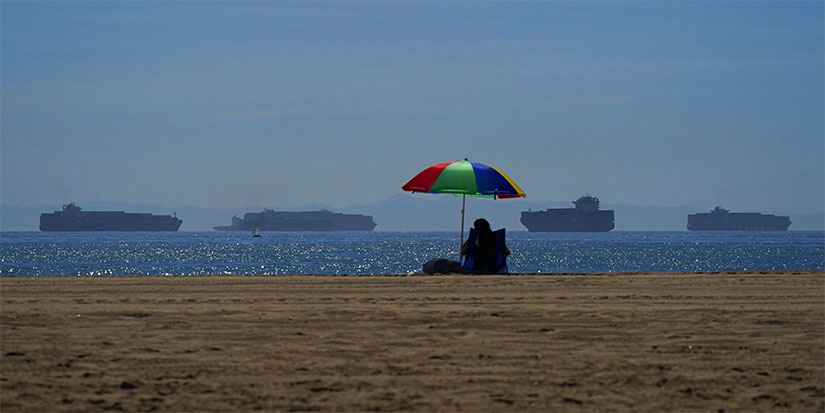
This week I try to give you an understanding of why oil prices have risen and whether they are likely to stay at such lofty heights or maybe even fall! And we look at a very odd statistic: where are all the tankers? There are some very unusual things happening in the oil patch. If you are currently exposed to the energy or commodity markets, or are thinking about it, I believe you will find this letter of interest. At the end of the letter, I also tell you how you can personally see that help gets to the victims of Cyclone Nargis in Myanmar. It is a desperately needy situation. There is a lot to cover, so we will get to the essay right after this quick note.

I have talked for the past few months about why I feel we may be in for a tough investment environment and a Muddle Through Economy. I think in this type of market cycle it is important to increase your portfolio allocation weighting to noncorrelating investment strategies. I work with Steve Blumenthal and his team at CMG to help investors find managers who can take smaller minimums and who have such alternative strategies. We are creating a platform of managers that you can access for your personal portfolio. I recently completed a special write-up on Eric Leake of Anchor Capital, an investment advisor I am particularly impressed with. For the last 12-1/2 months, he is up 16.77%, in comparison to the S&P 500 index that is down -2.08% (net of fees from April 30, 2007 through May 15, 2008). Past results are not necessarily indicative of future results.


Pop Go the Bubbles

December 21, 2007

Consumer spending was much stronger than thought in November, yet Circuit City Stores Inc., Best Buy Co. and other retailers that warned of a slump in purchases. A private report today showed consumer confidence slid to the lowest level in more than two years in December. The stock market chooses to see all things bullish, and so it powers ever upward. This week we take a brief look at the consumer, recent "shock and awe" central bank actions, money supply and more, trying to see how it all fits together.

But first, let's quickly turn our attention to a practical way we can help save the lives of those who are desperately suffering in Darfur and Myanmar. Over the years my readers have generously supported the work of a very special group of guys who help bring aid to places where it is the most difficult, if not dangerous, to reach.

Knightsbridge International is a small group of volunteers who go to places that are not safe but the needs for help is critical. Like the Knights of old, who ran hospitals and relief efforts, these modern day knights go to where the need is the greatest. They took food and medicine to northern Afghanistan before the troops went in (very dangerous!). They went to rebel held territory in Sri Lanka after the tsunami when no one else could get medicine and help in. Whether it's driving in to rescue nuns in Rwanda (fascinating story!), or taking solar power for clinics in Myanmar, Water Purification Units and medicine to Darfur, and a lot more, they go where other groups fear to tread. They have no political or religious agendas, just the drive to get aid to where it can do the most good.


How Low Can We Go?

September 21, 2001

Our web site hosting firm has been victim to the recent nimda virus. While we are back up, we are not yet able to post this e-letter. It may be a few days. The cost of this virus world-wide is estimated in the billions. The virus was launched one week later to the minute of the World Trade Towers tragedy. These hackers, when caught, should do serious jail time.