Can Two Senators End “Too Big To Fail’?
May 20, 2013
I am often on a panel or at dinner with Barry Ritholtz (The Big Picture), and he will remark, "I am going to have to rethink my position – I agree with John, and that can't be right." While I don't share that bias, I do agree with Barry about his recent take on legislation – which might actually pass – that would deal with too-big-to-fail banks in the US. Barry's latest take on that issue is this week's Outside the Box.
I have not written all that much on the topic lately, other than to say that Dodd-Frank was designed by big banks for big banks – the best legislation they could buy, I have been very critical of allowing too-big-to-fail banks to put taxpayers at risk, and I don't think it should ever be allowed to happen again. Dodd-Frank did not deal with that.
There is bipartisan legislation making its way through Congress that is a huge step in the right direction. The Senate passed it 99-0. Barry explains it below. Both as a taxpayer and an investor, you should be paying attention. And as a voter, call or write your Representative and tell him or her to vote in favor. We will find out who is on the big banks' side on this one.
While I would go further in requiring even more capital for the larger regionals, this legislation will not only remove taxpayer risk but also give small banks a more even playing field, and they are the ones who fund small businesses, the engine of the economy. And I agree, it is a template for how bipartisan legislation can be passed without the usual rancor.
I am back from Tulsa, where my daughter Abbi's wedding came off beautifully. We were lucky in that the tornadoes that sadly have plagued Oklahoma this weekend avoided our area. My heart goes out to those whose lives were shattered by the violent weather.
I have been going to weddings for 40+ years, and they have become a good marker, at least for me, of how different the generations are, as weddings seem to do such a good job of reflecting the subculture in which they are conducted. It is not just the differences in dance styles – those change just to make sure they're different from what the previous generation did. That's what young people do: they try to put their own personal stamp on how they express their lives.
But one of the key differences I have begun to notice is how this 20-something generation communicates. I was sitting with Abbi and her bridesmaid prior to the wedding. She was in her gown and looking radiant, if a little anxious. But they were all on their cell phones, talking and sending pictures, texting and updating their Facebook accounts, checking to see who was coming to the wedding (as their friends updated their Facebook accounts) or sent texts. "[Someone] posted a picture of Abbi [insert expletives]." "Make sure that Stephen [the groom] does not check that Facebook account so he doesn't see the picture of Abbi [more expletives]. Don't they know he can see that account? They are 'friends' with each other!" In a world of constant online, they still adhered to the old standard of the groom not being allowed to see his bride on the day of the wedding – not even on Facebook!
In a sense, I can separate my children into pre- and post-cell-phone kids, and into a further grouping that grew up with smart phones. The youngest just does not understand a world where connection is not always possible (except when he conveniently doesn't want to talk to Dad). The older ones have quickly adapted. (And yes, I was one of the people taking pictures on my iPhone and iPad. I sometimes feel though as if I have willingly joined with the Borg.)
But communications has been affecting culture for centuries. Gutenberg, newspapers, radio, TV, the internet. They have all had a hand in shaping society. I wonder what a wedding will be like in 20 years, when Google Glass will be considered Stone Age technology by my grandchildren and their friends. How do we cope with a world in which it is possible to communicate with thousands of "friends" but our "wetware" (otherwise known as our brains) was evolved for nowhere close to that many relationships? I am sure the young will adapt, but their parents will be left to try and figure out how to update the latest version of whatever has replaced Facebook.
I want to mention that my friends at Casey Research are about to release a very important web event that will be of interest to anyone concerned about energy security in the US and Western world and the role that nuclear energy has to play. "The Myth of American Energy Independence" features guests with serious credentials: former US Energy Secretary Spencer Abraham, former SEC Commissioner and Chairman Emeritus of the UK Atomic Energy Authority Lady Barbara Judge, and former Canadian Minister of Natural Resources Herb Dhaliwal.
You'll also have the benefit of in-depth analysis of investment potential in the nuclear and uranium sector from Rick Rule, Founder of the Sprott Global Companies, and Amir Adnani, President and CEO of Uranium Energy Corp., a dynamic presence in US uranium production.
I just previewed this event, and I found it fascinating as well as compelling from an investment perspective. Marin Katusa, Casey's Chief Energy Investment Strategist and host of the event, has lined up the sort of comprehensive analysis of the uranium opportunity that will give you the confidence to make your move. To tune in, go here to register, free of charge. The event will be released on Tuesday, May 21, at 2 pm EST and will be available for viewing any time thereafter.
Your still trying to surf the latest communications wave analyst,
John Mauldin, Editor
Outside the Box
subscribers@mauldineconomics.com
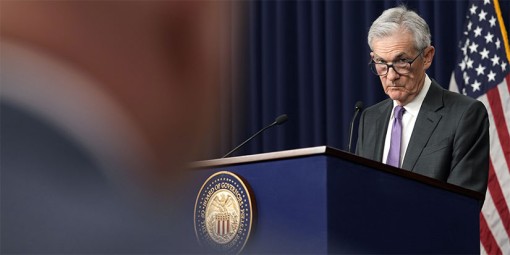
Can Two Senators End “Too Big To Fail’?
By Barry Ritholtz
Last month, an unlikely pair of senators – Sherrod Brown, an Ohio Democrat, and David Vitter, a Louisiana Republican – introduced a non-binding resolution calling for the end of the implicit subsidies that “too big to fail” (TBTF) banks enjoy.
The Senate voted 99-0 in support of the measure.
This month, they have pushed their ideas into actual legislation:…