
Consumer “Rationality” Returns in 2026

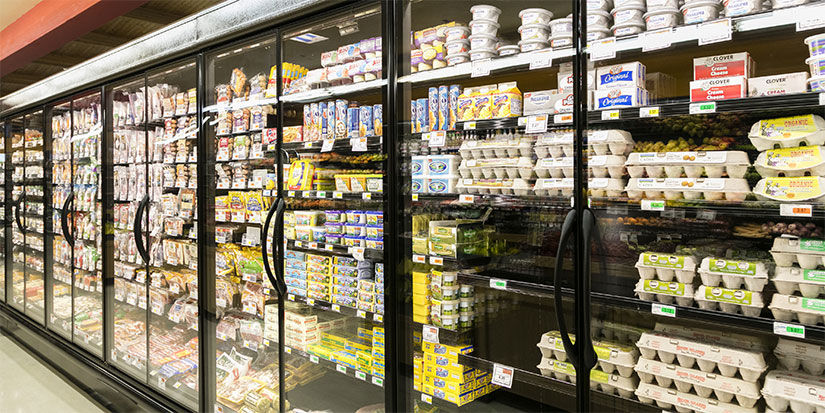
Last Friday morning, I realized I would run out of dish soap by Monday as I did the breakfast dishes. That meant heading out to witness the state of grocery stores before we all got snowed in here in Memphis, TN.
I got some weird glances as I grabbed my soap, a few zucchinis, and a pack of steaks. Everyone around me had enough milk and toilet paper to last into Spring. I did a final lap to ensure I didn’t want anything else, and was surprised to see the broth shelves completely empty.
In general, the middle aisles of a grocery store haven’t been getting much love the past few years. Health-conscious buyers tend to shop the perimeter, and value-conscious shoppers tend to buy their non-perishables in bulk. But that didn’t matter last week as every brand and flavor of broth had been snatched up.
I briefly thought about adding broth giants The Campbell’s Company (CPB) and General Mills (GIS) to my portfolio. CPB owns Pacific Foods and Swansons, and GIS is the parent company of Progresso. They currently yield 5.8% and 5.4%, respectively. And shares of both have been beaten down over the past year as they struggle with the industry-wide challenge of shrinking margins.
Instead, I headed down the rabbit hole of what analysts think we’ll see in terms of consumer sentiment in 2026.
Less but Better
I started with the latest University of Michigan Consumer Sentiment numbers. The January reading of 56.4 was down considerably from last year’s 71.7. However, it is the second straight monthly increase and the highest number we’ve seen since August’s 58.2.

Source: UMich
It set a cautious tone that was repeated by others as I continued my search.
Many articles mentioned the return of the K-shaped economy. That’s where consumer sentiment moves in both directions as the gap widens between high- and low-income Americans.
But my favorite recurring theme was the idea that a value-shift is underway with consumers. One article called it an era of frugality when buyers expect better product longevity before replacement. To me, that’s a return to the basics of economics—utility. Consumer satisfaction depends on the alignment of product expectations and price.
Paul Martin, Global Retail Growth Leader at AlixPartners, agreed with this outlook, adding “Businesses must recognize that this is not a cyclical dip—it’s a structural reset of value. Winning in 2026 will require sharper value-led pricing, more personalized offers, and customer experiences that justify every incremental dollar.”
As someone with a background in economics, I’m excited about this return to thinking about value. But as Mr. Martin points out, that adds another layer of uncertainty for businesses. Yet one more variable in a long stream of them to adjust to. And of course, it’s going to trickle down to our investments.
Action to Take
It doesn’t look like 2026 will be the year to add consumer discretionary companies to your portfolio. Maybe the opportunity will come in the second half, but I’ve been saying that since 2024.
I would avoid adding these to your portfolio right now including travel stocks. If you hold these stocks and they pay you a dividend, I would take the time to confirm that the dividend is safe through this year of changing consumer preferences.
Consumer staples are also not immune to sentiment shifts. Yes, these are goods and services that consumers will continue to buy, but the options continue to expand. We will continue to watch the health-conscious and value-conscious consumers behavior throughout the year.
You should have one or two beaten down consumer staples in your portfolio. This includes companies like Clorox (CLX), Kimberly-Clark (KMB), and Target (TGT) that have already started to see a turnaround. I wouldn’t buy them at current prices, just hold and collect your dividends.
If you don’t have any of these in your portfolio, you might take a closer look at Campbells or General Mills. Shares of both are beaten down and probably 12–18 months from recovery. And they currently have the ability to keep paying a dividend while you wait.
For more income, now and in the future,

Kelly Green
Kelly Green

RECENT ARTICLES
Back to the “Big Four”
October 21, 2026
A Worthwhile Exit Strategy
October 14, 2026
A Sinking Ship or A Turnaround Bet
October 7, 2026
Mailbag: Are There Dividend ETFs Out There That Are Worth It?
September 30, 2026
Burning a Hole in My Pocket
September 23, 2026
Personal Principles as An Investment Screener
September 16, 2026

Mauldin Economics Dividend Digest
There are lots of generous dividend payments waiting to be collected—if you know where to look. And many of these companies have been paying and boosting their dividends year in and year out for decades. If you want to find the yield that you deserve, sign up for Mauldin Economics Dividend Digest—industry-leading income investing research delivered to your inbox every Wednesday.
Uncover the tips and tricks to navigate the income investing landscape… to find the yield you deserve and add income to your pocket today and in the future.
By opting in you are also consenting to receive Mauldin Economics' marketing emails. You can opt-out from these at any time. Privacy Policy
Great article as always, Kelly... keep up the good work you do for us. What do you think of LYB now? Are you still holding it? Incredible (but scary) dividend!
I own all of them and continue adding on weakness. Wrote a call against CLX after it bounced higher. Wrote puts on CPB, KMB and GIS to hopefully buy lower or just collect the option Income.