
My Favorite Market Sector Gets No Love

What are the two worst performing sectors year to date and over the last five years?
Those were the data sets I played around with over the weekend. I had already figured out that Financials was the worst performing sector last week, and thought I might find other patterns.
Year to date, I discovered the worst performing sector was Energy, up just 0.37%. The runner up was Consumer Staples, up just 1.4%. That’s paltry compared to the 14.5% gain for the S&P 500.
Looking at five-year data, the worst performing sector was Real Estate, up 16.4%. The runner up, again, was Consumer Staples, up just 20.4%. The S&P 500 soared 95.6% over the same period.
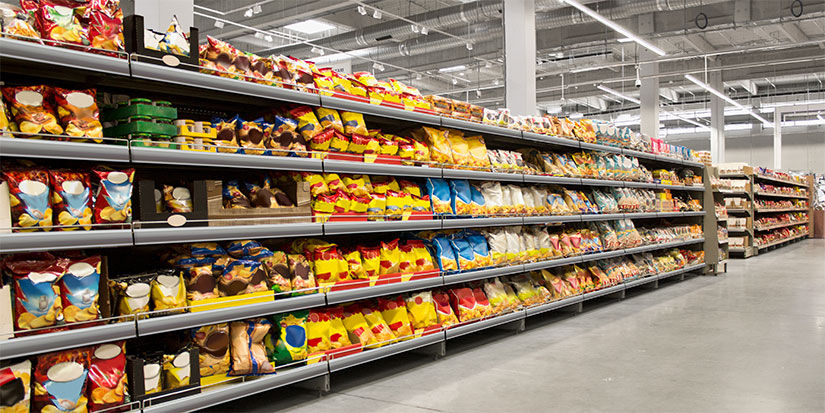
There’s just no love for consumer staples right now, and that creates opportunity for us.
Too Boring for Most
As a dividend investor, it’s easy to see the advantage of having consumer staples stocks in your portfolio. It doesn’t matter if interest rates or the economy are heading up or down, or if we’re in the grips of a global pandemic. People will continue to buy toilet paper, bleach, and pantry supplies.
We know that consumer staples make great Bedrock Income holdings. For decades, these companies have been the meat and potatoes of long-term dividend reinvestment strategies. It is no coincidence that over 20% of the current Dividend Aristocrats—and 25% of Dividend Kings—are consumer staples companies.
But who wants to talk about toilet paper stocks when you could be speculating on the next great AI company or cryptocurrency. Stock price moonshots make for exciting headlines and YouTube videos.
This investor mind-set will change under conditions that could be right around the corner—economic uncertainty and lower interest rates. If it starts to look like we’re headed for a recession, investors will want to own recession-resistant stocks like staples.
Falling interest rates also spark investor interest in staples as an alternative to CDs and other banking products. Current interest rates on those products remain above 4%, which most staples companies can’t match. If that FDIC-insured opportunity disappears, however, investors will turn to boring, safe dividend stocks as the alternative.
I keep staples companies in my personal portfolio and our Yield Shark portfolio at all times. I do not try to time the market and trade in and out of these stocks. Instead, I reinvest my dividends and let the magic of compounding build long-term wealth.
Are Consumer Staples Stocks in Your Portfolio?
What are your favorite consumer staples stocks? Some of you have been investing far longer than I have, and probably have some staples stocks with amazingly high yields. I’d love to hear what stocks you’re holding.
The good news is that there are still opportunities if you want to get in now. Here are my top two:
1. Kimberly-Clark (KMB)
People will continue to buy diapers, toilet paper, Kleenex, and feminine care products for the foreseeable future. And KMB is the parent company of a portfolio of powerhouse brands.
Shares have bounced up and down over the past few years, but always tend to find a low around $118. And they are trading just above that today.

Source: StockCharts
At this price, you would collect an annualized yield of 4.2%. And KMB has raised its dividend every year for the past 53 years. I expect we’ll see another increase in January.
2. Clorox (CLX)
This king of pantry staples is more than just bleach. CLX is the parent company of dozens of brands, including Brita, Burt’s Bees, Fresh Step, Glad, Hidden Valley, Kingsford, and Pine-Sol. I bet you have at least one of these products in your bathroom or kitchen.
This is another example of shares trading around a support level. It is essentially a price floor created by supply and demand from investors. What does that mean? If CLX drops any further, I don’t expect it to stay there long.
At current prices, you would lock in a 4.1% yield on a consumer giant with a 49-year track record of annual dividend increases.
For both companies, these are above-average yields and a great deal right now. I recommend holding them as Bedrock Income positions and reinvesting the dividends to build wealth for decades to come.

Kelly Green
Kelly Green


RECENT ARTICLES
Back to the “Big Four”
October 21, 2026
A Worthwhile Exit Strategy
October 14, 2026
A Sinking Ship or A Turnaround Bet
October 7, 2026
Mailbag: Are There Dividend ETFs Out There That Are Worth It?
September 30, 2026
Burning a Hole in My Pocket
September 23, 2026
Personal Principles as An Investment Screener
September 16, 2026

Mauldin Economics Dividend Digest
There are lots of generous dividend payments waiting to be collected—if you know where to look. And many of these companies have been paying and boosting their dividends year in and year out for decades. If you want to find the yield that you deserve, sign up for Mauldin Economics Dividend Digest—industry-leading income investing research delivered to your inbox every Wednesday.
Uncover the tips and tricks to navigate the income investing landscape… to find the yield you deserve and add income to your pocket today and in the future.
By opting in you are also consenting to receive Mauldin Economics' marketing emails. You can opt-out from these at any time. Privacy Policy