
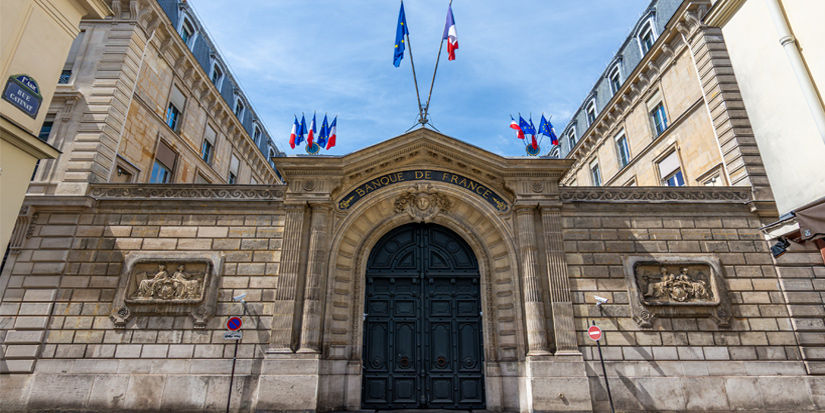
Singing the Songs of Low-Priced Bonds

Add paragraph text. Click “Edit Text” to update the font, size and more. To change and reuse text themes, go to Site Styles.
The Situation
Back from summer holiday, French high school students hit the streets instead of the classroom. Since mid-September, hundreds of thousands have protested against overcrowded classrooms, teacher shortages, and dilapidated schools. University students, parents, and teachers’ unions have since joined the fray. (One epic quote from The New York Times: “We are used to seeing police in France beat people, but they are normally adults… these are kids.”)
France is no stranger to student protests. The 1968 protests transformed the country, cementing a political culture in which acquired social rights are untouchable and street protests can override the government. That culture largely explains why France has struggled to reform its unsustainable fiscal model and massive social welfare system. ’68 still divides the French right and left, though at least one Le Figaro poll shows 62% of the French support the current protests. And yet, protests in France are commonplace. This analyst has been to Paris three times… and twice, students were protesting. Is this ’68 or just another Thursday?
Paris is taking the protesters seriously. Last week, the government announced it would deploy 3,000 teachers to schools nationwide and is drafting proposals to upgrade school buildings and make admissions more transparent. And while the 2027 budget now under debate focuses on cutting spending to rein in a 5.4% deficit, education spending is slated to increase by roughly 1.2%. Color the students unimpressed; they have already planned more protests. And this is about more than money: France already spends more on education than the Organisation for Economic Co-operation and Development (OECD) average… and yet French student scores have fallen faster than the OECD average since 2015.
Policy Shortfall
Which is what this story is really about: French policy falling short. Lame-duck President Emmanuel Macron came to power in 2017 with grand plans to make France competitive in a multipolar world and reshape the EU from within. But as adept as Macron was at seeing where the world was going and what reforms France needed, he has proven inept at pushing them through.
The 2018 yellow vest protests, Mouvement des gilets jaunes, pressured Macron into abandoning a fuel-tax increase and reintroducing inflation-linking for pensions, which helped push France’s budget deficit above the 3% EU ceiling. In 2024, Macron gambled on snap elections and lost big, leaving him at the head of a gridlocked minority government that has reversed his biggest legislative successes. (Last October, the government had to suspend Macron’s unpopular but responsible pension reform just to pass a Social Security budget.) The malaise French voters and protesters are expressing is the product of over two years of gridlock and rising prices, exacerbated by April’s upcoming presidential election.
Markets Concur
High schoolers aren’t the only ones protesting. So are investors; they just riot in the bond market rather than at the Bastille. Earlier this month, the spread between French 10-year OATs (obligation assimilable du Trésor) and German Bunds hit 147 bps—the widest since the 2011–2012 eurozone crisis. It now costs France more to borrow than Italy or Greece. Sit with that for a moment. Italy and Greece both carry debt-to-GDP ratios above 135% (France sits at ~120%), yet the market is signaling that France is the worse credit risk because of its trajectory and governability. And ~55% of French debt is held by non-residents.
Nor is the riot confined to the bond market. European equities have performed well in recent years, outperforming the S&P 500 in dollar terms before giving back some of those gains YTD. Not so French equities. The CAC 40 (Cotation Assistée en Continu) is flat since Macron’s ill-fated June 2024 election gamble, while Germany’s DAX is up 34%, Italy’s FTSE MIB is up 42%, and Spain’s Ibex 35 is up almost 70%. Bank of America’s fund manager survey has ranked France the least preferred European market for several months running, with a net 32% of respondents planning to underweight it over the next 12 months, per Bloomberg.
French students are protesting because they have lost faith in a government they see as incompetent. Markets concur, signaling doubt that any of the likely presidential candidates can rein in public spending, which at ~57% of GDP stands among the highest in the OECD while delivering subpar results.

Solvable, If Difficult
But malaise is a passing condition. It is tempting to read protests as chaos—sacrebleu!—but they can also signal dynamism: a once-stolid status quo opening up because people are fed up and demanding change. And change is coming in the next French election. Le Pen is moderating—in the last two months, she’s strongly criticized Russian aggression in Ukraine and called for a debt brake. The far left is making noise, but that should only force the center to prove it has more to offer than Macron’s idiosyncrasies. Markets, meanwhile, seem to assume France is headed for either a debt crisis or a slow grind toward periphery status punctuated by political malfeasance.
It would not take a miracle for France to turn this around. Its problems are largely political rather than fundamental, which means they are solvable, if difficult. France has one of Europe’s highest fertility rates and, immigration politics aside, can attract immigrants when it wants to, so demographics are less of a concern than elsewhere. Its nuclear, low-carbon energy base is a structural advantage in a reindustrializing world of high energy costs and AI data centers. Paris and London are neck-and-neck for the title of Europe’s largest equity market, and Paris only ceded a lead to London on the snap-election rout. And neighboring Germany’s fiscal expansion offers France a tailwind.
Change is also happening at the EU level. In recent weeks, France and Germany agreed to push for a credible trade instrument that could cut off access to the EU internal market by reverse qualified majority. France also dropped its opposition to weakening the EU’s planned phaseout of combustion engines; in return, Germany will support France’s “Made in Europe” requirements, which would steer EU subsidies, tax incentives, and public procurement toward manufacturers who make things exclusively inside the EU. Macron may be a lame duck, and German Chancellor Friedrich Merz hasn’t exactly covered himself in glory (see AfD’s rise in the polls), but at long last, Berlin and Paris appear to agree on the urgency of real reforms at the EU level.
What If They Don’t Fumble It?
Macron was early, but he was right: If the EU is to make a go of it, France—nuclear-powered France, militarily strong France, culturally robust France—must be at its center. Brexit gave France what its leaders always wanted: a chance to lead Europe. Will they fumble it? Possibly, even probably.
But readers and investors should ask: What if they don’t? What if the narrative about France has gone too far because people see protests in Paris and mistake a national pastime for Les Misérables? What if the protests are a symptom of impatience for change that is already coming, change that doesn’t justify this much pessimism about one of the world’s great underperforming powers?
One does not have to be bullish France, just less bearish than a market pricing revolution and default, to see what’s at stake in the streets of Paris and the voting booths next April.
Map/Chart of the Week

Blind Spot
Last Friday, US President Donald Trump announced a deal with Russia to “immediately supply over 300,000 Tons of Diesel Fuel to the American and Global Marketplace,” with another 1.5 million tons to follow. (300,000 tons is roughly 2.2 million barrels.) On Sunday, Trump followed up with another announcement: Russia and Ukraine had agreed to an energy ceasefire.
Asked why neither Moscow nor Kyiv had confirmed the deal, Trump retorted, “They agreed. You know why? Because I said, ‘You agree.’” Ukrainian President Volodymyr Zelenskyy criticized the US-Russia diesel deal, joking that it was Ukraine, not Russia, that controlled whether Russia could export its diesel. He said Ukraine would honor the energy ceasefire if Russia did. (Russia promptly bombed Ukrainian energy infrastructure after Trump’s post.) In response to Zelenskyy’s criticism, Trump suggested it was “time for Ukraine to get a new President.”
Trump and Zelenskyy have been squabbling since that fateful Oval Office visit last year, but this latest round is worth noting for three reasons:
Trump has been even more volatile on social media than usual, perhaps because polls are predicting a blue wave in November’s midterms that will see Democrats take both the House and Senate. Even if Democrats take only the House, they will gain broad oversight and investigatory powers they will surely use. He will soon be a lame duck.
Is there any clearer sign of declining US power than a US president ordering a Ukrainian president to stop doing something… and the latter not only ignoring the directive but doubling down?
US diesel prices are slightly off their September 21–22 record but remain over $6/gallon… and nonsensical claims about “tons” of Russian diesel being “immediately” delivered to save the US rancher and farmer won’t bring them down in the slightest.
The White House is acting like a unipolar power in a multipolar world. Tweeting or Truthing or X’ing or whatever we are supposed to call it does not make things so. To mix fictional metaphors: As Lord Varys says in George R.R. Martin’s A Clash of Kings, “Power resides where men believe it resides.” Once the curtain is pulled back and the Wizard of Oz is revealed to be a fallible man, the spell is broken—as it has been for Zelenskyy, the Houthis, China, Ethiopia, Canada, and others. Current and future US leaders ignore this reality at their own risk.
Reader Question

Finally…
What I’m watching: The American Revolution, “The Times That Try Men’s Souls,” Ken Burns
What I’m reading: Rising Tide, John M. Barry
What I’m listening to: The Well-Tempered Clavier, played by Angela Hewitt; J.S. Bach

Jacob Shapiro
Read important disclosures here.
YOUR USE OF THESE MATERIALS IS SUBJECT TO THE TERMS OF THESE DISCLOSURES.
Permanlink:
Put Mauldin Economics to work in your portfolio. Your financial journey is unique, and so are your needs. That's why we suggest the following options to suit your preferences:
-
John’s curated thoughts: John Mauldin and editor Patrick Watson share the best research notes and reports of the week, along with a summary of key takeaways. In a world awash with information, John and Patrick help you find the most important insights of the week, from our network of economists and analysts. Read by over 7,500 members. See the full details here.
-
Invest in longevity: Transformative Age delivers proven ways to extend your healthy lifespan, and helps you invest in the world’s most cutting-edge health and biotech companies. See more here.
-
Macro investing: Our flagship investment research service is led by Mauldin Economics partner Ed D’Agostino. His thematic approach to investing gives you a portfolio that will benefit from the economy’s most exciting trends—before they are well known. Go here to learn more about Macro Advantage.
Recent Articles
Singing the Songs of Low-Priced Bonds
October 15, 2026
Brazil’s Turn to the Right
October 8, 2026
China Is Building What Nature Gifted the US
October 1, 2026
Trading Russia for Canada
September 24, 2026
Can Anyone Bring the Houthis to Heel?
September 17, 2026
The Return of Germany to History
September 10, 2026

New from Jacob Shapiro × Mauldin Economics…
The World Isn't Ending
Geopolitics, translated for investors
The headlines say the world is going to hell in a handbasket. The reality is that it’s just being rearranged —and that there is opportunity amid the chaos. Join Jacob Shapiro every Thursday as he translates complex global power shifts into actionable intelligence for your portfolio.
Join thousands of investors who refuse to watch the world from a fetal position.
By opting in you are also consenting to receive Mauldin Economics' marketing emails. You can opt-out from these at any time. Privacy Policy