
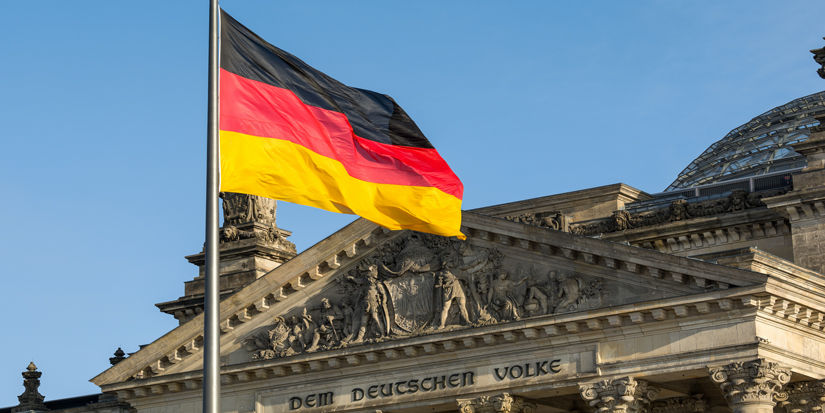
The Return of Germany to History

Add paragraph text. Click “Edit Text” to update the font, size and more. To change and reuse text themes, go to Site Styles.
The Situation
Over the weekend, a German political party called Alternative für Deutschland (AfD) won a major victory in the state of Saxony-Anhalt. AfD won 43.8% of the vote, improving on its 2021 result by 23 percentage points. Three other parties, all various shades of far left, took 22.3% between them. Germany’s governing and center-right party, the Christian Democratic Union, saw its share decline from 37.1% in 2021 to 17.2%. Voter turnout was a record 77.8%.
AfD’s platform and ideology have dominated coverage, but don’t miss the forest for the trees. This election was not a vote for anything. It was a protest vote against an incumbent presiding over a status quo unacceptable to a large and growing swath of the electorate. Over-indexing on the notion that a far-right populist party doing well in a state election means it’s 1933 again misses the political earthquake that has already happened in Germany. AfD’s victory is important—just not for the reasons Western media and mainstream German parties are focused on.
The Professors’ Party
AfD was founded in 2013 by German economics professors and conservative journalists. Its nickname: “The Professors’ party.” The dominant issue in Europe then was the sovereign debt crisis. The so-called “PIGS”—Portugal, Ireland, Greece, and Spain—needed bailouts; Germany insisted on austerity.
AfD arose from this debate as a single-issue party pursuing the dissolution of the euro. Most of its 2013 manifesto concerns a return to national currencies within the European common market; a small section—three bullet points—noted support for tighter immigration policies.
The AfD’s founders were reacting to European Central Bank President Mario Draghi’s 2012 pledge to do “whatever it takes” to save the euro. These were intellectual, relatively moderate Germans who thought the euro was not worth saving from Germany’s national perspective.
Storm Clouds
Germany’s geopolitical problems were only just becoming visible in 2013. The debt crisis had made Germany Europe’s de facto leader, but even as it forced austerity down the bloc’s throat, storm clouds were gathering.
At the end of 2012, a little-known compromise candidate was anointed General Secretary of the Chinese Communist Party: Xi Jinping. In 2013, Germany still expected to sell cars to China’s burgeoning middle class for the foreseeable future. Now Chinese EVs are putting German car companies under tremendous pressure.
The end of 2013 saw the Euromaidan protests in Ukraine, which by 2014 had led Russia to seizing Crimea and the beginning of the Donbas war. Even so, Germany expected to keep importing cheap Russian energy (Nord Streams 1 and 2 had just been completed in 2011 and 2012). Fast-forward to 2026: The Nord Stream pipelines are gone, and Germany is attempting to sever energy dependence on Russia.
In 2013, President Barack Obama urged European countries to spend more of their GDP on defense, but Germany expected the US would still guarantee its security indefinitely. It took another decade, and President Trump’s threats, to get Germany to start surging defense spending in earnest.
The 2015 European migration crisis, which brought over 1 million people fleeing wars in the Middle East and Africa, still lay ahead. When they arrived, German Chancellor Angela Merkel insisted Germany—and every other European country—would do its part, with a rallying cry of Wir schaffen das: “We can do it.” That this would become the source of her downfall seemed to occur to her not at all.
More Than Its Extremes
AfD is no longer the Professors’ party. It is now a broad tent for populist grievances born of Germany’s geopolitical challenges and a decade of policy that failed to answer them. Some of the voices within the AfD are unsavory. This is the country that brought the world National Socialism, aka Nazis, in the first place. They haven’t gone extinct. Voices within the AfD calling for more aggressive “remigration” of non-ethnic German citizens, or “new, patriotic, cultural policy,” or halting both aid for Ukraine and sanctions on Russia, have found a home within the AfD.
But as an Israeli cab driver once said to me, “In every house there is a trash can.” AfD is much more than its most extreme elements.
After 2015, immigration became the AfD’s raison d'être. In its 2025 manifesto, AfD calls for “remigration,” a combination of expelling illegal migrants with a significant tightening of German immigration laws and enough ambiguity to deport anyone deemed a “security threat.”
The rest of AfD’s platform is less extreme than one might think. The party is still broadly Euroskeptic and advocates a return to the Deutschemark, though without abrupt rupture, and still wants to retain a European common market, external border control, and defense. But according to the latest Eurobarometer survey, 69% of Germans support membership within the EU. The more responsibility AfD garners, the more it will be forced to do what Euroskeptic parties in Italy, France, Poland, and elsewhere in Europe have done: accept that their electoral success is not a vote against the EU.
The Divide
It is instead a vote against German policy failures. The biggest is reunification. AfD draws most of its support from East Germany, where it now polls as the strongest party in every eastern state. East Germany’s GDP per capita, productivity, support for the EU (closer to 50%), and faith in democracy all lag West Germany. These are the hollowed-out industrial cores that lost most when cheap Russian energy evaporated and China turned from promising market into existential competitor.
The divide goes back centuries, far beyond the Cold War’s East/West line. The point is that the structural problems AfD speaks to are real, have nothing to do with Nazis, and have been made worse by a political class that meets them with neglect and derision.
Case in point: After a fiery speech from AfD’s admittedly controversial leader, Alice Weidel, Chancellor Friedrich Merz addressed the Bundestag and tried to downplay the party’s success in Saxony-Anhalt. Insisting that Germany must embrace “the opportunities offered by new technology to modernize industry,” an AfD member jeered, “How is that supposed to work without energy?” Merz replied, “How is that supposed to work without any natural intelligence?” A politician who defaults to ridicule does not have an answer.
Ghosts
It would be flippant to dismiss the historical overtones. The National Socialist Party never won a majority; it entered power via coalition, then manufactured the emergency it used to end democracy. But that was a different time, a different context, and a different party. If Germany is to lead Europe and rebuild its defense capacity—as Washington has demanded since well before Trump—it must face these ghosts and transcend them. Ignoring the voters those parties speak for is the surest way to make things worse.
A generation is coming of age that did not live through World War II, has no memory of the Berlin Wall, and sees only feckless, ineffective government. Rather than vote for the status quo, at least in Saxony-Anhalt, they voted for change. Right-wing, left-wing, it does not matter. Whatever party can deliver change, or at least the feeling of it, will win elections.
Do Not Underestimate Germany
In 1999, The Economist put Germany on its cover as “the sick man of Europe.” By 2013, the year AfD was born, Germany was the beating heart of the European economy, thanks to tough reforms commentators had thought impossible.
In democracies, things must get worse before they can get better because that is what creates the necessary electoral conditions to usher in politicians willing to change. And few countries have shown the ability to change as successfully and rapidly as Germany.
From a macro perspective, Germany has faced headwinds in recent years, and those will continue. But look at the performance of German companies like Siemens, Rheinmetall, and even SAP. Germany can no longer outsource its security, energy, and market access needs. The world is changing, and Germany must change with it.
History suggests when Germany changes, the world changes. An AfD victory in a state election in an Eastern German state is not the beginning of the Fourth Reich—but it may well be the return of Germany to history.
Map/Chart of the Week

Blind Spot
Bloomberg reports that Malaysia is “seriously evaluating using Huawei’s AI hardware as the backbone of a 2 billion ringgit ($494 million) initiative intended to give the country greater control over national data.” Regular readers of this letter will know that I have focused a lot on both Chinese AI and Huawei in recent editions. This sort of development is exactly why, for a few reasons:
It demonstrates how protectionist US measures against China not only failed to stop Chinese technological growth but created the necessary conditions for a company like Huawei to vertically integrate and innovate its way into the technological frontier.
It shows that even a country like Malaysia—which signed an Agreement on Reciprocal Trade with the United States in 2025 before the tariffs were struck down by the US Supreme Court—is not only hedging its bets on the United States but potentially embracing Chinese tech because the development of Malaysia’s AI infrastructure is more important than avoiding tariffs.
It becomes a test for the Trump Administration: How will it respond to this report? Other countries in Southeast Asia, especially Vietnam, whose trade deficit and transshipment issues have made it a focus point of Trump administration ire in recent months, will be watching. If the US does not react strongly, then those countries may opt to take their chances too.
Reader Question

Finally…
What I’m watching: Devotion: Obedience or Betrayal
What I’m reading: Global Farmer Insights 2026
What I’m listening to: David McWilliams’ podcast on the rise of the AfD

Jacob Shapiro
Read important disclosures here.
YOUR USE OF THESE MATERIALS IS SUBJECT TO THE TERMS OF THESE DISCLOSURES.
Put Mauldin Economics to work in your portfolio. Your financial journey is unique, and so are your needs. That's why we suggest the following options to suit your preferences:
-
John’s curated thoughts: John Mauldin and editor Patrick Watson share the best research notes and reports of the week, along with a summary of key takeaways. In a world awash with information, John and Patrick help you find the most important insights of the week, from our network of economists and analysts. Read by over 7,500 members. See the full details here.
-
Invest in longevity: Transformative Age delivers proven ways to extend your healthy lifespan, and helps you invest in the world’s most cutting-edge health and biotech companies. See more here.
-
Macro investing: Our flagship investment research service is led by Mauldin Economics partner Ed D’Agostino. His thematic approach to investing gives you a portfolio that will benefit from the economy’s most exciting trends—before they are well known. Go here to learn more about Macro Advantage.
Recent Articles
The War on Grain
October 22, 2026
Singing the Songs of Low-Priced Bonds
October 15, 2026
Brazil’s Turn to the Right
October 8, 2026
China Is Building What Nature Gifted the US
October 1, 2026
Trading Russia for Canada
September 24, 2026
Can Anyone Bring the Houthis to Heel?
September 17, 2026

New from Jacob Shapiro × Mauldin Economics…
The World Isn't Ending
Geopolitics, translated for investors
The headlines say the world is going to hell in a handbasket. The reality is that it’s just being rearranged —and that there is opportunity amid the chaos. Join Jacob Shapiro every Thursday as he translates complex global power shifts into actionable intelligence for your portfolio.
Join thousands of investors who refuse to watch the world from a fetal position.
By opting in you are also consenting to receive Mauldin Economics' marketing emails. You can opt-out from these at any time. Privacy Policy
Good article , but fails to appreciate Germany's ( Merkel's ) self-destruction of affordable reliable energy due to the nonscience demonization of CO2 .
Germany made a huge mistake when it shut down its nuclear power plants and committed to wind and solar. That’s why German consumers pay ridiculous prices for electricity. Wind and solar power at the grid level, not LCOE at the farm, is way more expensive than nuclear power. If Germany wasn’t next door to France and connected to Norway via Denmark, the whole country would shut down when the sun wasn’t shining and the wind wasn’t blowing. That happens for weeks at a time during the winter.