
The War on Grain

Add paragraph text. Click “Edit Text” to update the font, size and more. To change and reuse text themes, go to Site Styles.
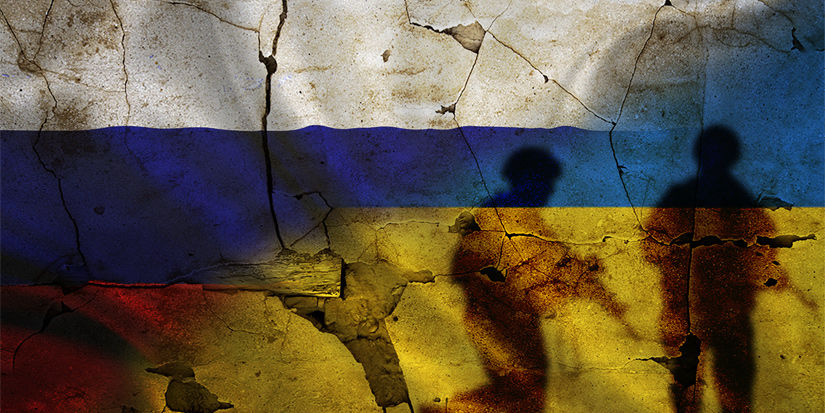
The conventional Russia-Ukraine war is at a stalemate. Russia is unwilling to declare victory with the territory it holds and is unable to acquire more. (In recent weeks, Ukrainian forces have even been recapturing small parts of Donetsk.) Ukraine is unwilling to cede additional territory in a peace deal and insists all captured lands be returned, including Crimea.
Unable to win on the field, both sides must resort to hurting each other’s governments by striking targets that increase pain for everyday Russians and Ukrainians, hoping popular pressure forces the other side to sue for peace. The Black Sea has become a key theater of this new phase of the war.
The Situation
The Black Sea has been important since before the start of the war. Hormuz is to energy as the Black Sea is to grain. (A stretch, but not by much.) Roughly 17% of the world’s grain goes through the Black Sea, as Russia and Ukraine account for ~30% of exported wheat and ~15% of exported corn. Sunflower oil is the most extreme case: Russia and Ukraine ship roughly two-thirds of the world’s exports, with no third supplier close. Russia’s 2014 seizure of Crimea effectively let it interdict Ukrainian ships in the Black Sea. When Russia invaded Ukraine in February 2022, wheat and corn prices rose ~40% and ~25%, respectively, due to a disruption in both Russian and Ukrainian exports. Other potential export routes, like overland via Europe or Mongolia/China, can’t replace Black Sea shipping.
But five months into the war, and under global pressure, Russia and Ukraine agreed to keep their fight separate from the global grain trade. A Turkish-brokered grain deal followed in July 2022, and prices returned to (relatively) normal. Even after Russia withdrew in July 2023, shipments continued apace out of the Black Sea, reaching pre-war levels by 2024. Occasional fighting continued, but for the most part, Ukrainian grain and oilseed exports flowed from Odesa, Chornomorsk, and Pivdennyi, while Russian seaborne cereal and oilseed exports moved through the Azov-Black Sea basin.
The Truce Breaks
That is, until July, when Ukraine began a broad campaign to, in President Zelenskyy’s words, “compel Russia to end the war.” Largely using drones, Ukraine struck targets in Russian cities like Moscow and St. Petersburg, attacked oil refineries and energy facilities serving domestic and export markets, destroyed warehouses belonging to online retailers, and targeted tankers and other Russian ships in the Sea of Azov and the Black Sea. By mid-month, Russia began retaliating in the Black Sea, even sinking the commercial grain ship Golden Leo on July 26. By month’s end, several Russian and Ukrainian Black Sea ports were effectively shut down for the first time since 2022.
The results are hard to miss. Wheat loadings in September were down ~78% year-over-year and ~45% month-over-month. Ukraine’s agriculture minister, Taras Vysotskyi, said Ukraine exported just 46% of its potential volume in September.
At a grain conference I attended in Dublin last week, Dan Basse of AgResource said Black Sea grain exports are down 60% and projected Q4 exports are at just a third of last year’s total. The FAO Cereal Price Index rose 5.1% in September and was up 17.2% year-over-year, reaching its highest level since August 2023.
There is also no end in sight. Any hope that Russia and Ukraine might agree to halt attacks in the Black Sea as part of President Trump’s unilaterally announced energy ceasefire blew up in Russian attacks on Ukrainian energy targets that left 600,000+ without power, and on tankers in NATO member Romania’s territorial waters.
What Happens in the Black Sea…
This is where the Russia-Ukraine war becomes more than an internecine conflict in Eastern Europe. What happens in the Donbas stays in the Donbas—but what happens in the Black Sea does not stay in the Black Sea. Both Kyiv and Moscow want to use this to their advantage. Ukraine saw how the world reacted to the US war on Iran and realized that if it could similarly move global commodity prices, countries might put pressure where it was needed: on Russia to stop fighting, on the US and Europe to continue supporting Ukraine’s fight. Russia’s strategy is the mirror image: It uses its leverage over global energy and grain markets liberally, betting that external powers would rather make a deal than support Ukraine and suffer higher prices for energy and food.
The last time this happened, food prices levitated for four months before crashing back to earth after global pressure resulted in the Black Sea Grain Initiative. It is not unreasonable to expect a repeat, but context matters. The spike in 2022 was sudden and shocking—a similar spike for the next four months would hit a world already smarting from higher energy prices due to the US-Iran war and the cumulative, corrosive impact of inflation and higher rates since 2022. A single El Niño-driven weather failure could tilt the world toward deeper crisis.
Still, this is not a supply-driven crisis. Ukrainian and Russian farmers both enjoyed bumper crops this year. They have the grain; they just can’t get it to market. Russia has expanded its export capacity via the Baltic, now its largest grain export corridor. Low water levels on the Danube and limited rail capacity constrain Ukrainian efforts to work around the Black Sea, but trade, like water, tends to find a way.
It is also dangerous to assume that because something happened before, it will happen again. Patterns are the nemesis of the analyst, a precursor to irresponsible complacency. The initial Black Sea fighting in 2022 came during an earlier phase of the war, when both sides still believed they could achieve their objectives on land without attacking each other at sea. The stalemate on land changes things, because now what happens in the Black Sea is seen in both Kyiv and Moscow as determining who gains the upper hand. And as recent weeks have shown, there are limits to external pressure stopping Ukraine and Russia from fighting. Indeed, for both sides, the more pressure that is applied, the more each government can convince itself that its plan is working—that global pain will result in pressure on the enemy.
A war on grain has begun. Food prices are rising. A quick, easy end seems less likely by the day. That is not the end of the world, but it is the beginning of a new cycle of global political volatility in markets dependent on the Black Sea to feed hungry populations, and an accelerant to already pernicious inflation.
Map/Chart of the Week

Blind Spot
On Saturday, Egypt’s President Abdel Fattah el-Sisi declared that Egypt “will take any action to protect Saudi Arabia” and called an emergency session of parliament to authorize a military deployment to the Gulf. Parliament delayed the vote to next week, though it is expected to pass with the required two-thirds majority.
The UK plans to deploy fighter jets to defend Saudi Arabia from escalating Houthi missile and drone attacks. France began deploying promised air and ground assets to defend the Red Sea oil export terminal at Yanbu, and President Emmanuel Macron proceeded with a trip to the Gulf even as Paris seethes with protests. Israel wants to directly join strikes against the Houthis, but Saudi Arabia has so far declined Israeli help, fearing domestic political backlash. Some 8,000 Pakistani troops and a squadron of fighter jets are already in the kingdom. Turkey submitted the “Mecca Pact” to its parliament on Tuesday, with deployments presumed to follow. Eastern Libya and Turkey reached a maritime deal that isolates Cyprus from the Mediterranean and blocks Israel from Greece. Syria is worried that Israeli-backed Druze armed groups will soon launch an offensive against the Syrian government.
It is easy to get lost in constant Middle East machinations, but a few things stand out:
In a multipolar world, non-US actors are pursuing security goals that used to be the province of the US. Washington asked for this, but careful what you wish for—influence and power decline proportionally. Notably, China is not involved.
The world is eager to protect Saudi Arabia against Houthi attacks on its energy infrastructure.
Keep an eye on Egypt and the Suez Canal. The last time the Egyptians fought in Yemen, in the 1960s, it ended disastrously. Could the Houthis target Suez in response, setting off yet another global supply chain crisis?
The political and security map of the region is being redrawn in real time. Stay nimble as these relationships develop.
Reader Question

Finally…
What I’m watching: East of Eden, Netflix
What I’m reading: Bowling Alone: The Collapse and Revival of American Community, Robert Putnam
What I’m listening to: Hacks on Tap, “Split Happens” (with Robert Gibbs and Karl Rove)

Jacob Shapiro
Read important disclosures here.
YOUR USE OF THESE MATERIALS IS SUBJECT TO THE TERMS OF THESE DISCLOSURES.
Put Mauldin Economics to work in your portfolio. Your financial journey is unique, and so are your needs. That's why we suggest the following options to suit your preferences:
-
John’s curated thoughts: John Mauldin and editor Patrick Watson share the best research notes and reports of the week, along with a summary of key takeaways. In a world awash with information, John and Patrick help you find the most important insights of the week, from our network of economists and analysts. Read by over 7,500 members. See the full details here.
-
Invest in longevity: Transformative Age delivers proven ways to extend your healthy lifespan, and helps you invest in the world’s most cutting-edge health and biotech companies. See more here.
-
Macro investing: Our flagship investment research service is led by Mauldin Economics partner Ed D’Agostino. His thematic approach to investing gives you a portfolio that will benefit from the economy’s most exciting trends—before they are well known. Go here to learn more about Macro Advantage.
Recent Articles
The War on Grain
October 22, 2026
Singing the Songs of Low-Priced Bonds
October 15, 2026
Brazil’s Turn to the Right
October 8, 2026
China Is Building What Nature Gifted the US
October 1, 2026
Trading Russia for Canada
September 24, 2026
Can Anyone Bring the Houthis to Heel?
September 17, 2026

New from Jacob Shapiro × Mauldin Economics…
The World Isn't Ending
Geopolitics, translated for investors
The headlines say the world is going to hell in a handbasket. The reality is that it’s just being rearranged —and that there is opportunity amid the chaos. Join Jacob Shapiro every Thursday as he translates complex global power shifts into actionable intelligence for your portfolio.
Join thousands of investors who refuse to watch the world from a fetal position.
By opting in you are also consenting to receive Mauldin Economics' marketing emails. You can opt-out from these at any time. Privacy Policy