
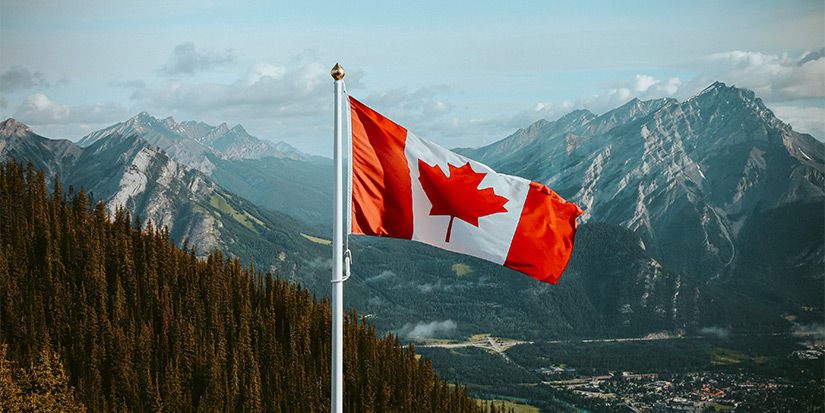
Trading Russia for Canada

Add paragraph text. Click “Edit Text” to update the font, size and more. To change and reuse text themes, go to Site Styles.
When Russia invaded Ukraine in 2022, one of Moscow’s assumptions was that European energy dependence on Russia would prevent the EU and its member states from supporting Ukraine’s defense. Moscow assumed wrong.
Since 2022, EU imports of Russian oil have declined from 27% to 2%; of natural gas from 45% to 12%; and of coal from 52% to 0%. Moreover, Europe’s support of Ukraine has steadily increased.
US military and financial support was critical to Ukraine’s early success, but since 2025, most of that support has come not from Washington but from Europe’s much-maligned capitals.
The Situation
Since 2025, the top military aid donors to Ukraine are Germany, the UK, Sweden, and Norway.

This is one of the reasons that US President Donald Trump’s recent pressure on Ukraine to halt attacks on Russian oil refineries has fallen on deaf ears in Kyiv. If that pressure came from Berlin and Paris, it would mean a lot more. As it stands, President Trump long ago forfeited his “cards” over Ukraine’s behavior. In fact, every time the White House demands Ukraine halt its strikes on Russian energy, it proves to Ukraine that its strategy is working.
US diesel prices topped $6.50 a gallon over the weekend, setting a new record. The situation is so dire that Republicans are squabbling among themselves over a potential ban on US diesel exports, with senators from farm states like Iowa calling for restrictions and senators from Texas decrying an export ban as little more than a gimmick.

US energy companies have profited handsomely from the vacuum left by Europe’s shift away from Russia. US LNG exports to the EU have roughly tripled since 2021, and US crude exports are up 71%. The flip side is that American consumers pay more for energy than they otherwise would. And prices surged again last week after the Houthi onslaught against Saudi-backed fighters in Yemen, on top of Ukrainian strikes on Russian energy infrastructure and continued uncertainty around the Strait of Hormuz.

Prices are not just rising for Americans. Europeans have it worse. Europe avoided freezing in the winter of 2022 thanks to mild weather and diversified imports from the US, Norway, and Kazakhstan. But Middle Eastern sources still account for ~12% of EU crude imports and ~10% of EU LNG. As temperatures start to fall, Europe is once again facing rising energy prices even as its storage levels sit at a five-year low. And, because of the US war against Iran, Europe is being forced for the second time in four years to replace a major source of its energy imports.
Enter Canada
The Kremlin may be thinking that it played its cards wrong in 2022, but this year Europe will have to constrain Ukraine and force it into a settlement. Well, perhaps. It is in this context that the recent EU-Canada bromance deserves a closer look.
There is, of course, ample reason for skepticism over Ursula von der Leyen’s speech about inviting Canada to become an associate member of the European Union. For one thing, there is no such thing as an associate member. There is already a Canada-EU free trade agreement, CETA, provisionally in force since 2017—and it has been fully implemented by only 17 EU members. In 2025, the US accounted for ~71% of Canada’s total exports and ~90% of its crude exports because that’s what its infrastructure is built to do—and that won’t change because of an EU bureaucrat’s daydream.
And yet, something is changing, and Canada is leading the way. Some 49% of Canadians support EU membership, with 64% of liberal voters for and 33% of conservative voters opposed. But that obscures the effervescence in overall support for deeper Canada-EU relations. General impressions of the EU in Canada are 71% positive, as compared to just 21% positive of the United States. Support for deeper Canada-EU strategic cooperation is 80%, with 92% of liberal voters and 69% of conservative voters. Whether it is called “associate membership” or not is semantics. What matters is that Canadians want closer ties with Europe.
Moreover, Mark Carney’s liberal government has embraced Canada’s fossil fuel sector, championing new pipelines, speeding up major projects, and making energy sovereignty central to his agenda. Over the weekend, Carney became the first Canadian prime minister to make an official visit to the French territory of Saint-Pierre and Miquelon off Canada’s Atlantic coast to meet French President Emmanuel Macron. Canada also joined the EU, Brazil, and Kenya in announcing “Partners for Multilateralism,” aka P4M, billed as a network for a world where “spheres of influence and power politics is back.”
Capital for Energy
All of which is well and good, but to be taken seriously, Canada must answer how it plans to transcend its dependence on the United States. And here is where the EU-Canada relationship comes into view: Europe needs energy. Canada needs capital.
Europe has the chance to trade its energy dependence on Russia, the Middle East, and the US for a deeper relationship with Canada. Canada has the chance to use European capital to build the infrastructure needed to export its vast energy and mineral resources across the Atlantic. In geopolitics, when incentives align this clearly, interests outweigh policy and even law. In other words, policy does not dictate reality; reality dictates policy.
Will it happen this year? Absolutely not. It will likely take years. But do not underestimate the nonlinearity of geopolitics when such powerful interests align.
Facing energy shortages in the summer of 2022, Germany fast-tracked floating LNG terminals, which normally take one to three years to build. Germany did it in seven months. At the height of the European sovereign debt crisis in July 2012, then-ECB President Mario Draghi famously vowed to do “whatever it takes to preserve the euro.” Unlike with US Treasury Secretary Scott “I am the house now” Bessent, markets took Draghi seriously. If the EU and Canada are serious about doing “whatever it takes” to ensure their respective energy security and sovereignty, change may come much quicker than markets and analysts (this one included) expect.
And in that world of spheres of influence and power politics, with Russia and China joined at the commodity hip and the US dabbling in imperialism in the Western Hemisphere, a Canada-EU alignment would be as formidable as it would be geopolitically coherent. Should it come to pass, both Mark Carney and Ursula von der Leyen should be sure to send the White House a thank-you card, because without Washington’s aggressive trade approach toward Canada, withdrawal of support from Ukraine, and war against Iran, neither side would have found the urgency to overcome the inertia of the easy prosperity of the “liberal international order.”
Map/Chart of the Week

Blind Spot
While the US and Canada have sparred over trade, the US-Mexico side of the negotiation has been much calmer, mostly because Mexico has chosen to acquiesce to Washington’s requests. The latest request involves pressuring Mexico to accept new rules for exports of AI hardware to prevent Chinese companies from circumventing tariffs.
According to The Wall Street Journal, the proposal on the table would cap the number of components that can come from outside North America in the production of AI hardware. US negotiators reportedly want AI equipment and other sectors to have the same sourcing rules as the auto industry—namely, 75% of the content of a good must come from North American suppliers to qualify for duty-free treatment. The ~5X surge in annual US computer imports from Mexico explains the urgency.
Whereas Canada has sought to push back against US requests, Mexico has done the opposite. In February 2025, when US President Donald Trump demanded Mexico deploy troops to the border, Mexico promptly sent 10,000 National Guard and army troops. When the US demanded Mexico increase tariffs on goods from China, Mexico did so. In April, when the US Department of Justice indicted Sinaloa’s governor and nine other current and former Mexican officials on drug trafficking and weapons charges, Mexican President Claudia Sheinbaum played it down and appeared to oppose the governor’s bid to return to office from leave.
Rather than replicate Canada’s approach, Mexico has doubled down on its proximity to the US. No doubt Mexico’s leaders will be watching the outcome of the Trump-Xi summit at the White House on Thursday, because the one thing Mexico truly can’t afford is if the US makes a deal with China after putting so much pressure on Mexico to fall in line with “Fortress North America.”
Reader Question

Finally…
What I’m watching: Green Lantern, HBO
What I’m reading: Report of the Committee on the Future of the American University, Cornell University
What I’m listening to: Rubber Soul, The Beatles

Jacob Shapiro
Read important disclosures here.
YOUR USE OF THESE MATERIALS IS SUBJECT TO THE TERMS OF THESE DISCLOSURES.
Put Mauldin Economics to work in your portfolio. Your financial journey is unique, and so are your needs. That's why we suggest the following options to suit your preferences:
-
John’s curated thoughts: John Mauldin and editor Patrick Watson share the best research notes and reports of the week, along with a summary of key takeaways. In a world awash with information, John and Patrick help you find the most important insights of the week, from our network of economists and analysts. Read by over 7,500 members. See the full details here.
-
Invest in longevity: Transformative Age delivers proven ways to extend your healthy lifespan, and helps you invest in the world’s most cutting-edge health and biotech companies. See more here.
-
Macro investing: Our flagship investment research service is led by Mauldin Economics partner Ed D’Agostino. His thematic approach to investing gives you a portfolio that will benefit from the economy’s most exciting trends—before they are well known. Go here to learn more about Macro Advantage.
Recent Articles
Singing the Songs of Low-Priced Bonds
October 15, 2026
Brazil’s Turn to the Right
October 8, 2026
China Is Building What Nature Gifted the US
October 1, 2026
Trading Russia for Canada
September 24, 2026
Can Anyone Bring the Houthis to Heel?
September 17, 2026
The Return of Germany to History
September 10, 2026

New from Jacob Shapiro × Mauldin Economics…
The World Isn't Ending
Geopolitics, translated for investors
The headlines say the world is going to hell in a handbasket. The reality is that it’s just being rearranged —and that there is opportunity amid the chaos. Join Jacob Shapiro every Thursday as he translates complex global power shifts into actionable intelligence for your portfolio.
Join thousands of investors who refuse to watch the world from a fetal position.
By opting in you are also consenting to receive Mauldin Economics' marketing emails. You can opt-out from these at any time. Privacy Policy