

Thoughts from the Frontline
Follow John Mauldin as he uncovers the truth behind, and beyond, the financial headlines. This in-depth weekly dispatch helps you understand what's happening in the economy and navigate the markets with confidence.
Let John guide you through this decade of disruption
John Mauldin's Thoughts from the Frontline
Free in your inbox every Saturday
By opting in you are also consenting to receive Mauldin Economics' marketing emails. You can opt-out from these at any time. Privacy Policy
Latest Articles
August 27, 2015
Weapons of Economic Misdirection
“Measurement theory shows that strong assumptions are required for certain statistics to provide meaningful information about reality. Measurement theory encourages people to think about the meaning of their data. It encourages critical assessment of the assumptions behind the analysis. “In ‘pure’ science, we can form a better, more coherent, and objective picture of the world, based on the information measurement provides. The information allows us to create models of (parts of) the world and formulate laws and theorems. We must then determine (again) by measuring whether these models, hypotheses, theorems, and laws are a valid representation of the world.” – Gauri Shankar Shrestha

August 21, 2015
Playing the Chinese Trump Card
“I know the Chinese. I’ve made a lot of money with the Chinese. I understand the Chinese mind.” – Donald Trump, 2011 Back in the olden days (pre-2000 or so), information junkies like me relied on printed newspapers, paper magazines, TV newscasts, and snail-mail newsletters. All these channels still exist, but they can’t begin to compete with the constant stream of data rushing into our tablets and smartphones. And on some days the stream rushes faster.

August 13, 2015
Riding the Energy Wave to the Future
“Formula for success: rise early, work hard, strike oil.” – J. Paul Getty This week’s yuan devaluation was big news, but it’s really part of a much bigger saga. Events around the globe are combining to create huge economic change over the next few years. We are watching giant, multidimensional chess games played by some master players.

August 6, 2015
Closing the Sausage Factory
“Bureaucracy destroys initiative. There is little that bureaucrats hate more than innovation, especially innovation that produces better results than the old routines. Improvements always make those at the top of the heap look inept. Who enjoys appearing inept?” – Frank Herbert, Heretics of Dune “Economies naturally grow. People innovate as they go through life. They also look around at what others are doing and adopt better practices or tools. They invest, accumulating financial, human and physical capital. Something is deeply wrong if an economy is not growing, because it means these natural processes are impeded. That is why around the world, since the Dark Ages, lack of growth has been a signal of political oppression or instability. Absent such sickness, growth occurs.” – Adam Posen, “Debate: The Case for Slower Growth”
July 30, 2015
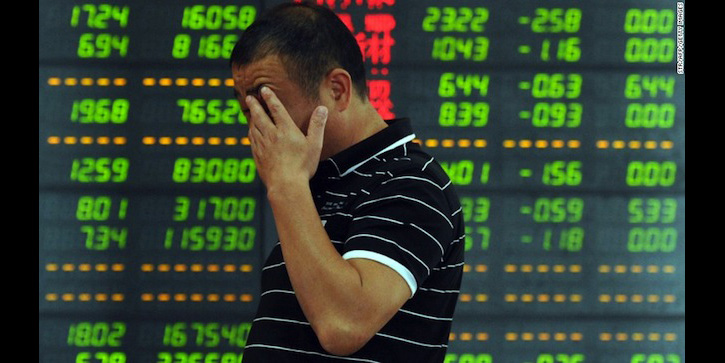
When China Stopped Acting Chinese
“The one thing I know for sure about China is, I will never know China. It's too big, too old, too diverse, too deep. There's simply not enough time.” – Anthony Bourdain, Parts Unknown Much of the world is focused on what is happening in Greece and Europe. A lot of people are paying attention to the Middle East and geopolitics. These are significant concerns, for sure; but what has been happening in China the past few months has more far-reaching global investment implications than Europe or the Middle East do. Most people are aware of the amazing run-up in the Shanghai stock index and the recent “crash.” The government intervened and for a time has halted the rapid drop in the markets.

July 24, 2015
Europe: Running on Borrowed Time
“I am sure the euro will oblige us to introduce a new set of economic policy instruments. It is politically impossible to propose that now. But some day there will be a crisis and new instruments will be created.” – Romano Prodi, EU Commission president, December 2001

July 16, 2015
Productivity and Modern-Day Horse Manure
“They just use your mind and they never give you credit. It’s enough to drive you crazy if you let it.” – Dolly Parton, “Working 9 to 5” Almost everyone wants to be more productive. I include myself in that group – there are lots of ways I could be more productive. When I have conversations with people I think are very productive, they almost always tell me they wish they were more productive. What more could anyone expect from them?
July 9, 2015
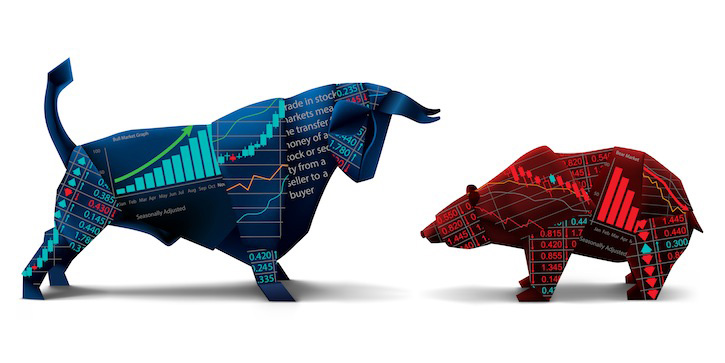
It’s Not Over Till the Fat Lady Goes on a P/E Diet
For the vast majority of investors, portfolio returns are generated by the equity markets or at a minimum heavily influenced by the equity markets. We have enjoyed an almost six-year bull market run in the stock market, which has helped heal portfolios after the devastating market crash of the Great Recession. So much so that many prominent market analysts have proclaimed the beginning of a new secular bull market. If we have indeed entered such a new phase, we need to recognize it for what it is, because – as I’ve written for 17 years – the style of investing that is appropriate for a secular bull market is almost the exact opposite of what is appropriate for a secular bear market. I think that most analysts would agree with that last statement. The disagreements would revolve around whether we are in a secular bull or a secular bear market.

July 3, 2015
A Week of Unseen Things
“In the economic sphere an act, a habit, an institution, a law produces not only one effect, but a series of effects. Of these effects, the first alone is immediate; it appears simultaneously with its cause; it is seen. The other effects emerge only subsequently; they are not seen; we are fortunate if we foresee them. “There is only one difference between a bad economist and a good one: the bad economist confines himself to the visible effect; the good economist takes into account both the effect that can be seen and those effects that must be foreseen. “Yet this difference is tremendous; for it almost always happens that when the immediate consequence is favorable, the later consequences are disastrous, and vice versa. Whence it follows that the bad economist pursues a small present good that will be followed by a great evil to come, while the good economist pursues a great good to come, at the risk of a small present evil.” – From an essay by Frédéric Bastiat, “That Which Is Seen and That Which Is Unseen,” 1850

June 26, 2015
Shoot the Dog and Sell the Farm
“If this were a marriage, the lawyers would be circling.” The Economist, My Big Fat Greek Divorce, 6/20/2015 Greece is again all the buzz in the media and on the commentary circuit. If you’re like me, you are suffering terminal Greece fatigue. You just want Greece and its creditors to “do something already” rather than continually coming to the end of every week with no resolution, amid finger-pointing and dire warnings from all sides about the End of All Things Europe – maybe even the world.


June 13, 2015
The People’s Republic of Debt
It wasn’t that many centuries ago that China was the absolute economic center of the world. That center gravitated to Europe and then towards North America and has now begun moving back to China. My colleague Jawad Mian provided this chart showing the evolution of Earth’s economic center of gravity from 2000 years ago to a few years and into the future:
- Page 48
Free Financial Newsletter
Thoughts from the Frontline explores developments overlooked by mainstream news and analyzes challenges and opportunities on the horizon.
The newsletter began as John’s way of sharing his thoughts with a few associates. Two decades later, it is one of the most widely read investment newsletters in the world. From his warning of an impending recession in 2000, to a polemic on the Obamacare “death spiral” in 2016, John has blazed his own trail as one of the most respected macroeconomic minds in the field.
"Central bankers, businessmen, and investors continually try to beat History to a pulp, but History always wins the final rounds."
John Mauldin, Thoughts from the Frontline, 2001.



John Mauldin
Editor, Thoughts from the Frontline
When investors, financial professionals, and discerning citizens need a big-picture view of what's going on in the economy, they turn to John Mauldin.
And for good reason. John has dedicated more than 30 years to keeping people informed about financial risk.