

Thoughts from the Frontline
Follow John Mauldin as he uncovers the truth behind, and beyond, the financial headlines. This in-depth weekly dispatch helps you understand what's happening in the economy and navigate the markets with confidence.
Let John guide you through this decade of disruption
John Mauldin's Thoughts from the Frontline
Free in your inbox every Saturday
By opting in you are also consenting to receive Mauldin Economics' marketing emails. You can opt-out from these at any time. Privacy Policy
Latest Articles

August 24, 2013
France: On the Edge of the Periphery
"The emotional side of me tends to imagine France, like the princess in the fairy stories or the Madonna in the frescoes, as dedicated to an exalted and exceptional destiny. Instinctively I have the feeling that Providence has created her either for complete successes or for exemplary misfortunes. Our country, as it is, surrounded by the others as they are, must aim high and hold itself straight, on pain of mortal danger. In short, to my mind, France cannot be France without greatness. – Charles de Gaulle, from his memoirs Recently there have been a spate of horrific train wrecks in the news. Almost inevitably we find out there was human error involved. Almost four years ago I began writing about the coming train wreck that was Europe and specifically Greece. It was clear from the numbers that Greece would have to default, and I thought at the time that Portugal would not be too far behind. Spain and Italy clearly needed massive restructuring. Part of the problem I highlighted was the significant imbalance between exports and imports in all of the above countries. In the Eurozone there was no mechanism by which exchange rates could be used to balance the labor-cost differentials between the peripheral countries and those of the northern tier. And then there's France. I've been writing in this space for some time that France has the potential to become the next Greece. I've spent a good deal of time this past month reviewing the European situation, and I'm more convinced than ever that France is on its way to becoming the most significant economic train wreck in Europe within the next few years. We shifted focus at the beginning of the year to Japan because of the real crisis that is brewing there. Over the next few months I will begin to refocus on Europe as that train threatens to go off the track again. And true to form, this wreck will be entirely due to human error, coupled with a large dollop of hubris. This week we will take a brief look at the problems developing in Europe and then do a series of in-depth dives between now and the beginning of winter. The coming European crisis will not show up next week but will start playing in a movie theater near you sometime next year. Today's letter will close with a little speculation on how the developing conflict between France and Germany and the rest of its euro neighbors will play out.

August 16, 2013
Signs of the Top
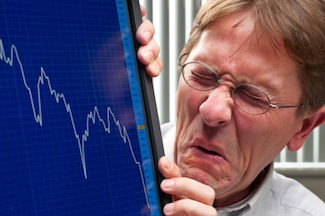
The investment media seems obsessed with the question of whether the Fed will taper. The real question should be not about "tapering" but about credibility. What happens when fundamentals become the narrative as opposed to what the central bank is doing? What happens if the Federal Reserve throws a liquidity party and nobody comes? Today we look at some of the fundamentals. The market is in fact overvalued, but that doesn't mean it can't become more overvalued. Is this August 1987 or August 1999? Before we delve into that question, let me fix a problem. Last week I mentioned a great strategy paper authored by my good friend Jon Sundt, President and CEO of Altegris. I failed to include the link. Here is the link. I encourage anyone who is looking to diversify into alternative investments to read it.
August 9, 2013
We Can’t Take the Chance
What would it have been like to be in the decision-maker's seat at a central bank in the midst of the crisis in 2008-09? You'd know that you won't have the luxury of going back and making better decisions five years later. Instead, you have to act on the torrent of information that's coming at you from every quarter, and none of it is good. Major banks are literally collapsing, the interbank market is almost nonexistent, and there is panic in the air. Perhaps you feel that panic in the pit of your stomach. This week we'll perform a little thought experiment to see if we can extrapolate what is likely to happen in when the next crisis kicks in. This week's letter was triggered by a semiformal debate in Maine last week. David Kotok assembled about 50 economists, financial analysts, money managers, and media personalities to share a few days of fabulous food, what turned out to be great fishing, and awesome conversation. There were more Federal Reserve economists this year than in the past, as well as more attendees with the title "Chief Economist" on their business cards, many from large institutional names you would recognize. This was my seventh year to attend "Camp Kotok." David really did a marvelous job of bringing a diverse group of thinkers together, and I think everyone agreed this was the best conference ever. I learned a lot. Before we get into the letter, a little side note. Luciana Lopez from Reuters attended for the first time this year and wanted to do interviews. David asked me if I would take her out on the lake in our boat, since most of the other attendees went out in small canoes. Trey and I were glad to share our space. While we were out fishing, she asked if she could interview me. I said "Sure" and waited for her to bring out her recorder. She pulled out an iPhone 5 and started asking questions. Not the usual studio setting I am used to. I had serious trepidations about how this was going to look on-screen. She sent a link to her edited interviews last Monday, and I have to admit I was impressed at what she could do with a simple iPhone 5. I am supposed to be on top of a changing world, but sometimes these things still take me by surprise. I make no representations about the quality of the content of the interviews, at least my portion of them, but the phone is another matter. And in a few years this will be a $100 consumer item. In her interviews, Luciana asked two questions: "When will the Fed start to taper?" and "Who will be the next Fed chair?" You can see some of our answers at reut.rs/13if7Er and reut.rs/13gegE8.
August 2, 2013
Can It Get Any Better Than This?
What in the world is going on?! As I write this letter from the Maine woods, the S&P 500 has just cleared 1,700 for the first time. The German DAX continues to set all-time highs above 8,400. The United Kingdom’s FTSE 100 is quickly approaching its 1999 record high of 6,930, and its mid-cap cousin, the FTSE 250, just broke through to its all-time level above 15,000. And last but not least, Japan’s Nikkei 225 is extending its gains once more, toward 14,500. This weekend I am sitting around with some of the smartest economic and trading minds in the country. At Leen's Lodge, where we're fishing and eating where our phones don’t work, the question on our minds is, how long can this run go on? The debates can get intense in a room full of strong opinions. So, with a little help, I did some research on what our forward-looking prospects are for the markets. Let me take this opportunity to introduce a new name to readers, one that will become familiar over the next few years. I have gotten to know Worth Wray, a young economist (though I should say that, as I stare 64 in the face, a lot of people are looking young these days) who has really impressed me with the breadth of his knowledge and insights. He was the former portfolio strategist for my good friends at Salient down in Houston, and they were kind enough to let me entice him to come to Dallas to work with me. This is a big move for both of us, and I am finding that it's one I should have undertaken a long time ago. Worth is really going to help me expand my abilities to do research and present my thoughts to you. I asked him a few questions, and he helped me tee up this week’s letter. Plus, we'll look across the Pacific, and I'll share some thoughts I’ve had about an interesting black swan that could be developing in the Korean Peninsula. Let’s get started!

July 26, 2013
A Lost Generation
It is pretty well established that a tax increase, especially an income tax increase, will have an immediate negative effect on the economy, with a multiplier of between 1 and 3 depending upon whose research you accept. As far as I am aware, no peer-reviewed study exists that concludes there will be no negative effects. The US economy is soft; employment growth is weak – and yet we are about to see a significant middle-class tax increase, albeit a stealth one, passed by the current administration. I will acknowledge that dealing a blow to the economy was not the actual plan, but that is what is happening in the real world where you and I live. This week we will briefly look at why weak consumer spending is going to become an even greater problem in the coming years, and we will continue to look at some disturbing trends in employment. Last week, I noted at the beginning of the letter that an unintended consequence of Obamacare is a rather dramatic rise in the number of temporary versus full-time jobs. This trend results from employers having to pay for the health insurance of employees who work more than 29 hours a week. I quoted Mort Zuckerman, who wrote in the Wall Street Journal: The jobless nature of the recovery is particularly unsettling. In June, the government's Household Survey reported that since the start of the year, the number of people with jobs increased by 753,000 – but there are jobs and then there are "jobs." No fewer than 557,000 of these positions were only part-time. The June survey reported that in June full-time jobs declined by 240,000, while part-time jobs soared 360,000 and have now reached an all-time high of 28,059,000 – three million more part-time positions than when the recession began at the end of 2007. That's just for starters. The survey includes part-time workers who want full-time work but can't get it, as well as those who want to work but have stopped looking. That puts the real unemployment rate for June at 14.3%, up from 13.8% in May. As it turns out, the unintended consequences of Obamacare are not the only problem. Charles Gave wrote a withering indictment of quantitative easing this week (which we will look at in a few pages) and included the following chart, which caught my eye. Note that the relative increase in part-time jobs began prior to Obama's even assuming office. The redefinition of part-time as less than 29 hours a week and the new costs associated with full-time employment due to Obamacare simply accelerated a trend already set into motion.

July 20, 2013
Any Bonds Today?
By a continuing process of inflation, governments can confiscate, secretly and unobserved, an important part of the wealth of their citizens. By this method, they not only confiscate, but they confiscate arbitrarily; and, while the process impoverishes many, it actually enriches some. The sight of this arbitrary rearrangement of riches strikes not only at security, but at confidence in the equity of the existing distribution of wealth. Those to whom the system brings windfalls . . . become 'profiteers', who are the object of the hatred of the bourgeoisie, whom the inflationism has impoverished not less than the proletariat. As the inflation proceeds . . . all permanent relations between debtors and creditors, which form the ultimate foundation of capitalism, become so utterly disordered as to be almost meaningless…. – John Maynard Keynes One of the more frequent and important questions I get asked when I travel is whether I think we will see inflation or deflation. My usual flippant answer is "Yes," and then I go on to explain that there is no simple answer. Over what time period? In what country? And by what means do you want me to measure inflation or deflation? Today we take a look at part of a white paper I am working on with Jonathan Tepper, the co-author of Endgame, on this topic. I think you will find it interesting reading on a summer's day. And I have to quickly mention the absolute disaster that is happening before our eyes in the labor market. Our kids are getting skewered (the polite word) by unintended consequences of the Affordable Care Act. We need a bipartisan fix quick, before we damage an entire generation. But first, let me call your attention to a dynamite conference at which I'll be speaking in October. It's "3 Days with Casey," the Casey Research Summit for 2013, to be held October 4-7 in Tuscon, Arizona. In addition to the indomitable, incredible Doug Casey, my friends Ron Paul, Lacy Hunt, Rick Rule, and Don Coxe will all stand and deliver, along with a bunch of other outstanding speakers, including Jim Rickards (author of Currency Wars), Paul Brodsky (I love this guy's stuff!), and Chris Martenson (author of The Crash Course). And of course you get the whole Casey research team. Thoughts from the Frontline readers can get a special early bird discount here. Come help me celebrate my 64th birthday!
July 12, 2013
The Bang! Moment Shock
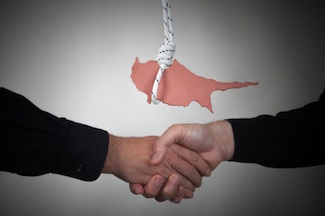
Future shock is the shattering stress and disorientation that we induce in individuals by subjecting them to too much change in too short a time. – Alvin Toffler What is it about humans that we fail to see a crisis in advance, yet when we look back, its likelihood or inevitability so often seems blindingly obvious? Rather than a flaw, our under-reliance on foresight as opposed to hindsight is perhaps a necessary evolutionary design feature that has allowed us to make rapid progress as a species (especially over the last few thousand years), but in a complex modern society it can really create quite the crisis for individuals. This week we resume our musings about Cyprus, to see what that tiny island can teach us about our own personal need to engage in ongoing critical analysis of our lives and investment portfolios. Cyprus is not Greece or France or Spain or Japan or the US or … (pick a country). I get that. No two situations are the same, but there may be a rhyme or two here that is instructive.

July 4, 2013
A Venture Investor from Bell Labs Channels the Noise and the Knowledge
Investors seek that elusive substance called alpha. It is too often remains hidden from them, and instead they find some form of beta, or simply what the market gives everyone. Sometimes, in secular bull markets, that can be plenty and investors feel secure. But in the secular bear cycles investing is a difficult task and one that at the end of the day may find you distressingly close to where you started. Beta, alternative beta (often trying to pass as alpha), and true alpha are the only real sources of returns. Today I am somewhat under the weather and unable to produce an issue of Thoughts from the Frontline, but I will offer you the following fascinating essay, sent to me by my good friend Andy Kessler. Our mutual friend George Gilder has written a powerful new book called Knowledge and Power, and he asked Andy to hammer out in his wordsmithy a foreword, which he has done to perfection. Alpha is found on the edges, away from common knowledge. Andy sees it in new technologies, and it can surely be found there, although there are different risks at the edge. But there are other sources of alpha, which can be found not by looking at what has happened but at what is likely to happen, not just in technology but in markets and the actions and reactions of those who would try to move markets. But for today, let's just look at Andy's essay and enjoy our weekends.
June 29, 2013
“This Country Is Different”
Panics do not destroy capital; they merely reveal the extent to which it has been destroyed by its betrayal into hopelessly unproductive works. – John Mills, "On Credit Cycles and the Origin of Commercial Panics," 1867 Hyman Minsky developed an economics of financial instability, of instability bred by stability itself…. Minsky's approach, very different from Godley's, is conceptual rather than statistical. A key virtue is that it puts finance at the center of economic analysis, analytically inseparable from what is sometimes called real economic activity, for the simple reason that capitalistic economies are run by banks. To grasp what Minsky is about, it seems to me, is to go immediately beyond the coarse notion of the 'Minsky moment,' a concept which implies falsely that there are also non-Minsky moments. It is to recognize that the financial system is both necessary and dangerous, that strict financial regulation is both indispensable and imperfect. – James Galbraith, 5th annual Dijon conference on post-Keynesian economics, Copenhagen, May 2011 I find myself finishing this letter on an island off the coast of Croatia, on the backside of the middle of nowhere. But it is the perfect place to contemplate my recent experience in Cyprus. Through the efforts of your fellow readers, I was able to meet a wide variety of people and have some in-depth discussions on the crisis that has enveloped Cyprus. And while the details are different, of course, there is a pattern to the weave, so to speak, that calls to mind various aspects of the crisis that began in 2008. And perhaps that pattern will give us a glimpse of what else may be coming our way. You must first realize that Cyprus is a very small country, some 800,000 people. Among the leadership, everyone knows everyone. There is much to admire, as we will see. But Cyprus has had a gut-wrenching crisis, proportionately more dire than any in other European countries recently; and precedents are being established here for how future problems will be dealt with in the Eurozone and elsewhere. To start a two-day marathon of meetings, I sat down Tuesday morning with two brothers, Symeon and Andreas Matsis. Symeon was until a few weeks ago a board member of the Bank of Cyprus, the largest bank on the island and now the focus of the financial crisis. He made his career in the governmental sector, where he was the general manager of the Planning Bureau of the Ministry of Finance. Andreas Matsis is a local businessman who until a few weeks ago sat on the board of the Central Bank of Cyprus. He is a successful entrepreneur who was also until recently the president of one of the local chambers of commerce. They are both in their early 70s, soft-spoken and totally engaging and forthcoming. Our one-hour meeting stretched to two hours. Symeon carried a copy of This Time Is Different by Rogoff and Reinhart. It was dog-eared and full of notes. "I am reading it so I can try to understand what happened to us. The more I read the more I understand that they were describing Cyprus. And we did think that 'This country is different.' Which is why the crisis has been such a shock to our local culture." And such a shock. The next evening, I dined with a group of families, eating the local version of Greek cuisine, course after course after course. While they were all severely financially distressed, to a person they believed that Cyprus would come back, and they offered reasons why one should still do business is Cyprus. They were not sure what they would do, as their livelihoods were in danger, yet they faced the future with the strong resolve to figure it out. "Our parents lost everything in 1974 (when Turkey invaded the north portion of the island) and then came here and built a good new life. We can do this." One of the women at dinner was a charming lady who had retired in January after a career at the Bank of Cyprus. Note this was less than three months before the crisis in mid-March. She had her entire pension and life savings in the Bank of Cyprus, which she totally trusted. And now it looks like she will lose at least 60% of those savings. It could have been worse. She could have been at Laiki Bank. There the losses may be 100%. The country has instituted capital controls, and she has access to only about 10% of her savings. At some point she will get all the remaining money but cannot move it out of the country until the capital controls are released. "If you could get it today, would you leave it in the bank?" I asked. She looked down and said quietly, "No, I would have to move it. I have children that will need that money for going to college abroad and then for help in buying homes. I can't take the risk that the money will not be there." She pointed to one of the unique and positive features of Cyprus. Until recently, there was no university on the island. Everyone went abroad to college, typically then staying on in the country where they were educated and getting work experience before returning with skills and contacts. Cyprus is a country of accountants and lawyers, engineers, and other professionals. The Bank of Cyprus made about 40% of the loans extended to businesses in Cyprus. It is now out of business itself. There are some solvent banks with available funds, but they can't make loans, because if capital controls are lifted, it is likely that a significant number of Cypriots would, like the lady mentioned above, move their money. There's no question that money will fly out of the country if trust is not first restored. But with no available bank financing, in addition to capital controls, businesses are closing up left and right. Unemployment, which was basically unknown before, now stands at 15% and is likely to go to 20%. If there is no functioning banking system for new loans, that makes doing business very difficult; and buying and selling property, outside of the cash market, is at a standstill. But which will arrive first? Trust and a new beginning or capital flight and a long nightmare? It is a chicken and egg sort of problem with no easy answer, and one which I will attempt to bring some thought to later.

June 20, 2013
Austerity is a Four-Letter French Word
The France that I see as I look out from the bullet train today is far different from the France I see when I survey the economic data. Going from Marseilles to Paris, the countryside is magnificent. The farms are laid out as if by a landscape artist – this is not the hurly-burly no-nonsense look of the Texas landscape. The mountains and forests that we glide through are glorious. It is a weekend of special music all over France, and last night in Marseilles the stages were alive and the crowds out in force. The French people smile and graciously correct my pidgin attempts at speaking French. I have found it diplomatic not to mention that I think France is in for a very difficult future. Why spoil the party? But for you, gentle reader, I will survey the economic landscape that I see on my computer screen. It shows a far different France from the one outside my window, one that resembles its peripheral southern neighbors far more than its neighbors to the north and east. The picture is not all bad, of course. There is always much to admire and love about France. But there are a lot of hard political choices to be made and much reform to be undertaken if this beautiful country is to remain La Belle France and not become the sick man of Europe. This week, in what I think will be a short letter, we'll look at a few of the problems facing France.

June 14, 2013
Economists Are (Still) Clueless
Economists set themselves too easy, too useless a task if in tempestuous seasons they can only tell us that when the storm is past the ocean is flat again. - John Maynard Keynes, A Tract on Monetary Reform There can be few fields of human endeavor in which history counts for so little as in the world of finance. Past experience, to the extent that it is part of memory at all, is dismissed as the primitive refuge of those who do not have insight to appreciate the incredible wonders of the present. - John Kenneth Galbraith Hitler must have been rather loosely educated, not having learned the lesson of Napoleon's autumn advance on Moscow. - Sir Winston Churchill US GDP has been slowly ramping up, only to fall back and then try once more to bring us back to the '90s. Stocks markets are volatile but seemingly moving higher in most of the developed world, except for Japan, where the current 20% drop comes hard on the heels of one of their frequent "end of the bear market forever" rallies of almost 90% – how many of those have we seen over the last 24 years? Europe is mostly in recession or Muddling Through with very slow growth. I continue to read from those who know China intimately that there is a real crisis brewing there. And over the last four weeks I have highlighted how desperate the situation is in Japan. The main obsession in the US seems to be whether and when the Fed may stop its current round of massive QE. Every hint of "tapering" spurs volatility in the markets. If you are a forex (foreign exchange) trader, you are left breathless at the recent moves, sometimes a whole order of magnitude (10 times) larger than average. Get used to it: currency wars are likely to be a feature of the landscape for the rest of this decade. (My friend Mohamed El-Erian, CEO of PIMCO, corrected me on stage recently, telling me the polite term du jour is "currency tensions." And compared to what I think is coming, we really are just in the tension phase. Later we will get to skirmishes and then full-fledged currency combat.) At the same time, there are some things to be sanguine about, at least in the US. Corporate profits are at all-time highs. The housing market is finally doing well in most parts of the country, adding jobs and boosting GDP. We continue to find more oil and gas seemingly everywhere we look. There are no political races this summer to spoil the mood, since it's too early to for anyone to seriously run for president in 2016. The economic forecasts of mainstream economists are quite positive, if not enirely optimistic, reflecting the current data. Should we not take heart from that? Alas, no. I have been working the last few months with my co-author of Endgame, Jonathan Tepper, on a longer paper in which we discuss the economic affairs of the world. One of our pet amusements is to research just how bad economists really are at forecasting. (Of course, we ourselves get branded with that economist label from time to time, although most serious economists would rather not be associated with us.) This week we look at some of our recent musings on that topic, triggered by a letter from a very serious economist who took umbrage when I wrote disparagingly about economists and forecasting a couple months ago.

June 7, 2013
Banzai! Banzai! Banzai!
I shot an Arrow into the air It fell to earth I know not where…. Henry Wadsworth Longfellow As kids, not knowing that we were being politically incorrect on so many levels, we would shout “Geronimo!” when we were playing war or getting ready to do something reckless. (For those not familiar, Geronimo was a rather fearsome Apache chief who plagued Mexico and the American cavalry.) Sam Houston and his fellows cried, “Remember the Alamo!” as they rode down upon Santa Ana at San Jacinto. The British went to battle with “God Save the Queen [or King]!” Confederate soldiers took up the rebel yell as they charged live bullets and fixed bayonets. Every good war movie has its own memorable moment of the battle charge. In Japan, the term Banzai! literally means “ten thousand years” and can be used to wish someone long life and happiness. But during World War II, “Banzai!” was shouted in battle. It was the Japanese equivalent of "Long live the king!" – but to soldiers on the other side it came to mean a suicidal, hell-for-leather attack. If the central bankers of the world think they're hearing a battle cry of “Banzai!” from the lips of their Japanese brethren, they may not be far from wrong, because the Japanese are indeed on a mad charge to fight deflation at all costs. As with all good suicidal charges, at least in legend and lore, once the cry has gone up and the thundering charge has begun, there can be no turning back. For the last three weeks, I have been making what I personally think is a rather strong case that the Japanese have embarked on what may be simultaneously the most outrageous, intriguing, and desperate monetary policy experiment by a major economic power in history. (Those letters are here, here, and here). The Japanese are rapidly coming to their own Endgame, the end of their ability to borrow money at interest rates that are economically rational. If interest rates on Japanese bonds rise to a mere 2.2%, 80% of tax revenues will go just to pay the interest on their debt. At a 245% debt-to-GDP ratio, they are in desperate straits, and they know it. And desperate times call for desperate measures. To get to where they want to go, to grow their way out of their deflationary problem, the Japanese need both inflation and real growth. Real growth can come from massively increased exports, and inflation can even come from an increase in import prices. Both results can be obtained by weakening the yen. As I have shown, they need to devalue the yen by 15-20% a year for many years in order to break through to the other side. That should be easy, at least in theory. Inflation, Milton Friedman famously said, is “always and everywhere a monetary phenomenon.” If you want to create inflation and devalue your currency, just print more money. A second shift in the print shop is in order, and if that doesn’t produce the desired results a third shift can be arranged, and then you can run full tilt on weekends. And soon maybe it will be time to build another print shop. But that is the theory. In practice it may be harder for Japan to grow and generate inflation than it might be for other major nations. Today we'll focus on Japanese demographics. While the letter is full of graphs and charts, it does not paint a pretty picture. The forces of deflation will not go gently into that good night. But first, a couple of quick notes. At the end of the letter, there is a link for Mauldin Circle members to the first crop of videos from my recent Strategic Investment Conference (co-hosted with Altegris Investments). These videos highlight some of our most popular speakers, including Kyle Bass, Niall Ferguson, Mohamed El-Erian, Lacy Hunt, and David Rosenberg. The final batch of videos will be ready in a few weeks. (If you are already a member of the Mauldin Circle in the US, you should have been sent that link.) Second, yesterday in New York we taped our video webinar in which I was joined by John Hussman, Barry Ritholtz, Mohamed El-Erian, Kyle Bass, and David Rosenberg. It was quite a day, and you can join us (for free) when the event goes live on Tuesday at 2 PM EDT. Click right here to register. And now, let’s shout “Banzai!” together as we dive right into Japanese demographics.
- Page 56
Free Financial Newsletter
Thoughts from the Frontline explores developments overlooked by mainstream news and analyzes challenges and opportunities on the horizon.
The newsletter began as John’s way of sharing his thoughts with a few associates. Two decades later, it is one of the most widely read investment newsletters in the world. From his warning of an impending recession in 2000, to a polemic on the Obamacare “death spiral” in 2016, John has blazed his own trail as one of the most respected macroeconomic minds in the field.
"Central bankers, businessmen, and investors continually try to beat History to a pulp, but History always wins the final rounds."
John Mauldin, Thoughts from the Frontline, 2001.


John Mauldin
Editor, Thoughts from the Frontline
When investors, financial professionals, and discerning citizens need a big-picture view of what's going on in the economy, they turn to John Mauldin.
And for good reason. John has dedicated more than 30 years to keeping people informed about financial risk.