
Red Card, Overruled

Add paragraph text. Click “Edit Text” to update the font, size and more. To change and reuse text themes, go to Site Styles.
We’re talking the World Cup this week—yes, really—after the President of the United States called the head of FIFA and got a red card overturned. That’s not a sports story. It’s a sovereignty story about the rule of law, the reach of transnational power, and a White House willing to bend both.
Stay with me, because there’s no better litmus test for the health of national sovereignty—and the pride the average citizen takes in their flag—than an event like the Cup.
The Situation
Last Wednesday, the US men’s national soccer team (USMNT) advanced to the round of 16 of the World Cup by defeating Bosnia-Herzegovina. During the match, the US’s top goal scorer, Folarin Balogun, was given a controversial red card, which meant he was immediately kicked out (forcing the Americans to finish the game down a player) and suspended from the next match.
Within hours of the match’s conclusion, senior Trump administration officials engaged lawyers to appeal the suspension. Later that day, President Trump called the president of FIFA, Gianni Infantino, and asked him to review the suspension. On Sunday, FIFA reversed the decision—the first time since 1962 that a red card during a World Cup did not result in a suspension.
European soccer body UEFA expressed disbelief at such an “unprecedented, incomprehensible, and unjustifiable decision.” Belgium’s Coach said he would have his team ready no matter what (turns out, they were ready) but decried the US and FIFA as attacking more than just Belgium’s national team. It was also an attack on football’s (soccer’s) global “integrity and ethics.”
Rules Are Rules
First, I am no soccer expert. When I say football, I mean the pig-skinned variety. (Hail State!) I’m unqualified to weigh in on whether Balogun deserved the red card or not—and I don’t intend to. But that is also not the way rules work. When the NBA suspended Amar’e Stoudemire and Boris Diaw in the 2007 NBA Western Conference Semifinals for stepping off the bench after an opposing player delivered a dirty forearm shiver to the Suns’ best player, Steve Nash, it did not matter whether the suspension was fair or not. The rule was that leaving the bench meant a suspension, and so they were suspended, the Suns lost their best chance at winning the NBA Finals, and that was that.
The US is a society built on the rule of law. That means laws are not changed because they are inconvenient or unfair; they are enforced until lawmakers decide they shouldn’t be. Now, FIFA is no paragon of virtue. But that a sitting president would strong-arm it into breaking its own rules? That’s a shocking bit of bravado, even for this White House.
Wait… Does Anyone Care?
The president’s sudden interest in the USMNT is strange on the surface. Americans also just don’t care that much about soccer. According to a May 2026 YouGov poll, just 29% of Americans say they were interested in the 2026 World Cup—68% said they weren’t. Of those interested, only half said they will watch World Cup matches… when they can.

I have only anecdotal data for this, but I can tell you there’s not a lot of soccer interest out there. When I canvass my conservative friends, they are by and large as blasé about the World Cup as my liberal friends have been obsessed.
Triumph of the Nation-State
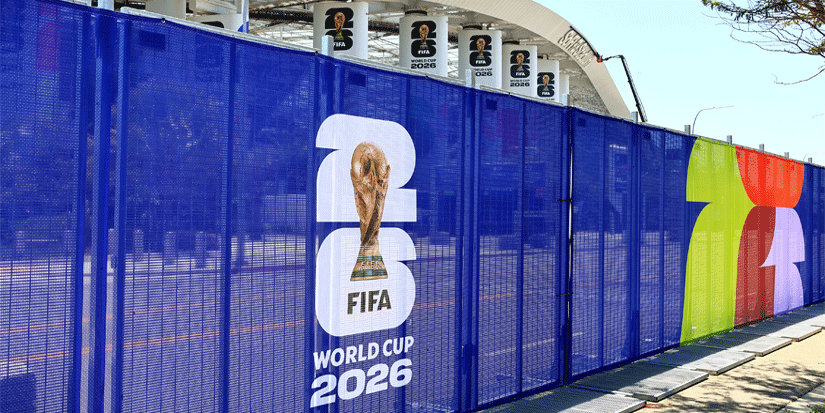
Overall, though, the North American 2026 World Cup has been a phenomenal success thus far. The expanded group stage, combined with the introduction of a new knockout Round of 32, increased the match total from 64 to 104. FIFA’s self-stated goal has been to maximize commercial returns by leveraging the world’s most developed sports and entertainment market, with tournament revenues expected to approach $11 billion, up ~32% from the 2022 Qatar World Cup.
Despite the overt commercialization, the tournament has yielded incredible sports moments. Cape Verde, an archipelago of ~500,000, took 2022 champion Argentina to the wire in the round of 32. A modern-day David vs. Goliath. Then England, a man down in Mexico City, held off wave after wave of a desperate Mexico for 35+ adrenaline-soaked minutes—one of the grittiest efforts I’ve ever watched. And Norway reached its first-ever quarterfinal on the back of Erling Haaland, who is essentially a modern-day Viking. In a year of stories about war, earthquakes, searing temperatures, and AI coming to replace us all, the World Cup has been a haven—a testament to the capacity of the human spirit.
It also supports one of the Trump administration’s deepest foreign policy priorities, namely that “the world’s fundamental political unit is and will remain the nation-state.” In his administration’s 2025 National Security Strategy, President Trump described the US as:
…standing for the sovereign right of nations, against the sovereignty-sapping incursions of the most intrusive transnational organizations, and for reforming those institutions so that they assist rather than hinder individual sovereignty and further American interests.
From a certain POV, that is exactly what the president did when he called FIFA’s president to get Balogun’s red card overturned. FIFA is the transnational organization. Balogun’s reinstatement is America’s interests. And all those criticizing the US for wielding its power this way are confessing their own weakness to defend their own interests.
Bottom line: The World Cup is a pure expression of the joy of national self-determination. There is no EU or UN squad; this is a contest between and among the best in the world’s respective nations, and it brings the citizens of those nations together not in fear, war, or calamity but in peace. It has been a welcome respite from most of the news flow this year.
The Deeper Story
It’s possible to over-index on President Trump preening over his ability to influence a FIFA decision, or on the Eurocentric nature of soccer as a sport, or FIFA’s less-than-savory institutional make-up. It is even possible to compare such events to ancient Roman gladiatorial combat—the bread and circuses as its empire slowly crumbled from within.
But I would submit the deeper story behind this World Cup is that it has brought together hundreds of millions (perhaps billions?) of people. It is a reminder that we share far more in common with each other than our politics and our governments and our political leaders would have us think. And it is a testament to the power individuals retain when united in common experience and purpose, for better and for worse.
One might even go so far as to say that as long as the World Cup is happening, the world isn’t ending. Truer words were never typed.
Map/Chart of the Week
Hear that sound? It’s the sound of Teutonic knights marching in the forest, of Panzer divisions revving up for battle.

Blind Spot
A record “El Niño” is upon us. According to NOAA, El Niño is a climate pattern characterized by unusually warm ocean surface temperatures in the central and eastern tropical Pacific Ocean. During this phase, typical east-to-west trade winds weaken, allowing warm water to pool toward the Americas and causing significant shifts in global weather. El Niños also lead to higher temperatures globally. Before this year, the strongest El Niño on record was during 1877–1878, which led to a global famine that killed more than 50 million people, or about 3–4% of the estimated global population.
Europe is sweltering. France alone recorded over 2,000 deaths during a heatwave at the end of June, and forecasters expect more hot weather to come. Super Typhoon just finished lashing the Northern Mariana Islands and Guam, and by the time you read this will likely have hit Taiwan and parts of southern China. Wildfires have consumed swathes of Southern Europe, as thousands have had to leave their homes. Temperatures are surging in the Indian subcontinent, where a recent study suggested that extreme heat days could lead to 3,000 deaths per day in that country. Aside from the human toll, global agriculture will be deeply impacted, on top of the fertilizer disruptions from the Iran-US war.
I will have some more fully formed thoughts on the relationship between higher temperatures, geopolitics, and investing in the coming months. But for now, it suffices to say that a super El Niño is increasingly certain, and it doesn’t really matter where it sets a record or not. We should be bracing for more extreme weather throughout the duration… and demand for technology to control temperatures to increase accordingly.
Reader Question

Finally…
What I’m watching: The World Cup
What I’m reading: The Most Important of All Unimportant Forecasts: 2026 World Cup, from my friends at BCA Research
What I’m listening to: Fortress, Sister Hazel

Jacob Shapiro
Read important disclosures here.
YOUR USE OF THESE MATERIALS IS SUBJECT TO THE TERMS OF THESE DISCLOSURES.
Put Mauldin Economics to work in your portfolio. Your financial journey is unique, and so are your needs. That's why we suggest the following options to suit your preferences:
-
John’s curated thoughts: John Mauldin and editor Patrick Watson share the best research notes and reports of the week, along with a summary of key takeaways. In a world awash with information, John and Patrick help you find the most important insights of the week, from our network of economists and analysts. Read by over 7,500 members. See the full details here.
-
Invest in longevity: Transformative Age delivers proven ways to extend your healthy lifespan, and helps you invest in the world’s most cutting-edge health and biotech companies. See more here.
-
Macro investing: Our flagship investment research service is led by Mauldin Economics partner Ed D’Agostino. His thematic approach to investing gives you a portfolio that will benefit from the economy’s most exciting trends—before they are well known. Go here to learn more about Macro Advantage.
Recent Articles
The War on Grain
October 22, 2026
Singing the Songs of Low-Priced Bonds
October 15, 2026
Brazil’s Turn to the Right
October 8, 2026
China Is Building What Nature Gifted the US
October 1, 2026
Trading Russia for Canada
September 24, 2026
Can Anyone Bring the Houthis to Heel?
September 17, 2026
New from Jacob Shapiro × Mauldin Economics…
The World Isn't Ending
Geopolitics, translated for investors
The headlines say the world is going to hell in a handbasket. The reality is that it’s just being rearranged —and that there is opportunity amid the chaos. Join Jacob Shapiro every Thursday as he translates complex global power shifts into actionable intelligence for your portfolio.
Join thousands of investors who refuse to watch the world from a fetal position.
By opting in you are also consenting to receive Mauldin Economics' marketing emails. You can opt-out from these at any time. Privacy Policy
Nice to hear from another Bulldog. Hail State.
Something I haven't heard enough about, related to your image of the German spending: that big chunk of infrastructure expansion. What is the story there? What are they doing with that money? In general, I tend to look at infrastructure investments as positive long-term plays. So I'm curious.