

Thoughts from the Frontline
Follow John Mauldin as he uncovers the truth behind, and beyond, the financial headlines. This in-depth weekly dispatch helps you understand what's happening in the economy and navigate the markets with confidence.
Let John guide you through this decade of disruption
John Mauldin's Thoughts from the Frontline
Free in your inbox every Saturday
By opting in you are also consenting to receive Mauldin Economics' marketing emails. You can opt-out from these at any time. Privacy Policy
Latest Articles
August 3, 2017
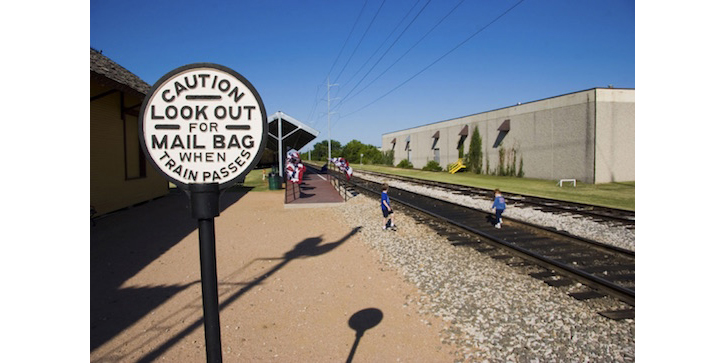
Hot Summer Mailbag
Perhaps the best part of being a writer is the chance to interact with readers. I can’t tell you how much I’ve learned from you over the years. Whether it’s through our online comment threads or emails or conversations in the hallway at a conference, nothing pleases me more than to share thoughts with you. The exchanges are always stimulating, even when we disagree. Believe it or not, I make a special point to read those who disagree with me if they come armed with cogent thoughts. And I will admit to changing my mind at times. Or at least softening my position. I know many of you think I have too much going on to take time to read your comments, but I make it a priority.

July 28, 2017
Happiness Is a Normal Yield Curve
“I never liked quantitative easing. Flattening the yield curve is not stimulative; flattening the yield curve is anti-stimulative.” – Ken Fisher “There is a limit to how much the United States Treasury can borrow.” – Alan Greenspan “In other words, we have the models we have because of inertia and theology, but also because all we can do is all we can do.” – Kit Webster “[T]he specific manner by which prices collapsed is not the most important problem: A crash occurs because the market has entered an unstable phase, and any small disturbance or process may have triggered the instability. Think of a ruler held up vertically on your finger: This very unstable position will lead eventually to its collapse, as a result of a small (or an absence of adequate) motion of your hand or due to any tiny whiff of air. The collapse is fundamentally due to the unstable position; the instantaneous cause of the collapse is secondary.” – Didier Sornette, French geophysicist
July 21, 2017
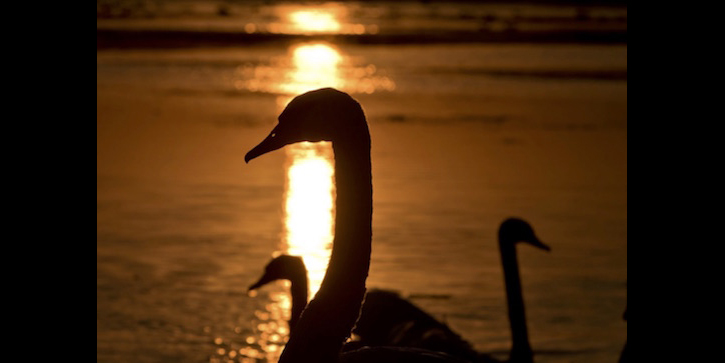
Three Black Swans
“The world in which we live has an increasing number of feedback loops, causing events to be the cause of more events (say, people buy a book because other people bought it), thus generating snowballs and arbitrary and unpredictable planet-wide winner-take-all effects.” – Nassim Nicholas Taleb, The Black Swan


July 8, 2017
Prepare for Turbulence
“The job of the central bank is to worry.” – Alice Rivlin “The central bank needs to be able to make policy without short-term political concerns.” – Ben Bernanke “… from the standpoint of the overall economy, my bottom line is we’re watching it closely but it appears to be contained. – Ben Bernanke, repeatedly, in 2007 “Would I say there will never, ever be another financial crisis? You know, probably that would be going too far, but I do think we’re much safer, and I hope that it will not be in our lifetimes, and I don’t believe it will be.” – Janet Yellen, June 27, 2017 “My good friends, for the second time in our history, a British Prime Minister has returned from Germany bringing peace with honor. I believe it is ‘peace for our time.’ Go home and get a nice quiet sleep.” – Neville Chamberlain, September 30, 1938




June 2, 2017
Can You Afford to Reach 100?
“I often joke that 100 years from now I hope people are saying, ‘Dang, she looks good for her age!’” – Dolly Parton “Just because you live 20 years or 100 years doesn’t make it less meaningful. They’re both short amounts of time. So all we can do is just live in that time, whatever time we’re given.” – Ansel Elgort “If I had more time, I would have written a shorter letter.” – Blaise Pascal, 1657 (and a few score other later attributions)


May 21, 2017
The Great Reset: How Should We Then Invest?
“A speculator is one who runs risks of which he is aware, and an investor is one who runs risks of which he is unaware.” – John Maynard Keynes “The biggest mistake investors make is to believe that what happened in the recent past is likely to persist. They assume that something that was a good investment in the recent past is still a good investment. Typically, high past returns simply imply that an asset has become more expensive and is a poorer, not better, investment.” – Ray Dalio, founder, Bridgewater Associates, LP
- Page 40
Free Financial Newsletter
Thoughts from the Frontline explores developments overlooked by mainstream news and analyzes challenges and opportunities on the horizon.
The newsletter began as John’s way of sharing his thoughts with a few associates. Two decades later, it is one of the most widely read investment newsletters in the world. From his warning of an impending recession in 2000, to a polemic on the Obamacare “death spiral” in 2016, John has blazed his own trail as one of the most respected macroeconomic minds in the field.
"Central bankers, businessmen, and investors continually try to beat History to a pulp, but History always wins the final rounds."
John Mauldin, Thoughts from the Frontline, 2001.



John Mauldin
Editor, Thoughts from the Frontline
When investors, financial professionals, and discerning citizens need a big-picture view of what's going on in the economy, they turn to John Mauldin.
And for good reason. John has dedicated more than 30 years to keeping people informed about financial risk.