

Thoughts from the Frontline
Follow John Mauldin as he uncovers the truth behind, and beyond, the financial headlines. This in-depth weekly dispatch helps you understand what's happening in the economy and navigate the markets with confidence.
Let John guide you through this decade of disruption
John Mauldin's Thoughts from the Frontline
Free in your inbox every Saturday
By opting in you are also consenting to receive Mauldin Economics' marketing emails. You can opt-out from these at any time. Privacy Policy
Latest Articles

June 5, 2015
Cleaning Out the Attic
Three weeks ago I co-authored an op-ed for the Investor’s Business Daily with Stephen Moore, founder of the Club for Growth and former Wall Street Journal editorial board member, currently working with the Heritage Foundation. Our goal was to present a simple outline of the policies we need to pursue as a country in order to get us back to 3–4% annual GDP growth. As we note in the op-ed, Stephen and I have been engaging with a number of presidential candidates and with other economists around the topic of growth.


May 15, 2015
Secular Versus Cyclical: Notes from SIC 2015
The consensus I’m hearing and reading from the 500+ attendees at the recent Strategic Investment Conference is that this was the best ever. It was certainly intense, with more divergent views presented this year than at previous conferences. Plus, the range of topics was rather dramatic. This year I was able to listen to all but one of the presentations, and I want to share with you my notes and takeaway thoughts. (In addition to my own notes as a source for this letter, my associate Pat Watson sent me his notes, as well as links to a summary by attendees Chris Bailey and my good friend Steve Blumenthal. I borrow freely.)

April 25, 2015
The Third and Final Transformation of Monetary Policy
The law of unintended consequences is becoming ever more prominent in the economic sphere, as the world becomes exponentially more complex with every passing year. Just as a network grows in complexity and value as the number of connections in that network grows, the global economy becomes more complex, interesting, and hard to manage as the number of individuals, businesses, governmental bodies, and other institutions swells, all of them interconnected by contracts and security instruments, as well as by financial and information flows.

April 19, 2015
Half a Bubble Off Dead Center
I can sense a growing unease as I talk with investors and other friends, from professional market watchers and traders to casual observers. What in the Wide World of Sports is going on? It is not just that markets are behaving in an unusual and volatile manner (see chart below showing multiple double-digit moves in the last few months); it’s that the data seems to be so conflicting. One day we get data that shows the economies of the developed world to be slowing, and the next day we get positive numbers. The ship of the economy seems to be drifting rudderless.

March 27, 2015
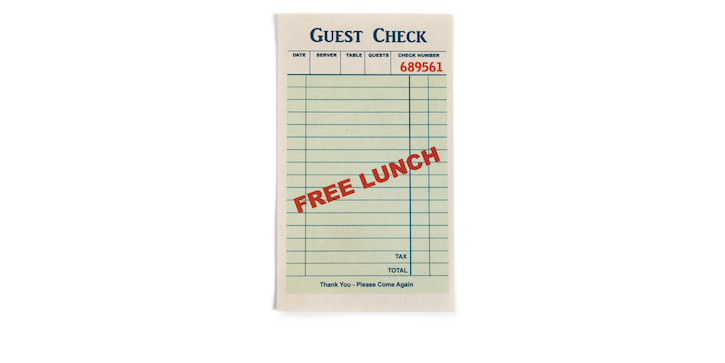
Living in a Free-Lunch World
“Everyone is a prisoner of his own experiences. No one can eliminate prejudices – just recognize them.” – Edward R. Murrow, US broadcast journalist & newscaster (1908 – 1965), television broadcast, December 31, 1955 “High debt levels, whether in the public or private sector, have historically placed a drag on growth and raised the risk of financial crises that spark deep economic recessions.” – The McKinsey Institute, “Debt and (not much) Deleveraging”

March 9, 2015
Never Smile at a Crocodile
“High debt levels, whether in the public or private sector, have historically placed a drag on growth and raised the risk of financial crises that spark deep economic recessions.” – The McKinsey Institute, “Debt and (not much) deleveraging” Never smile at a crocodile No, you can't get friendly with a crocodile Don't be taken in by his welcome grin He's imagining how well you'd fit within his skin Never smile at a crocodile Never tip your hat and stop to talk awhile Never run, walk away, say good-night, not good-day Clear the aisle but never smile at Mister Crocodile – Peter Pan

February 14, 2015
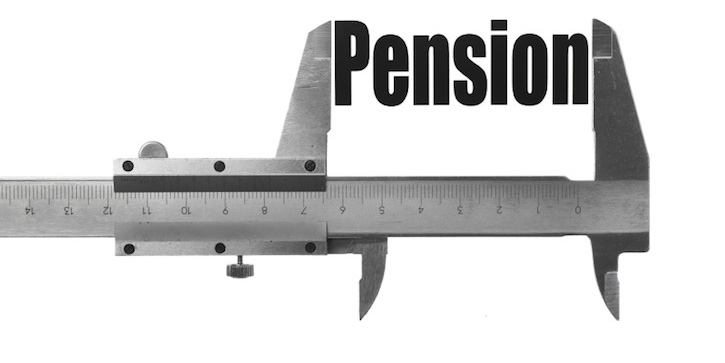
Mamas, Don’t Let Your Babies Grow Up to Be Pension Fund Managers
We do not have to look to Greece to find massively underfunded obligations. Here in the US we can find hundreds of examples, willingly created by politicians and businessmen who proclaim they are working for the public good. We call them pension funds, but they’re just another form of unfunded debt. A sovereign bond is a promise to pay a certain amount of money over time. A defined-benefit pension fund is a promise to pay a certain amount of income over time. The value of either is determined by the ability of the government or the pension fund (or its sponsor) to pay.

February 1, 2015
Portfolio Strategies 2015: Investing in an Age of Divergence
With all the negative news out of Europe, how do you find a positive story? Is there a way to structure a portfolio that gives you permission to be more aggressive when there are danger signs all around? Everyone is worried about being blindsided by a significant downdraft in the markets when maybe we should be thinking about making sure we don’t miss a bull market somewhere. These and several dozen other topics were on the table when the Mauldin Economics writing team gathered here in Dallas for 3½ days of intensive talk, interviews, and planning. Today we’ll go over a few of the highlights of this last week, and I’ll share a few reasons to be optimistic about 2015.
- Page 49
Free Financial Newsletter
Thoughts from the Frontline explores developments overlooked by mainstream news and analyzes challenges and opportunities on the horizon.
The newsletter began as John’s way of sharing his thoughts with a few associates. Two decades later, it is one of the most widely read investment newsletters in the world. From his warning of an impending recession in 2000, to a polemic on the Obamacare “death spiral” in 2016, John has blazed his own trail as one of the most respected macroeconomic minds in the field.
"Central bankers, businessmen, and investors continually try to beat History to a pulp, but History always wins the final rounds."
John Mauldin, Thoughts from the Frontline, 2001.



John Mauldin
Editor, Thoughts from the Frontline
When investors, financial professionals, and discerning citizens need a big-picture view of what's going on in the economy, they turn to John Mauldin.
And for good reason. John has dedicated more than 30 years to keeping people informed about financial risk.