

Thoughts from the Frontline
Follow John Mauldin as he uncovers the truth behind, and beyond, the financial headlines. This in-depth weekly dispatch helps you understand what's happening in the economy and navigate the markets with confidence.
Let John guide you through this decade of disruption
John Mauldin's Thoughts from the Frontline
Free in your inbox every Saturday
By opting in you are also consenting to receive Mauldin Economics' marketing emails. You can opt-out from these at any time. Privacy Policy
Latest Articles

January 24, 2015
How Global Interest Rates Deceive Markets
“You keep on using that word. I do not think it means what you think it means.” – Inigo Montoya, The Princess Bride “In the economic sphere an act, a habit, an institution, a law produces not only one effect, but a series of effects. Of these effects, the first alone is immediate; it appears simultaneously with its cause; it is seen. The other effects emerge only subsequently; they are not seen; we are fortunate if we foresee them. “There is only one difference between a bad economist and a good one: the bad economist confines himself to the visible effect; the good economist takes into account both the effect that can be seen and those effects that must be foreseen. “Yet this difference is tremendous; for it almost always happens that when the immediate consequence is favorable, the later consequences are disastrous, and vice versa. Whence it follows that the bad economist pursues a small present good that will be followed by a great evil to come, while the good economist pursues a great good to come, at the risk of a small present evil.” – From an 1850 essay by Frédéric Bastiat, “That Which Is Seen and That Which Is Unseen”

January 18, 2015
The Swiss Release the Kraken!
“Below the thunders of the upper deep, Far far beneath in the abysmal sea, His ancient, dreamless, uninvaded sleep The Kraken sleepeth: faintest sunlights flee…. “There hath he lain for ages, and will lie Battening upon huge sea-worms in his sleep, Until the latter fire shall heat the deep; Then once by man and angels to be seen, In roaring he shall rise and on the surface die.” – Alfred, Lord Tennyson, “The Kraken” "The exact contrary of what is generally believed is often the truth." – Jean De La Bruyère “Cry ‘Havoc!’ And let slip the dogs of war!” – William Shakespeare, Julius Caesar, Act III, Scene I “No mas!” – Roberto Duran to the referee at the end of his fight with Sugar Ray Leonard, 1980
January 11, 2015
2015 Five-Year Global Financial Forecast | Mauldin Economics
Seven major trends are likely to produce an economic tsunami over the next five years, wreaking havoc but delivering opportunities to the savvy investor. It is the time of the year for forecasts; but rather than do an annual forecast, which is as much a guessing game as anything else (and I am bad at guessing games), I’m going to do a five-year forecast to take us to the end of the decade, which I think may be useful for longer-term investors. We will focus on events and trends that I think have a high probability, and I’ll state what I think the probabilities are for my forecasts to actually happen. While I could provide several dozen items, I think there are seven major trends that are going to sweep over the globe and that as an investor you need to have on your radar screen. You will need to approach these trends with caution, but they will also provide significant opportunities.
January 3, 2015
Why the World Needs the US Economy to Struggle
The headlines this morning talk about the US dollar hitting an 11-year high. I have been saying for years that the dollar is going to go higher than anyone can imagine. This trade is just in the early innings. And the repercussions will be dramatic, not only for emerging markets that have financed projects in dollars, but also for commodities and energy, gold, and a variety of other investments. The world is at the doorstep of a new era of volatility and currency wars. In this week’s letter, my associate Worth Wray explores what a rising dollar means for emerging markets and what central banks are likely to do in response. Can they smooth the ride, or will it be the world’s scariest roller coaster? This letter will print long because of the number of fabulous charts Worth provides. I might make a brief comment or two at the end. Here’s Worth.

December 21, 2014
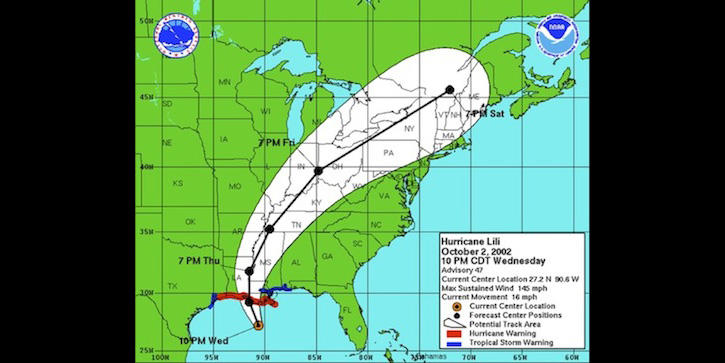
The US Dollar and the Cone of Uncertainty
Currently we have an international monetary non-system. Nobody has to follow any rules. Everybody does what they consider is in their own short-term best interest. The real difficulty is: What is in their short-term interest – for example, following ultra-easy monetary policy – could well backfire somewhere. It might be not in their long-term best interest. And as the easy monetary policy influences the exchange rates, it influences other countries. Almost every country in the world is in easing mode, following the Fed, and we have absolutely no idea how it will end up. We are in absolutely unchartered territory here. – William S. White, former Chief Economist, Bank for International Settlements, in an interview for Finanz und Wirtschaft I visualize this process [of forecasting the future] as mapping a cone of uncertainty, a tool I use to delineate possibilities that extend out from a particular moment or event. The forecaster’s job is to define the cone in a manner that helps the decision maker exercise strategic judgment. Many factors go into delineating the cone of uncertainty, but the most important is defining its breadth, which is a measure of overall uncertainty. Drawing a cone too narrowly is worse than drawing it too broadly. A broad cone leaves you with a lot of uncertainty, but uncertainty is a friend, for its bedfellow is opportunity – as any good underwriter knows. The cone can be narrowed in subsequent refinements. Indeed, good forecasting is always an iterative process. Defining the cone broadly at the start maximizes your capacity to generate hypotheses about outcomes and eventual responses. A cone that is too narrow, by contrast, leaves you open to avoidable unpleasant surprises. Worse, it may cause you to miss the most important opportunities on your horizon. – Paul Saffo, technology forecaster
December 15, 2014
Oil, Employment, and Growth
Last week we started a series of letters on the topics I think we need to research in depth as we try to peer into the future and think about how 2015 will unfold. In forecasting US growth, I wrote that we really need to understand the relationships between the boom in energy production on the one hand and employment and overall growth in the US on the other. The old saw that falling oil prices are like a tax cut and are thus a net benefit to the US economy and consumers is not altogether clear to me. I certainly hope the net effect will be positive, but hope is not a realistic basis for a forecast. Let’s go back to two paragraphs I wrote last week:
December 6, 2014
Macroeconomics Finally Gets Interesting
“The future is already here – it's just not very evenly distributed.” – William Gibson, Hall of Fame science fiction writer Since I began writing this letter some 15 years ago, I’ve always done an annual forecast letter, generally in the first week of January. That letter is typically the most-read issue of the year, and I spend more time thinking about it than any other letter. I typically take the last week of the year off from writing just to concentrate on my research, and I often begin to compile my reading material the first week in December, which the calendar tells us is now. Helping me this year will be my associate Worth Wray and a few members of the Mauldin Economics team, and of course my many friends and readers.

November 29, 2014
Is Bitcoin the Future?
Bitcoin is a topic of discussion almost everywhere I go. My introduction to Bitcoin came when I was speaking at a gold conference in Palm Springs and three bright-eyed, bushy-tailed college students approached me with a video camera and asked for my thoughts on Bitcoin. Noting my confusion, they began to evangelistically espouse the virtues of Bitcoin and tell me how it would save us from the evils of the Federal Reserve. I kept from rolling my eyes (you do want to encourage passion in the young) and mentioned a meeting that I had to go to – at that very moment as it turned out.
November 22, 2014
On the Verge of Chaos
“Great powers and empires are, I would suggest, complex systems, made up of a very large number of interacting components that are asymmetrically organized, which means their construction more resembles a termite hill than an Egyptian pyramid. They operate somewhere between order and disorder – on “the edge of chaos,” in the phrase of the computer scientist Christopher Langton. Such systems can appear to operate quite stably for some time; they seem to be in equilibrium but are, in fact, constantly adapting. But there comes a moment when complex systems “go critical.” A very small trigger can set off a “phase transition” from a benign equilibrium to a crisis – a single grain of sand causes a whole pile to collapse, or a butterfly flaps its wings in the Amazon and brings about a hurricane in southeastern England. “Not long after such crises happen, historians arrive on the scene. They are the scholars who specialize in the study of “fat tail” events – the low-frequency, high-impact moments that inhabit the tails of probability distributions, such as wars, revolutions, financial crashes, and imperial collapses. But historians often misunderstand complexity in decoding these events. They are trained to explain calamity in terms of long-term causes, often dating back decades. This is what Nassim Taleb rightly condemned in The Black Swan as “the narrative fallacy”: the construction of psychologically satisfying stories on the principle of post hoc, ergo propter hoc. – Niall Ferguson, “Complexity and Collapse” I see a bad moon arisin’, I see trouble on the way. I see earthquakes and lightnin’, I see bad times today. I hear hurricanes ablowin’, I know the end is comin’ soon. I fear rivers overflowin’, I hear the voice of rage and ruin. Don’t go ’round tonight, well, it’s bound to take your life. There’s a bad moon on the rise. – “Bad Moon Rising,” John Fogerty, Creedence Clearwater Revival, 1969
November 9, 2014
Deflation: The Final Battle of Central Banks
For a central banker, deflation is one of the Four Horsemen of the Apocalypse: Death, Famine, Disease, and Deflation. (We will address later in this letter why War, in the form of a currency war, is not in a central banker’s Apocalypse mix.) It is helpful to understand that, before a person is allowed to join the staff or board of a central bank, he or she is taken into a back room and given DNA replacement therapy, inserting a gene that is viscerally opposed to deflation. Of course, in fairness, it must be noted that central bankers don’t like high inflation, either (although, looking around the world, we see that the definition of high inflation can vary). In the developed world, 2% inflation seems to be the common goal. You wouldn’t think that 2% a year is a significant change in the overall price structure, but the panic among economists that would ensue with a 2% price deflation would border on hysteria.
November 3, 2014
Rhyme and Reason
“The significant problems that we have created cannot be solved at the level of thinking we were at when we created them.” – Albert Einstein “Generals are notorious for their tendency to ‘fight the last war’ – by using the strategies and tactics of the past to achieve victory in the present. Indeed, we all do this to some extent. Life's lessons are hard won, and we like to apply them – even when they don't apply. Sadly enough, fighting the last war is often a losing proposition. Conditions change. Objectives change. Strategies change. And you must change. If you don't, you lose.” – Dr. G. Terry Madonna and Dr. Michael Young “Markets are perpetuating a serious error by acting on the belief that central bankers actually know what they are doing. They do not. Not because they are ill-intentioned but because they are human and subject to the limitations that apply to all human endeavors. If you want proof of their fallibility, simply look at their economic forecasts. Despite their efforts to do so, central banks can’t repeal the business cycle (though they can distort it). While the 2008 financial crisis should have taught them that lesson, it appears to have led them to precisely the opposite conclusion. “There are limits to knowledge in every field, including the hard sciences, and economics is not a hard science; it is a social science whose knowledge is imprecise, and practitioners’ ability to predict the future is extremely limited. Fed officials are attempting to guide an extremely complex economy with tools of questionable utility, and markets are ignoring their warnings that their ability to manage a positive outcome is highly uncertain. Markets are confusing what they want to happen with what is likely to happen, a common psychological phenomenon. Investors who prosper in the long run will be those who acknowledge the severe limits of economic knowledge and the compelling evidence that trillions of dollars of QE and years of zero interest rates may have saved the system from immediate collapse five years ago but failed to produce sustained economic growth or long-term price stability.” – Michael Lewitt, The Credit Strategist, Nov. 1, 2014
October 24, 2014
A Scary Story for Emerging Markets
The consequences of the coming bull market in the US dollar, which I’ve been predicting for a number of years, go far beyond suppression of commodity prices (which in general is a good thing for consumers – but could at some point threaten the US shale-oil boom). The all-too-predictable effects of a rising dollar on emerging markets that have been propped up by hot inflows and the dollar carry trade will spread far beyond the emerging markets themselves. This is another key aspect of the not-so-coincidental consequences that we will be exploring in our series on what I feel is a sea change in the global economic environment.
- Page 50
Free Financial Newsletter
Thoughts from the Frontline explores developments overlooked by mainstream news and analyzes challenges and opportunities on the horizon.
The newsletter began as John’s way of sharing his thoughts with a few associates. Two decades later, it is one of the most widely read investment newsletters in the world. From his warning of an impending recession in 2000, to a polemic on the Obamacare “death spiral” in 2016, John has blazed his own trail as one of the most respected macroeconomic minds in the field.
"Central bankers, businessmen, and investors continually try to beat History to a pulp, but History always wins the final rounds."
John Mauldin, Thoughts from the Frontline, 2001.



John Mauldin
Editor, Thoughts from the Frontline
When investors, financial professionals, and discerning citizens need a big-picture view of what's going on in the economy, they turn to John Mauldin.
And for good reason. John has dedicated more than 30 years to keeping people informed about financial risk.