

Thoughts from the Frontline
Follow John Mauldin as he uncovers the truth behind, and beyond, the financial headlines. This in-depth weekly dispatch helps you understand what's happening in the economy and navigate the markets with confidence.
Let John guide you through this decade of disruption
John Mauldin's Thoughts from the Frontline
Free in your inbox every Saturday
By opting in you are also consenting to receive Mauldin Economics' marketing emails. You can opt-out from these at any time. Privacy Policy
Latest Articles

November 16, 2013
The Unintended Consequences of ZIRP
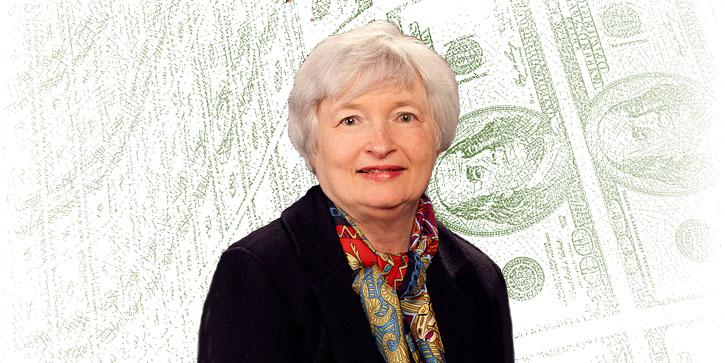
Yellen's coronation was this week. Art Cashin mused that it was a wonder some senator did not bring her a corsage: it was that type of confirmation hearing. There were a few interesting questions and answers, but by and large we heard what we already knew. And what we know is that monetary policy is going to be aggressively biased to the easy side for years, or at least that is the current plan. Far more revealing than the testimony we heard on Thursday were the two very important papers that were released last week by the two most senior and respected Federal Reserve staff economists. As Jan Hatzius at Goldman Sachs reasoned, it is not credible to believe that these papers and the thinking that went into them were not broadly approved by both Ben Bernanke and Janet Yellen.
November 9, 2013
What Would Yellen Do?
The US Senate Banking Committee will hold hearings on Thursday, November 14, on the nomination of Janet Yellen for Federal Reserve chair. There will be the usual softball questions, for example, "Do you think high unemployment is a problem in the United States and if so what do you intend to do about it?" (which allows a senator to express his concern over unemployment and for the nominee to agree that it's a problem). Or the always popular question, "What is the basis under which you would continue to hold interest rates at their current low level?" – as if she would answer anything other than, "Any future policy decision is of course data-dependent" or some variation on that response. Boring.

October 31, 2013
Bubbles, Bubbles Everywhere
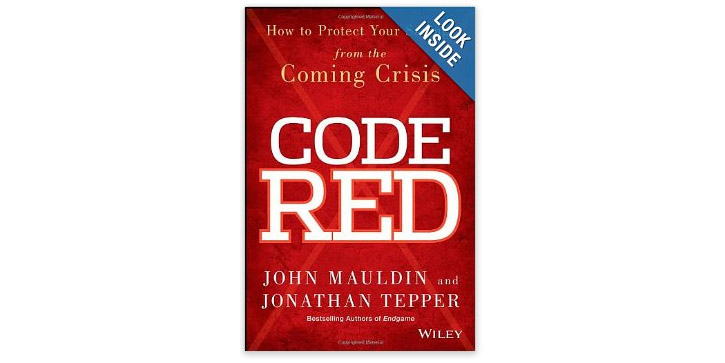
(Note to readers: A small number of readers reported receiving a blank email of today's Thoughts from the Frontline, and so we decided to resend the letter in order to ensure that all readers were getting it.) The difference between genius and stupidity is that genius has its limits. – Albert Einstein Genius is a rising stock market. – John Kenneth Galbraith Any plan conceived in moderation must fail when circumstances are set in extremes. – Prince Metternich You can almost feel it in the fall air (unless you are in the Southern Hemisphere). The froth and foam on markets of all shapes and sizes all over the world. It is an exhilarating feeling, and the pundits who populate the media outlets are bubbling over with it. There is nothing like a rising market to help lift our mood. Unless of course, as Prof. Kindleberger famously cautioned (see below), we are not participating in that rising market. Then we feel like losers. But what if the rising market is … a bubble? Are we smart enough to ride and then step aside before it bursts? Research says we all think that we are, yet we rarely demonstrate the actual ability. This week we'll think about bubbles. Specifically, we'll have a look at part of the chapter on bubbles from my latest book, Code Red, which we launched last week. At the end of the letter, for your amusement, is a link to a short video of what you might hear if Jack Nicholson were playing the part of Ben Bernanke (or Janet Yellen?) on the witness stand, defending the extreme measures of central banks. A bit of a spoof, in good fun, but there is just enough there to make you wonder what if … and then smile. Economics can be so much fun if we let it. I decided to use this part of the book when numerous references to bubbles popped into my inbox this week. When these bubbles finally burst, let no one exclaim that they were black swans, unforeseen events. Maybe because we have borne witness to so many crashes and bear markets in the past few decades, we have gotten better at discerning familiar patterns in the froth, reminiscent of past painful episodes. Let me offer you three such bubble alerts that came my way today. The first is from my friend Doug Kass, who wrote: I will address the issue of a stock market bubble next week, but here is a tease and fascinating piece of data: Since 1990, the P/E multiple of the S&P 500 has appreciated by about 2% a year; in 2013, the S&P's P/E has increased by 18%! Then, from Jolly Olde London, comes one Toby Nangle, of Threadneedle Investments (you gotta love that name), who found the following chart, created a few years ago at the Bank of England. At least when Mervyn King was there they knew what they were doing. In looking at the chart, pay attention to the red line, which depicts real asset prices. As in they know they are creating a bubble in asset prices and are very aware of how it ends and proceed full speed ahead anyway. Damn those pesky torpedoes. Toby remarks: This is the only chart that I’ve found that outlines how an instigator of QE believes QE’s end will impact asset prices. The Bank of England published it in Q3 2011, and it tells the story of their expectation that while QE was in operation there would be a massive rise in real asset prices, but that this would dissipate and unwind over time, starting at the point at which the asset purchases were complete. Oh, dear gods. Really? I can see my friends Nouriel Roubini or Marc Faber doing that chart, but the Bank of England? Really?!? Then, continuing with our puckish thoughts, we look at stock market total margin debt (courtesy of those always puckish blokes at the Motley Fool). They wonder if, possibly, maybe, conceivably, perchance this is a warning sign? And we won’t even go into the long list of stocks that are selling for large multiples, not of earnings but of SALES. As in dotcom-era valuations. We make the case in Code Red that central banks are inflating bubbles everywhere, and that even though bubbles are unpredictable almost by definition, there are ways to benefit from them. So, without further ado, let’s look at what co-author Jonathan Tepper and I have to say about bubbles in Chapter 9.
October 25, 2013
A Code Red World
I wasn't the only person coming out with a book this week (much more on that at the end of the letter). Alan Greenspan hit the street with The Map and the Territory. Greenspan left Bernanke and Yellen a map, all right, but in many ways the Fed (along with central banks worldwide) proceeded to throw the map away and march off into totally unexplored territory. Under pressure since the Great Recession hit in 2007, they abandoned traditional monetary policy principles in favor of a new direction: print, buy, and hope that growth will follow. If aggressive asset purchases fail to promote growth, Chairman Bernanke and his disciples (soon to be Janet Yellen and the boys) respond by upping the pace. That was appropriate in 2008 and 2009 and maybe even in 2010, but not today.
October 19, 2013
The Damage to the US Brand
There is no doubt that the image – what I will refer to in this letter as the "brand" – of the United States has been damaged in the past month. But what are the actual costs? And what does it matter to the average citizen? Can the US recover its tarnished image and go on about business as usual? Is the recent dysfunction in Washington DC now behind us, or is it destined to become part of a bleaker landscape? In this week's letter we try to answer those questions and more, as I step firmly into politically incorrect territory and offer a little advice to my junior senator from Texas. If nothing else, we will look at the problems we face in a different light.

October 11, 2013
Sometimes They Ring a Bell
After last week's discussion of the Affordable Care Act, it would be easy to drift off into all of the negative consequences of the current problems in Washington DC. There's just so much negative energy every time you turn on the TV that it simply drains you. I am well aware of what's happening and why, and yet I still find myself weary simply from the process of trying to follow what's happening. If I feel that way, it's no wonder the polls show that the general public's attitude is "a plague on all your houses." Of course, the snafus always seem to get resolved, but you just wonder how worthwhile all the drama is. In this week's letter, though, we are going to talk about a different type of energy and a story that I find enormously positive. Three items have come across my screen in the past month that, taken together, truly do signal a major turning point in how energy is discovered, transported, and transformed. And while we'll start with a story that most of us are somewhat aware of, there is an even larger transformation happening that I think argues against the negative research that has come out in the last few years about the reduced potential for growth in the world economy.

October 4, 2013
The Road to a New Medical Order
There is no doubt that the single most contentious topic I can bring up in a small group discussion or speech is the Affordable Care Act, otherwise known as Obamacare. You can feel the tension rise, as everyone has an opinion they want to express – most of them based essentially on preconceived philosophical positions, nearly all of which can be can seen through their own eyes as reasonable and consistent with civilized behavior. And the facts that can be trotted out to support their positions, pro and con, could fill up a document almost as long as the original 2,300+ page bill. I have avoided writing about the Affordable Care Act (ACA) for a variety of reasons but primarily because it is so difficult for us to get our heads around the economic implications. Today I will try, though some of my readers may conclude that I have failed, to avoid coming to political conclusions about the ACA. Instead, I will aim to dwell simply on the economic ramifications of the implementation of the bill as it exists today. We are changing the plumbing on 17.9% of the US GDP in profound ways. Many, if not most, of the changes are absolutely necessary. This letter has grown out of a rather lengthy, ongoing conversation I have had with my very close friend and personal doctor, Mike Roizen, about his perceptions of changes that his institution, the Cleveland Clinic, and others like it have to make concerning the delivery of medicine in the near future, and the Clinic's expectations regarding the income they will receive for providing their services. The Cleveland Clinic is one of the largest and most respected hospital groups in the world (heck, Obama and Romney even cited it in their first debate as an institution providing great care very efficiently – the only institution so cited). The Clinic has 43,000 employees and a healthcare budget of over $6 billion. Looking at the future budget considerations of the Cleveland Clinic and similar institutions outlined below, there is both reason to be both optimistic and reason to be deeply concerned about the changes that are coming to US society in the immediate future. I asked Mike if he would be willing to provide me with some notes concerning the future of healthcare in our nation and the Clinic's own future. He kindly obliged, and I have edited and expanded upon what he wrote and shared with me in our conversations. This following should not be read as a policy statement or an official analysis from the Cleveland Clinic itself; instead, it is an essay that grew out of an exchange between two friends, a doctor and an economist, trying to make sense of how things will change. For those not familiar with Mike, he is quite the medical celebrity. He is an anesthesiologist and an internist, an award-winning author, and the chief wellness officer of the Cleveland Clinic. He has completed a tour of duty in the US Public Health Service and has written more than 170 peer-reviewed papers and 100 medical chapters, filed 14 US patents, started 12 companies, served on Food and Drug Administration (FDA) advisory committees as a committee member or as a consultant to them for 16 years, and chaired an FDA advisory committee. He also co-invented a drug that is now FDA-approved. He first became famous for developing the RealAge concept and has authored or coauthored five number-one New York Times best sellers, including RealAge and three titles in the YOU series, with Dr. Mehmet Oz. Possibly, he is best-known for being Oprah’s doctor. He has been praised for encouraginge Americans to exercise, eat healthier, manage stress, and live healthier lives. He has been an outspoken critic of politicians who use healthcare funds for other purposes, and particularly of states’ taking tobacco settlement money and using it wrongly for projects in no way related to tobacco prevention programs. Besides advocating for a healthier lifestyle today, Dr. Roizen has controversially speculated that by 2023 one of the 14 areas of aging research might see a breakthrough that will allow us to live until 160 with the same quality of life we enjoyed at age 45. Mike wants to be sure you know that we are talking here about what may happens to hospital systems similar in size to the Cleveland Clinic. The views he expressed in preparation for this letter are his and his alone and are not necessarily reflective of anyone else's at the Cleveland Clinic. This letter is somewhat longer than usual, but I was simply not willing to break it up into two letters. It was written to be read as one essay, and this topic is too important and timely to serve up by halves. I think you will find the conclusion thought-provoking, as we come at this issue from a bit of a different angle than you normally encounter. Mike and I welcome your comments and will read them and perhaps do a follow-up letter with our responses.

September 27, 2013
The Renminbi: Soon to Be a Reserve Currency?
I get the question all the time: when will the Chinese renminbi (RMB) replace the US dollar as the major world reserve currency? The assumption behind such questions is almost always that the coming crisis in US entitlement programs will force the Fed to monetize even more debt, thereby killing the dollar. Or some derivative line of that thought. Contrary to the thinking of fretful dollar skeptics, my firm belief is that the US dollar is going to become even stronger and will at some point actually deserve to be the reserve currency of choice rather than merely the prettiest girl in the ugly contest – the last currency standing, so to speak.

September 20, 2013
Rich City, Poor City
"The future is already here," intoned William Gibson, one of my favorite cyberpunk science fiction authors, "it's just not very evenly distributed." Paraphrasing Gibson, the pension crisis is already here; it's just not very evenly distributed. For the past two weeks we've been exploring the problems of state pension funds. This week we will conclude our look at pension plans for the nonce with a 30,000-foot overview of the states and then take a deeper dive into one city: mine. This will give you at least one version of how to do your own homework about your own hometown. But fair warning, depending on your locale, you may need medical help or significant quantities of an adult beverage after you finish your research. Then again you may be pleasantly surprised and congratulate yourself on choosing a particularly adept hometown. And be on notice that, no matter what your personal conclusion and how well-grounded your analysis is, there will be people who live in your neighborhood who think you are utterly full of, well, let's just say "nonsensical matter" and leave it at that. This is a family letter.

September 13, 2013
Nothing But Bad Choices
It is hard to imagine a more stupid or more dangerous way of making decisions than by putting those decisions in the hands of people who pay no price for being wrong. – Thomas Sowell With a few exceptions here and there, crises in government funding don't simply arrive on the doorstep unannounced. Their progress toward the eventual Bang! moment is there for all the world to see. What final misdeed triggers the ultimate phase of the crisis is less predictable, but the root cause is almost always the same: debt. And whether that debt is actually borrowed or is merely promised to the populace, when the market becomes worried that the ability of the government to fund its promises is suspect, then the end is near. Last week we began a series on what I think is an impending crisis in the unfunded pension liabilities of state and local governments in the United States. To talk about the situation using the word crisis can seem a little hyperbolic. The problems are distributed throughout the country, yet not every city or state has significant unfunded pension liabilities. And even those that do can muddle through for very long time before a smoldering problem explodes into an actual crisis. Think Detroit. You could see the crisis building for years and years in the media before it finally reached the breaking point. And Detroit was not the first city to go bankrupt, though it has been the largest. But unless significant action is taken to alleviate the problem of debt, we are going to see even larger cities and then whole states enter a crisis period. And as we will see from the data, we are not talking insignificant states. This week we continue our series on the unfunded liabilities of states and cities. Note: this letter will print a little longer than most, as there are lots of charts and graphs.

September 6, 2013
Unrealistic Expectations
"In the short run, the market is like a voting machine, tallying up which firms are popular and unpopular. But in the long run, the market is like a weighing machine, assessing the substance [intrinsic value] of a company." – Benjamin Graham Way back in the Paleozoic era (as far as markets are concerned), circa 2003, I wrote in this letter and in Bull's Eye Investing that the pension liabilities of state and municipal plans would soon top $2 trillion. This was of course far above the stated actuarial claims at the time, and I was seen as such a pessimist. Everyone knew that the market would compound at 9%, so any problems were just a rounding error. Now it turns out I may have been a tad optimistic. Two well-respected analysts of pension funds have produced reports this summer suggesting that pensions are now underfunded by more than $4 trillion and possibly more than $5 trillion. I would like to tell you that the underfunding is all the bad news, but when you probe deeper into the problems facing pension funds, it just gets worse. The two reports conclude that pension plan sponsors seem determined to keep digging themselves an ever-deeper hole. But to hear the plan sponsors tell it, the situation is readily manageable and the risks are minimal. Except that pesky old reality keeps confounding their expectations. And that is the crux of the problem. Whether you believe there really is a problem boils down to the assumptions you make about future returns. If you believe the projections trotted out by pension fund management and the bulk of the pension consulting groups, the underfunding is a mere $1 trillion — a large amount to be sure but manageable for most states. The emphasis here is on most. Some states and municipalities are in far worse shape than others, and to be honest with you, I don't see how some of them can meet their commitments. Others are trying to be responsible and fulfill their pension fund obligations based on the assumptions their "experts" come up with, but the problem is that those assumptions may be overly optimistic. The seemingly small difference of just 1% of GDP growth can make a huge difference in pension liabilities (and thus taxpayer obligations).This week we begin a series focusing on the problems facing US state and local pension funds. This issue has relevance to you not only as a taxpayer but also as an investor, because it goes to the very core of the question, what is the level of reasonable returns we can expect to see from our investments in the future? This is not a problem that is restricted to the US — it's global. Sadly, we don't live in a Lake Wobegon world where all pension funds and investment portfolios are above average. Not everyone can be David Swenson, the famous chief investment officer of Yale University. Truth be told, David Swenson will have a difficult time being David Swenson in the next 20 years.

August 30, 2013
How Do I Hate Thee?
How do I love thee? Let me count the ways. I love thee to the depth and breadth and height My soul can reach, when feeling out of sight For the ends of Being and ideal Grace. … I love thee with the breath, Smiles, tears, of all my life! — and, if God choose, I shall but love thee better after death. – Elizabeth Barrett Browning (1806-1861) When I was growing up, Labor Day always marked the official end of summer, since we started school the next day. These days everyone seems to start school sometime in August, but for those of us of a certain age, the natural annual rhythm is still to see the last few days of August as the end of a carefree summer. So with a nod to your need for a little more summer relaxation, I will try to keep this letter shorter than usual. And with apologies to Elizabeth Barrett Browning, I will list a number of reasons why I hate this market and then suggest a few reasons why that should get you excited. We will look at some charts, and I'll briefly comment on them. No deep dives this week, just a survey of the general landscape.
- Page 55
Free Financial Newsletter
Thoughts from the Frontline explores developments overlooked by mainstream news and analyzes challenges and opportunities on the horizon.
The newsletter began as John’s way of sharing his thoughts with a few associates. Two decades later, it is one of the most widely read investment newsletters in the world. From his warning of an impending recession in 2000, to a polemic on the Obamacare “death spiral” in 2016, John has blazed his own trail as one of the most respected macroeconomic minds in the field.
"Central bankers, businessmen, and investors continually try to beat History to a pulp, but History always wins the final rounds."
John Mauldin, Thoughts from the Frontline, 2001.



John Mauldin
Editor, Thoughts from the Frontline
When investors, financial professionals, and discerning citizens need a big-picture view of what's going on in the economy, they turn to John Mauldin.
And for good reason. John has dedicated more than 30 years to keeping people informed about financial risk.