

Thoughts from the Frontline
Follow John Mauldin as he uncovers the truth behind, and beyond, the financial headlines. This in-depth weekly dispatch helps you understand what's happening in the economy and navigate the markets with confidence.
Let John guide you through this decade of disruption
John Mauldin's Thoughts from the Frontline
Free in your inbox every Saturday
By opting in you are also consenting to receive Mauldin Economics' marketing emails. You can opt-out from these at any time. Privacy Policy
Latest Articles
June 8, 2012
A Dysfunctional Nation
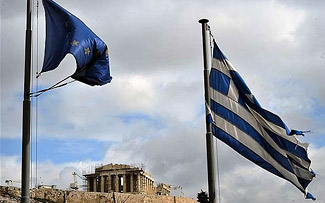
dysfunctional [dɪsˈfʌŋkʃənəl] adj 1. (Medicine) Med (of an organ or part) not functioning normally 2. (especially of a family) characterized by a breakdown of normal or beneficial relationships between members of the group European leaders launched the euro project in the last century as an experiment to see whether political hope could become economic reality. What they have done is create one of the most dysfunctional economic systems in history. And the distortions inherent in that system are now playing out in an increasingly dysfunctional social order. Today we look at some rather disturbing recent events and wonder about the actual costs of that experiment. What type of "therapy" will be needed to treat the dysfunctional family that Europe has become? And maybe I'll throw in a "fun" item to finish with, so let's get started.

June 1, 2012
First Deflation, Then Inflation. But the Timing…?
One of the more frequent questions I am asked in meetings or after a speech is whether I think we will have inflation or deflation. My ready answer is, "Yes." Then I stop, which I must admit is rather fun, as the person who asked tries to digest the answer. And while my answer is flippant, it's also the truth, as I do expect both outcomes. So the follow-up question (after the obligatory chuckle from the rest of the group) is for a few more specifics. And the answer is that I expect we will first see deflation and then inflation, but the key is the timing. Today we will examine that question in more detail, as we look at how interest rates could actually be negative (!!!) this week in German and Swiss bonds and why the US ten-year has dipped below 1.5%. The very poor May employment number needs some analysis, too, and we'll check the prospects of a synchronized global slowdown. Rarely have I come to a Friday with so much data that simply begs for a more thorough look, but we will try to hit at least the most important topics.

May 25, 2012
Meanwhile, Back at the Ranch
It is simply hard to tear your eyes away from the slow-motion train wreck that is Europe. Historians will be writing about this moment in time for centuries, and with an ever-present media we see it unfold before our eyes. And yes, we need to tear our gaze away from Europe and look around at what is happening in the rest of the world. There is about to be an eerily near-simultaneous ending to the quantitative easing by the four major central banks while global growth is slowing down. And so, while the future of Europe is up for grabs, the true danger to global markets and growth may be elsewhere. But, let’s do start with the seemingly obligatory tour of Europe.
May 18, 2012
Dr. Frankenstein’s Europe
"Had I right, for my own benefit, to inflict this curse upon everlasting generations? I had before been moved by the sophisms of the being I had created; I had been struck senseless by his fiendish threats; but now, for the first time, the wickedness of my promise burst upon me; I shuddered to think that future ages might curse me as their pest, whose selfishness had not hesitated to buy its own peace at the price, perhaps, of the existence of the whole human race." – The musings of Dr. Frankenstein about his creation of a monster, in Mary Shelley's 1818 novel, Frankenstein And later the monster answers: "Shall each man," cried he, "find a wife for his bosom, and each beast have his mate, and I be alone? I had feelings of affection, and they were requited by detestation and scorn. Man! You may hate, but beware! Your hours will pass in dread and misery, and soon the bolt will fall which must ravish from you your happiness forever. Are you to be happy while I grovel in the intensity of my wretchedness? You can blast my other passions, but revenge remains – revenge, henceforth dearer than light or food! I may die, but first you, my tyrant and tormentor, shall curse the sun that gazes on your misery. Beware, for I am fearless and therefore powerful. I will watch with the wiliness of a snake, that I may sting with its venom. Man, you shall repent of the injuries you inflict." In the classic novel by Mary Shelley (written when she was just 19!), she writes about a young doctor (the Frankenstein of the title) who defies nature and creates an ungainly monster, piecing together parts that were not designed to fit each other. Even though he gives the creature life, it eventually turns on him and his family. The unhappy monster, which develops into quite the rationalizing being, demands that Dr. Frankenstein create a female version of himself so they can flee civilization and find happiness. When Dr. Frankenstein decides not to follow through on his initial promise to do so (thus the first quote), the monster seeks revenge. It does not end happily. The European Monetary Union was a triumph of hope over reason, pieced together from very dissimilar countries which, while sharing common borders, have very different cultures and economies. That it would eventually face an existential crisis was foretold by numerous critics at the time of its creation. The euro has never been a real currency. It was and still is an experiment, fashioned and shaped by a generation with noble ideas and vision, but tied together by an unworkable structure. Can its foundation be reworked into a solid structure? Or will natural centrifugal forces pull it apart? The difficulties that are faced are somewhat akin to fixing the engine of a jet plane while it is flying at 30,000 feet. In today's letter we explore the options that the eurozone faces in order to stay together, and what it all means for some of the countries involved. While I have written for a very long time about the probability of Greece exiting the eurozone, the actuality is fraught with risk, not just for Europe but for the world economy. What happens in the next few months will impact us all for a very long time. Indeed, this is one of those years, as Lenin noted, when decades happen. There is a lot to cover, and in future weeks we will go into more detail, but today let's just step back and see if we can get the larger picture.
May 11, 2012
Waving the White Flag
A common mistake that people make when trying to design something completely foolproof is to underestimate the ingenuity of complete fools. - Douglas Adams, The Hitchhiker's Guide to the Galaxy For quite some time in this letter I have been making the case that for the eurozone to survive, the European Central Bank would have to print more money than any of us can now imagine. That the sentiment among European leaders was that they were prepared for such a move was clear – except for Germany, which is haunted by fears of a return to the days of the Weimar Republic and hyperinflation. When Germany agreed to a fixed monetary union and a European Central Bank, it was with the clear understanding that it would be run along the lines of the German central bank, the Bundesbank. The members of the Bundesbank and the German members of the ECB were most outspoken about the need for a conservative monetary policy that would keep a clamp on inflation. However, as I have previously noted, the Bundesbank was a toothless tiger. Germany has two votes out of 23 on the ECB, and the loud drumbeat from most of Europe, which is experiencing the difficulty of austerity accompanied by too much debt, is for a far more accommodating ECB. The simple fact is that Mario Draghi, the Italian president of the ECB, created €1 trillion euros to help fund European banks, which promptly turned around and bought their respective countrys' sovereign debt. Germany's Angela Merkel forced the Bundesbank to "play nice" and go along with what was seen as the only way to solve a growing banking crisis in Europe. Everyone breathed a sigh of relief, thinking that this at least bought a year during which things could be sorted out. But it turns out that a trillion euros just doesn't go as far as it used to. The "relief" lasted about a month. The last few weeks have presented yet another budding crisis, as least as large as the last one. Where to get the next trillion? This week the German Bundesbank waved the white flag. The die is cast. For good or ill, Europe has embarked on a program that will require multiple trillions of euros of freshly minted money in order to maintain the eurozone. But the alternative, European leaders agree, is even worse. Today we will look at the recent German shift in policy, why it was so predictable, and what it means. This is a Ponzi scheme that makes Madoff look like a small-time street hustler. There is a lot to cover. At the end of the letter I will mention a few upcoming speaking engagements, in Atlanta, Philadelphia, and a webinar I will be doing next week. Now let's jump over to Europe.
May 4, 2012
A Graphic Presentation
The US employment numbers came out this morning, and they were disappointing. But disappointing does not begin to describe the situation I read about today in Europe. I have just finished up with my conference in Carlsbad, California and am getting back to the room late. I have to get up in a few hours (4 AM is rather obscene) to fly to Tulsa to see my daughter graduate from university, but wanted to drop you a note as I normally do on Friday night. But given the time and the need for some sleep, tonight I will draw your attention to the writing of a few friends and some of the more interesting charts I saw at the conference. It will be a shorter letter than usual, but we will uncover a few real nuggets; and next week I will be back to a more normal writing schedule. On May 22 I will be doing a webinar with my conference co-host, Jon Sundt of Altegris Investments, where we will talk about what we heard at the conference and some of the material I covered in my speech. This webinar will be a great way for those not able to attend the SIC conference to get a sense of its scope and depth. Because of the nature of the material, and due to SEC regulations, we will need to limit the webinar to accredited investors. If you have already registered at my Accredited Investor website, you should be getting an invitation. If you have not registered and would like to listen in, you can go to www.mauldincircle.com/ and sign up. The call will be at 11 AM Central Time. (In this regard, I am president and a registered representative of Millennium Wave Securities, LLC, member FINRA.) Also, I will be in Atlanta May 23 (details at the end of the letter). And now for some "nugget hunting."
April 27, 2012
A Gold Standard?
There are times, my friends Michael Lewitt and Dr. Lacy Hunt agreed today at lunch, when the study of economics is best informed by a sound knowledge of history. Indeed, Michael's son wants to follow his father into the finance world, and Michael is starting him off in history. I have spent hours listening to Lacy stroll through economic history, detailing the path of economic thought from Fisher to Kindleberger to Minsky. The last few days have been one of those times when I realized how much I don't know and how much more there is to learn. Not only Lacy and Michael are here in Florida, but a long list of bright minds to learn from. James Rickards, who has recently written the tour de force book Currency Wars, Harry Dent, Doug Casey, Porter Stansberry, Greg Weldon, and John Williams of Shadow Stats, with whom I look forward to meeting (do I have questions for him!). And so many more. And it is because I simply have to stop, listen and learn (and visit with friends) that this week I will kind of take the weekend off and instead send you one of the more remarkable essays I have read in a long time. It is a speech by Jim Grant to the New York Federal Reserve. The always erudite Grant takes us back in time to the very beginnings of the Federal Reserve, to show us how far we have strayed from the original intent. I really think you should read this. I have perused it several times and intend to read it yet again – and then some more. Grant argued for a return to the gold standard in the very halls of fiat money! It seems the New York Fed is asking some of its critics to come and speak. I have read some of the speeches, but this is the best so far for several reasons, not the least of which is that it contains some very funny lines. If you find yourself invited to the lion's den, Grant seems to think it is best to make fun of their teeth! You really do have to admire his courage. I think I would be a little concerned that I might be on the menu! I will make a few comments at the end of his speech and then note some upcoming speaking events in Atlanta and Philadelphia. But let's jump straight away into today's main event.
April 20, 2012
A Little Bull’s Eye Investing
"Would you tell me, please, which way I ought to go from here?" "That depends a good deal on where you want to get to," said the Cheshire Cat. "I don't much care where . . . " said Alice. "Then it doesn't matter which way you go," said the Cat. ". . . just so long as I get SOMEWHERE," Alice added as an explanation. "Oh, you're sure to do that," said the Cat, "if you only walk long enough." —Lewis Carroll, Alice in Wonderland Bull's Eye Investing was the book that really helped establish this letter. It dealt with a host of investing ideas, secular market cycles, value investing, alternative investing, and more. It is still in print some nine years later and has had a very positive response. Today I can share that I have taken that material, updated it, and written a new book, part of the Little Book series done by Wiley, called The Little Book of Bull's Eye Investing – Finding Value, Generating Absolute Returns, and Controlling Risk in Turbulent Markets. Rather than talk about a book I am going to do, I have waited to announce this one until it is off the presses and being shipped. Technically, the publication date is May 8, but Amazon will be shipping before then and it will be in book stores in short order. I am quite pleased with it and think you will find it's a great way to "catch up" with my thoughts on the nitty-gritty of investing and allocation. Today's e-letter is the introduction and part of the first chapter of the book. You can order the book on Amazon at
April 13, 2012
The War for Spain
I fully intended to ignore Spain this week. Really, truly I did. I had my letter all planned, but then a few notes drew my attention, and the more I reflected on them, the more I realized that the inflection point that I thought the ECB had pushed down the road for at least a year with their recent €1 trillion LTRO is now rushing toward us much faster than ECB President Draghi had in mind when he launched his massive funding operation.So, we simply must pay attention to what Spain has done this week – which, to my surprise, seems to have escaped the attention of the major media. What we will find may be considered a tipping point when the crisis is analyzed by some future historian. And then we'll get back to some additional details on the US employment situation, starting with a few rather shocking data points. What we'll see is that for most people in the US the employment level has not risen, even as overall employment is up by 2 million jobs since the end of the recession in 2009. And there are a few other interesting items. Are we really going to see 2 billion jobs disappear in the next 30 years? But first, a personal note. My friend and fellow writer/economic blogger Mike "Mish" Shedlock's wife has ALS, better known as Lou Gehrig's disease. I have talked at length with him the past year as the disease progressed. It is a truly evil affliction. Mish has stayed the course, working with his wife, and now the options will soon be down to her communicating with a device that follows her eye movements to choose words on a computer screen. I cannot even imagine the pain of living with a loved one in the condition. Mish is not asking for anything for his family, but he is sponsoring a raffle for ALS research. Please consider buying one or more tickets, or making a small donation to the Les Turner ALS Foundation. The money will go to research to find a cure, so that someday no one has to go through such pain. Thanks.
April 12, 2012
Complimentary Issue of The Pain in Spain Presentation
What are the major problems Spain is facing right now, and how will they impact your investments? Carmel Asset Management has written an outstanding presentation in which they analyze Spain's economic outlook, and what investors can do to prepare themselves. Simply enter your email below to download this important, must-read presentation.
April 6, 2012
It’s All About Jobs
Today's employment numbers were decidedly soft, but the unemployment rate went down anyway, and that is about the best you can say. And this being a holiday weekend, it provides us an opportunity to look deep into the employment numbers, while we put off thinking about Spain for at least a week. And who knew that being an unmarried Asian-American in the US was a risk for unemployment? Plus a few other interesting items will make for an interesting letter.
March 30, 2012
All Spain All the Time
Last Monday I was in Paris and was asked to do a spot on CNBC London. I arrived at the studios an hour early due to a misunderstanding of the time zones, so while trying to catch up on the news I listened to CNBC. I had just written about Spain in last week's letter and guessed that was what they wanted to talk to me about, but for the full hour before I got on it seemed like every guest wanted to talk about Spain. When I had my turn and indeed got the Spain question, I smiled and noted that we were now in a period when it would be "All Spain All the Time," for at least the next year. I should have noted that there would be brief interruptions where we glanced at Portugal and perhaps Ireland, but the real focus would be on Spain. I fully intended to write about something other than Europe this week, but the events of the last 24 hours compel me to once again look "across the pond" at the problems that not only plague Europe but will be a drag on world growth as well, as Europe goes through its continued painful adjustment as a consequence of trying to adopt a single currency. Since Spain is going to be on the front page for some time, it will be useful to look at some of the problems it is facing, to put it all into context. And what I heard while in Europe in private meetings is troubling.
- Page 61
Free Financial Newsletter
Thoughts from the Frontline explores developments overlooked by mainstream news and analyzes challenges and opportunities on the horizon.
The newsletter began as John’s way of sharing his thoughts with a few associates. Two decades later, it is one of the most widely read investment newsletters in the world. From his warning of an impending recession in 2000, to a polemic on the Obamacare “death spiral” in 2016, John has blazed his own trail as one of the most respected macroeconomic minds in the field.
"Central bankers, businessmen, and investors continually try to beat History to a pulp, but History always wins the final rounds."
John Mauldin, Thoughts from the Frontline, 2001.



John Mauldin
Editor, Thoughts from the Frontline
When investors, financial professionals, and discerning citizens need a big-picture view of what's going on in the economy, they turn to John Mauldin.
And for good reason. John has dedicated more than 30 years to keeping people informed about financial risk.