

Thoughts from the Frontline
Follow John Mauldin as he uncovers the truth behind, and beyond, the financial headlines. This in-depth weekly dispatch helps you understand what's happening in the economy and navigate the markets with confidence.
Let John guide you through this decade of disruption
John Mauldin's Thoughts from the Frontline
Free in your inbox every Saturday
By opting in you are also consenting to receive Mauldin Economics' marketing emails. You can opt-out from these at any time. Privacy Policy
Latest Articles

May 9, 2014
Are Valuations Really Too High?
The older I get and the more I research and study, the more convinced I become that one of the more important traits of a good investor or businessman is not simply to come up with the right answer but to be able to ask the right question. The questions we ask often reveal the biases in our thinking, and we are all prone to what behavioral psychologists call confirmation bias: we tend to look for (and thus to see, and to ask about) things that confirm our current thinking.

May 2, 2014
A Yen for a Mortgage
For some time I have been saying that I was going to close the mortgage on my new apartment and then hedge it in yen. I promised to tell you the story, including what type of loan I got and how I am doing the hedge. This week I was finally able to pull the trigger. This topic will also let us re-examine why I think the Japanese yen is a screaming short. I am going to make this a shorter letter, as Amsterdam is calling, and it is a beautiful day. This is not a big think piece, but I think many of you will find it interesting. It outlines how I put my economic thinking into actual practice, and names names, if you will, of those who helped me do it.

April 25, 2014
The Cost of Code Red
(It is especially important to read the opening quotes this week. They set up the theme in the proper context.) “There is no means of avoiding the final collapse of a boom brought about by credit expansion. The alternative is only whether the crisis should come sooner as the result of a voluntary abandonment of further credit expansion, or later as a final and total catastrophe of the currency system involved.” – Ludwig von Mises “No very deep knowledge of economics is usually needed for grasping the immediate effects of a measure; but the task of economics is to foretell the remoter effects, and so to allow us to avoid such acts as attempt to remedy a present ill by sowing the seeds of a much greater ill for the future.” – Ludwig von Mises “[Central banks are at] serious risk of exhausting the policy room for manoeuver over time.” – Jaime Caruana, General Manager of the Bank for International Settlements “The gap between the models in the world of monetary policymaking is now wider than at any time since the 1930s.” – Benjamin Friedman, William Joseph Maier Professor of Political Economy, Harvard
April 11, 2014
Every Central Bank for Itself
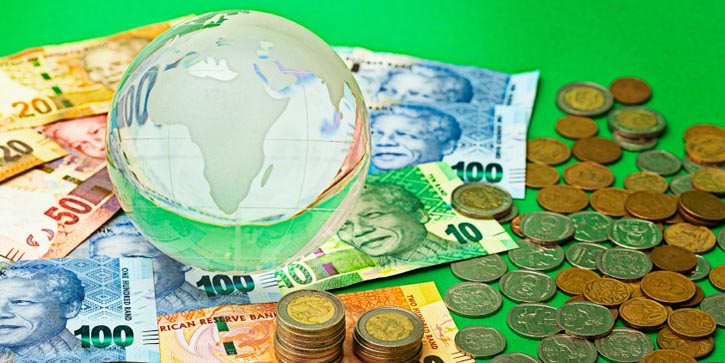
“Everybody has a plan until they get punched in the face.” – Mike Tyson For the last 25 days I’ve been traveling in Argentina and South Africa, two countries whose economies can only be described as fragile, though for very different reasons. Emerging-market countries face a significantly different set of challenges than the developed world does. These challenges are compounded by the rather indifferent policies of developed-world central banks, which are (even if somewhat understandably) entirely self-centered. Argentina has brought its problems upon itself, but South Africa can somewhat justifiably express frustration at the developed world, which, as one emerging-market central bank leader suggests, is engaged in a covert currency war, one where the casualties are the result of unintended consequences. But the effects are nonetheless real if you’re an emerging-market country.

April 4, 2014
The Lions in the Grass, Revisited
“In the economic sphere an act, a habit, an institution, a law produces not only one effect, but a series of effects. Of these effects, the first alone is immediate; it appears simultaneously with its cause; it is seen. The other effects emerge only subsequently; they are not seen; we are fortunate if we foresee them. “There is only one difference between a bad economist and a good one: the bad economist confines himself to the visible effect; the good economist takes into account both the effect that can be seen and those effects that must be foreseen. “Yet this difference is tremendous; for it almost always happens that when the immediate consequence is favorable, the later consequences are disastrous, and vice versa. Whence it follows that the bad economist pursues a small present good that will be followed by a great evil to come, while the good economist pursues a great good to come, at the risk of a small present evil.” – From an 1850 essay by Frédéric Bastiat, “That Which Is Seen and That Which Is Unseen”

March 28, 2014
When Inequality Isn’t
“An imbalance between rich and poor is the oldest and most fatal ailment of all republics.” –Plutarch, Greek historian, first century AD “In the economic sphere an act, a habit, an institution, a law produces not only one effect, but a series of effects. Of these effects, the first alone is immediate; it appears simultaneously with its cause; it is seen. The other effects emerge only subsequently; they are not seen; we are fortunate if we foresee them. “There is only one difference between a bad economist and a good one: the bad economist confines himself to the visible effect; the good economist takes into account both the effect that can be seen and those effects that must be foreseen. “Yet this difference is tremendous; for it almost always happens that when the immediate consequence is favorable, the later consequences are disastrous, and vice versa. Whence it follows that the bad economist pursues a small present good that will be followed by a great evil to come, while the good economist pursues a great good to come, at the risk of a small present evil.” –Frédéric Bastiat, “That Which Is Seen and That Which Is Unseen,” 1850 “Still one thing more, fellow-citizens – a wise and frugal Government, which shall restrain men from injuring one another, shall leave them otherwise free to regulate their own pursuits of industry and improvement, and shall not take from the mouth of labor the bread it has earned. This is the sum of good government, and this is necessary to close the circle of our felicities.” –President Thomas Jefferson, first inaugural address

March 21, 2014
China’s Minsky Moment?
In speeches and presentations since the end of last year, I have been saying that I think the biggest macro problem in the world today is China. China has run up a huge debt, and the payments are coming due. They seem to be proactive, but will it be enough? How much risk do they pose for the global system?

March 15, 2014
Inequality and Opportunity
“Nothing is more dangerous than a dogmatic worldview – nothing more constraining, more blinding to innovation, more destructive of openness to novelty.” – Stephen Jay Gould My letters the last few weeks on income inequality (here and here) brought more response from readers than any topic I’ve written on in the history of this letter. And there was certainly no unanimity of viewpoints. Some of you strongly agree with me; some of you aggressively disagree and think I’m full of it; and others see the issue in an entirely different light. Many of you offered links to other research, which I have spent a great deal of time reading. Today we will continue our thinking about income inequality, and I will respond to some of your letters, as they make good launching points for further discussion of the topic.
March 8, 2014
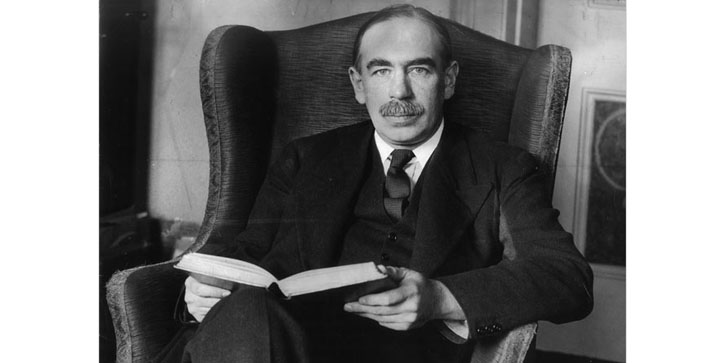
The Problem with Keynesianism
“The belief that wealth subsists not in ideas, attitudes, moral codes, and mental disciplines but in identifiable and static things that can be seized and redistributed is the materialist superstition. It stultified the works of Marx and other prophets of violence and envy. It frustrates every socialist revolutionary who imagines that by seizing the so-called means of production he can capture the crucial capital of an economy. It is the undoing of nearly every conglomerateur who believes he can safely enter new industries by buying rather than by learning them. It confounds every bureaucrat who imagines he can buy the fruits of research and development.

February 28, 2014
Black Swans and Endogenous Uncertainty
John is in Florida and feeling a bit under the weather, so this week we’re bringing back one of his most popular letters, from December 2007. In the letter he discusses the work of Professor Graciela Chichilnisky of Columbia University, one of whose key insights is that the greater the number of connections within an economic network, the more the system is at risk. Given the current macroeconomic environment, it is important to remind ourselves of how complacent we were back in 2007 and how it all fell apart so quickly, just as John outlined in this rather prescient piece. This is a theme to which John has returned again and again, pointing out that reforms such as Dodd-Frank (the Dodd–Frank Wall Street Reform and Consumer Protection Act of 2010) fell well short of solving the problem of excessive interconnectedness among global financial players. It shored up the big “sandpile” rather than breaking it up into smaller, more manageable sandpiles. Now, if the Chinese, Japanese, and/or European sides of the sandpile should avalanche, the whole US side is likely to go, too. John will be back next week with a report from Washington DC and the next installment of his series on income inequality.

February 22, 2014
The Worst Ten-Letter Word
“Inequality has emerged as a major issue in the US and beyond. A generation ago it could reasonably have been asserted that the overall growth rate of the economy was the main influence on the growth in middle-class incomes and progress in reducing poverty. This is no longer a plausible claim. “The share of income going to the top 1 per cent of earners has increased sharply. A rising share of output is going to profits. Real wages are stagnant. Family incomes have not risen as fast as productivity. The cumulative effect of all these developments is that the US may well be on the way to becoming a Downton Abbey economy. It is very likely that these issues will be with us long after the cyclical conditions have normalized and budget deficits have at last been addressed.” – Lawrence Summers (in the Financial Times) “Cyberpunk is a postmodern science fiction genre noted for its focus on ‘high tech and low life.’ It features advanced science, such as information technology and cybernetics, coupled with a degree of breakdown or radical change in the social order. ‘Classic cyberpunk characters were marginalized, alienated loners who lived on the edge of society in generally dystopic futures where daily life was impacted by rapid technological change, an ubiquitous datasphere of computerized information, and invasive modification of the human body.’” – Lawrence Person (Wikipedia)

February 14, 2014
The Economic Singularity
I fully intended to write today about a recently released academic paper that illustrates nearly every bad idea currently being bandied about in the field of economics. The insidious part is that the paper is considered mainstream and noncontroversial. Simply reading it required me to up my blood pressure medicine dosage. It is going to take me a little longer to finish that letter, and I realized that it needs a certain setup – one that coauthor Jonathan Tepper and I conveniently wrote a few months ago and included in the book Code Red. So next week we'll take a deep dive into the most dangerous economics paper written in a long time (that is perhaps only minor hyperbole on my part); but today, by way of setup, let's think about central banks and liquidity traps and see if we agree that central bankers are driving the car from the back seat based upon a fundamentally flawed theory of how the world works. That theory helped produce the wreck that was the Great Recession and will have its fingerprints all over the next one. So this week we'll have a preliminary round before putting on the sparring gloves next week.
- Page 53
Free Financial Newsletter
Thoughts from the Frontline explores developments overlooked by mainstream news and analyzes challenges and opportunities on the horizon.
The newsletter began as John’s way of sharing his thoughts with a few associates. Two decades later, it is one of the most widely read investment newsletters in the world. From his warning of an impending recession in 2000, to a polemic on the Obamacare “death spiral” in 2016, John has blazed his own trail as one of the most respected macroeconomic minds in the field.
"Central bankers, businessmen, and investors continually try to beat History to a pulp, but History always wins the final rounds."
John Mauldin, Thoughts from the Frontline, 2001.



John Mauldin
Editor, Thoughts from the Frontline
When investors, financial professionals, and discerning citizens need a big-picture view of what's going on in the economy, they turn to John Mauldin.
And for good reason. John has dedicated more than 30 years to keeping people informed about financial risk.