Outside the Box: Browse By Tags

3 posts tagged with "EU".

Has Germany just killed the dream of a European superstate?

March 22, 2010

While the US was focused on the health care drama over the weekend, over across the pond events are rapidly deteriorating in euro land. For this week's Outside the Box I offer two columns, one from the Financial Times and another from the London Telegraph. Both describe the problems that the eurozone faces. It is not pretty.

I was sent this note from a Steve Stough who translated this from a German TV news show' It is a nice set-up for the two short columns.

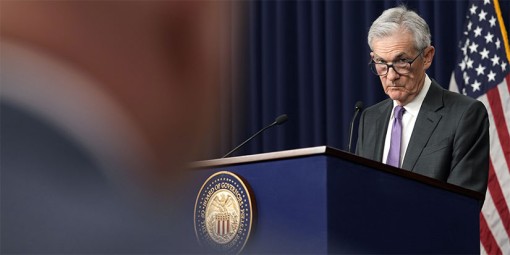
I was reading an interview with Germany's most-quoted economist and then, all of a sudden, his face pops up on a TV show (a panel discussion on Germany's version of Fox Business News) at the same time, so I paid close attention. Hans-Werner Sinn's remarks are apparently listened to as closely as are the Federal Reserve Chairman's remarks in the US. He said:

  • The Greek drama will have a 'frightful' ('schreklich') ending no matter which course of action is taken. The objective is to avoid having a Greek default trigger another banking crisis across the EU.
  • The EU member states are too financially fragile to take on any flaky Greek debt. The actual Greek deficit is running at 16% of GDP, not 12% as previously reported. Greece is in a deepening retraction, not a recovery, as previously claimed. [Germany's social security, welfare, unemployment, and health care entitlement programs are all running cash-negative or soon will be, but that is another subject entirely. Angela Merkel has a committee established to work on tax reform, meaning tax rate reductions - Steve].
  • There are three bad alternatives. He recommends #3 (effectively, default):
    1. A Franco-German bailout. Dr. Sinn believes this is impractical and the worst of the three alternatives because the amounts required for an effective bailout are so large that it would trigger a jump in yields on French and German sovereign debt which would result in a Euro-wide financial crisis. In addition, Angela Merkel said 'no,' and so did Guido Westerwelle (her coalition partner and foreign minister).
    2. IMF loans. Dr. Sinn believes that this would accelerate the Greek economic contraction with a dramatic deflation of wages and prices, which could lead to civil war, revolution and a political destabilization of the area.
    3. Exit the Euro zone, revive the Drachma, re-denominate the sovereign bonds in Drachma, let the Drachma collapse, and rebuild after the collapse, largely on tourist remittances Assuming a small amount of domestic (internal) default, this would be the least-painful to the Greek populace, but German banks and investors would lose approximately $38 Bn in bond investments +/- what can be recovered after the Greek economy recovers. Eventually, Greece would be allowed to re-join the EU.
  • Formation of an EU monetary fund is out of the question, he believes, because it requires treaty modifications that might take many years to pass.
  • As an aside, he said that if German tax rates are not lowered, that Germany will slide back into recession.

Steve Stough

As a quick aside, I know I said two weeks ago that I would do an assessment of the affect of taxes on the US economy. I decided to hold off until we can see what the health care taxes rally look like, rather than guessing. I will get to it, as I am quite curious as to the total level of the tax increases.

Now, to this week's OTB.


France and Leading Indicators

May 30, 2005

This week is we look at two short articles on different topics from some of my favorite writers. The first is by Anatole Kaltsky of GaveKal Research and looks at some of the recent political and economic problems in Europe and what must be done to help turn the EU around. Germany recently had state elections (big upsets), the French vote on the EU constitution was this weekend (expected to be a rejection). These and other issues will have interesting long term implications for Europe and the European economy. (I am writing this week's OTB a little head of time to take a holiday on Monday, so I am not sure of the French vote.)

The second article is by Paul Kasriel of Northern Trust and discusses the leading economic indicators (LEI) and why economists seem to ignore what it is telling them. Paul finds a strong correlation between the LEI and recessions. Can you guess what it might be telling us now?

These two articles were both short, but had some interesting things to say so that is why they were both picked for this week's Outside the Box.


Economic Reforms Sacrificed For Political Gains

April 18, 2005

This week we will turn once again to a group headquartered in Hong Kong with offices in Stockholm and New York called GaveKal Research Limited. Louis- Vincent Gave's GaveKal Ad Hoc Comments for Friday, April 8, 2005 looks at the political and economic climate in Europe and what that might mean for the Euro and European government bonds.

The European Union, now with a few years behind it, is looking to make some changes and as we have seen throughout history, what is good politically is not always good economically. Gave looks at the current issues and why this is bearish for Europe. The problem is not the concept of the EU but the implementation when politicians get involved and that is why this became our latest Outside the Box.

It is one of the reasons I wrote last week that I am somewhat nervous about the euro in the short term and prefer to play my overall bearishness on the dollar with Asian currencies. (Go to www.investorsinsight.com for last week's letter.)