Memo to Central Banks: You’re debasing more than our currency
October 26, 2012
I can only pass on Societe Generale’s work to you once in a while, but the piece for today’s Outside the Box is important enough that its author, Dylan Grice, worked hard to convince his bosses to let me share it with you. Dylan is one of my favorite investments analysts, as well as just an all-around nice guy.
In a change from his usual fun-loving demeanor, Dylan issues a serious warning here.
I am more worried than I have ever been about the clouds gathering today (which may be the most wonderful contrary indicator you could hope for...). I hope they pass without breaking, but I fear the defining feature of coming decades will be a Great Disorder of the sort which has defined past epochs and scarred whole generations….
So I keep wondering to myself, do our money-printing central banks and their cheerleaders understand the full consequences of the monetary debasement they continue to engineer?
He runs through some of the Great Debasements of the past, starting with third-century Rome, running through Europe’s medieval inflations and the French Revolution, to the monetary horror story of Weimar Germany in the 1920s.
His key point is that inflations and hyperinflations don’t just hurt money, they hurt people and the societies they live in. Inflating money is less trustworthy money, and so people doing business trust each other less. Plus, those who are farthest from the source of artificially created money suffer the most (the “Cantillon effect”).
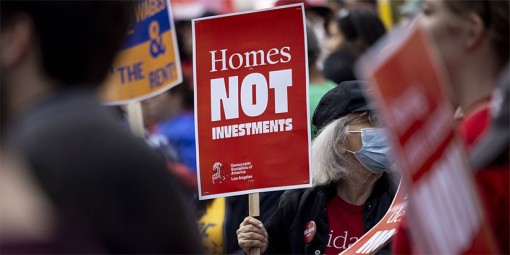
And now the social debasement is clear for all to see. The 99% blame the 1%, the 1% blame the 47%, the private sector blames the public sector, the public sector returns the sentiment … the young blame the old, everyone blame the rich … yet few question the ideas behind government or central banks ...
I’d feel a whole lot better if central banks stopped playing games with money….
All I see is more of the same – more money debasement, more unintended consequences and more social disorder. Since I worry that it will be Great Disorder, I remain very bullish on safe havens.
In just 10 days we will see how the US elections turn out. Depending on what happens after, the US will either remain as one of those safe havens (and perhaps become even more of one) or those of us who reside here will need to start thinking more globally. I know a lot of thoughtful people who are already contemplating (if not acting on) plans to make sure their life savings maintain their buying power through the coming decade. I remain optimistic that we will set ourselves on a course that ends in a safe harbor, although the sailing will be quite volatile. What Dylan describes are the unintended consequences of people who think they understand macroeconomics and who are well-intentioned but whose policies can be most disruptive.
Sunday night I head for South America. I always enjoy traveling there, and I am interested to see what I can learn, both about how Brazil, Uruguay, and Argentina are doing and what they are thinking when they look north. I really do find that I learn much more than I impart on these trips.
Election night will find me in a bar drinking non-alcoholic beer in Cafayete in the far north of Argentina, where the California polls won’t close till almost midnight. It might be a long night. Maybe I can set up a twitter account from there. Might be fun. There will be lots of friends on hand to share the times and commentary. I will be back in Texas that Sunday to write my letter, and I’ll be thinking about how the results will impact all of us everywhere.
Have a great weekend. And I am off to cast my absentee ballot! You make sure to vote too!
Your wishing I was in Illinois so I could vote several times analyst,
John Mauldin, Editor
Outside the Box
subscribers@mauldineconomics.com
Popular Delusions
Memo to Central Banks: You’re debasing more than our currency
By Dylan Grice, Societe Generale
At its most fundamental level, economic activity is no more than an exchange between strangers. It depends, therefore, on a degree of trust between strangers. Since money is the agent of exchange, it is the agent of trust. Debasing money therefore debases trust. History is replete with Great Disorders in which social cohesion has…