The Crisis of the Middle Class and American Power
January 11, 2013
Thinking about the long term is all too rare a talent these days and one I really appreciate. When you take a longer view, it is easier to see how all the moving parts, the bits and pieces, fit together. And you can see other streams of action impacting your original line of thought.
In today’s Outside the Box, my (and our) old friend George Friedman thinks about the future of employment and how it impacts the expression of American social order and geopolitical power. Sitting here in Stockholm tonight, that was the very point we were making in our dinner conversation with the management team of the Skagen funds. It is not just a US problem, although George looks at the US. This is a global issue as the gulf between the middle class and the upper income classes is widening, and it is widening for structural reasons. There are no easy answers. Dennis Gartman quotes PJ O’Rourke, who basically launched a shot from the right. It speaks for itself:
Mr. President, the worst thing that you’ve done is that you sent a message to America in your reelection campaign that we live in a zero-sum universe.
There is a fixed amount of good things. Life is a pizza. If some people have too many slices, other people have to eat the pizza box. You had no answer to Mitt Romney’s argument for more pizza parlors baking more pizzas. The solution to our problems, you said, is redistribution of the pizzas we’ve got—with low-cost, government-subsidized pepperoni somehow materializing as the result of higher taxes on pizza-parlor owners.
In this zero-sum universe there is only so much happiness. The idea is that if we wipe the smile off the faces of people with prosperous businesses and successful careers, that will make the rest of us grin.
There is only so much money. The people who have money are hogging it. The way for the rest of us to get money is to turn the hogs into bacon. The evil of zero-sum thinking and redistributive politics has nothing to do with which things are taken or to whom those things are given or what the sum of zero things is supposed to be. The evil lies in denying people the right, the means, and, indeed, the duty to make more things.
But George notes the other side (bold emphasis mine):
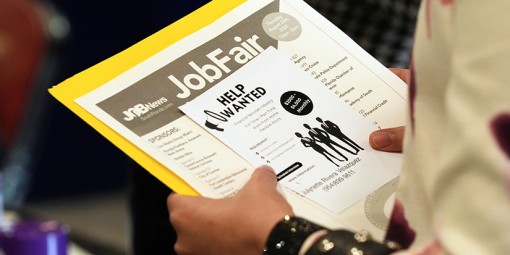
Last week I wrote about the crisis of unemployment in Europe. I received a great deal of feedback, with Europeans agreeing that this is the core problem and Americans arguing that the United States has the same problem, asserting that U.S. unemployment is twice as high as the government's official unemployment rate. My counterargument is that unemployment in the United States is not a problem in the same sense that it is in Europe because it does not pose a geopolitical threat. The United States does not face political disintegration from unemployment, whatever the number is. Europe might.
At the same time, I would agree that the United States faces a potentially significant but longer-term geopolitical problem deriving from economic trends. The threat to the United States is the persistent decline in the middle class' standard of living, a problem that is reshaping the social order that has been in place since World War II and that, if it continues, poses a threat to American power.
These issues and the threat they pose have to be resolved. The structural mechanisms are creating the inbalance. We need to nurture creativity and we need to reward it, but it creates a wide dispersion of income.
I think you will find George’s analysis quite thought-provoking, and you may find yourself wanting a Stratfor subscription. They are offering my readers a discount on their excellent products, and, you can get on board by clicking here: https://www.stratfor.com/subscribe/mauldin-jmf.
I am in Stockholm tonight (and did Copenhagen and Oslo) on my way to the south of Spain for a few days, for what is hoped will be a vacation, then a day in London for a Soc-Gen Conference and one of my famous “dinners with interesting people.” Dylan Grice (Soc Gen), Anatole Kaletsky (GaveKal, Simon Hunt (serious expert on copper and China), Dan Stetler (chief econ and Boston Consulting and wicked brilliant), Jonathan Tepper (of Variant Perception and my co-author). Just found out Richard Howard of Hayman Partners (Kyle’s Bass’s operation) and a few others will be there, too. I shall learn a lot. Then I’m off to Greece for five days with Christian Menegatti of Roubini Economics before ending up in Geneva and then returning to Dallas.
Have a great week. I am having a blast and will write your Thoughts from the Frontline letter tomorrow. Three computer crashes in five days! What are the chances? Ugh. But Life is fun and you take it all in stride. Just means I needed to think more about this next letter – maybe I will get it right.
Your ready for some Costa del Sol analyst,
John Mauldin, Editor
Outside the Box
subscribers@mauldineconomics.com
The Crisis of the Middle Class and American Power
By George Friedman
Founder and Chief Executive Officer
Last week I wrote about the crisis of unemployment in Europe. I received a great deal of feedback, with Europeans agreeing that this is the core problem and Americans arguing that the United States has the same problem, asserting that U.S. unemployment is twice as high as the government's official unemployment rate. My counterargument…