
Powering the AI

According to Einstein, energy is everything. Literally. Every material thing you can touch is simply energy in a different form. Sometimes we can unlock that energy via combustion – burning wood or coal, for example.
That’s where physics crosses over with economics. Those chemical processes enable us to produce the things that sustain and improve our lives. Economic history is the story of how we harnessed energy more effectively, from our own muscles to livestock to coal, whale oil, petroleum, hydroelectric dams, then to nuclear reactors and recently solar and wind.
Energy can be either an enabler or a constraint. The latter happens when our creativity gets out of sync with the energy we can apply to it. This is happening right now and will get worse as artificial intelligence data centers demand more power than we have available. This is a multifaceted story, so today we’ll begin with a look at natural gas. I suggest you read this carefully, as it also points to some possible investment opportunities.
And speaking of opportunities, I have a big one for you.
“John, How Do I Prepare for What’s Coming?”
I’ve written extensively about cycles, drawing on insights from Neil Howe, Peter Turchin, George Friedman, Martin Gurri, Ray Dalio, and my own Endgame: The End of the Debt Supercycle.
Taken together, these perspectives paint an unmistakable picture: change is accelerating, and we’re moving toward a major crisis around the end of this decade.
If there’s good news, it’s that we likely still have a window to position ahead of what will be a changed world. I explain what I’m to doing to prepare in a short, two-part letter here.
The first part is a framework for thinking about what lies ahead, and how I’m approaching positioning amid colliding cycles.
The second part looks at what we do now to preserve flexibility and buying power, including how a small group of readers meet with me privately four times a year as part of Alpha Society, a private, more comprehensive research relationship that now brings together a wider range of perspectives. We don’t open often. It won’t be the right fit for everyone. That’s by design.
But if you’d like to see how I’m thinking about and positioning for this moment in history, I’ve laid that out in a short letter here.
Now on to our main topic.
Gas-Fired Intelligence
I’m drawing today on the expertise of Michael Spyker, one of the world’s top natural gas authorities. His company is HTM Energy. He wrote two fascinating guest posts (Part 1 Part 2) for A16Z, the venture capital firm. They are lengthy but do a good job simplifying a complex subject.
Spyker’s main point: Growing AI power demand is coming just as the US natural gas system is shifting from “too much cheap supply” to something tighter, more price-sensitive, and more strategic. He is not arguing that we run out of supply: just cheaper supply that we’ve grown used to.
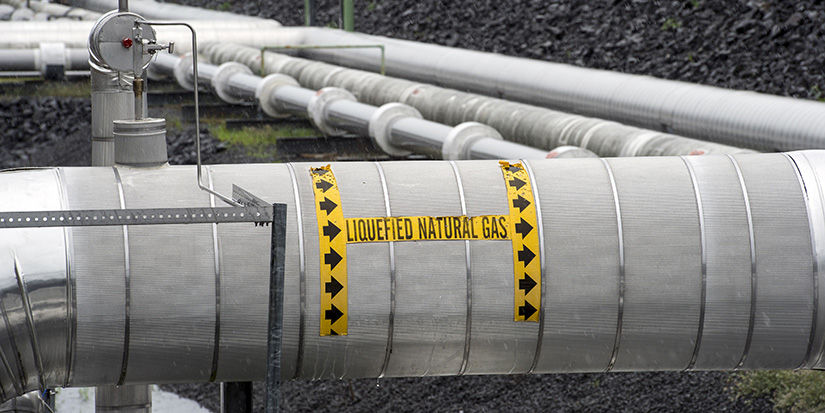
For years, the US produced more natural gas than we needed, to the point we started looking for new ways to burn it. Spyker calls this “supply-induced demand.” We created more demand by 1) converting electricity generation from coal to natural gas and b) exporting surplus gas as LNG – Liquefied Natural Gas.
Now, we’re moving from an era where excess supply induced more demand to one where demand has to pull new supply. This will, as we’ll see below, make it difficult to both meet domestic AI needs and continue exporting LNG at currently expected price and volume levels.
Spyker frames natural gas as central to two simultaneous booms: AI data centers and LNG exports. This is clear to AI industry leaders. He notes Sam Altman’s blunt expectation: “I expect in the short term, most of the net new in the US will be natural gas.”
Natural gas is primarily methane (CH₄), energy-dense, relatively cheap, and cleaner-burning than coal. US production is a little over 110 billion cubic feet per day (that’s the “Bcf/d” figure you will see cited throughout the reports) and growing.
Liquid fuels like oil and gasoline are easy for us to understand. You fill your tank from a pump and then run the engine. Natural gas is less intuitive because transporting it is harder. You need processing, pipelines, and a chain of infrastructure from wellhead to end-user.

Gas is a valuable energy source because it is dispatchable. You can burn as much of it as the pipeline will carry, any time you need it. This distinguishes it from intermittent sources like solar and wind. Those can be lower cost in favorable conditions (sunlight, wind) but you can’t control those conditions.
A key point—and one I think many readers will miss without help—is the distinction between:
Associated gas, which is a byproduct of oil drilling, especially in the Permian. Spyker describes it as effectively price-insensitive; it comes out whenever oil comes out. This is often called wet gas. Places like the Permian basin have enormous amounts of wet gas.
Dry gas is purpose-drilled gas. It comes out of the ground without accompanying oil or anything else. This production is highly price-sensitive and production can be dialed up or down depending on market conditions.
Unlike dry gas, associated gas production can’t be “turned up” on cue. It’s produced only if the well owner also wants to produce crude oil. That means relying too heavily on it can backfire when demand accelerates.
Spyker says the gas industry has churned through much of its low-cost inventory, while demand is re-accelerating. The “please come take it” days are over as demand is set to surge. The US is running out of easily drilled rock. There are still massive amounts of gas, just not as cheap to recover.
This is a new development. Just one year ago, many forecasters didn’t expect any meaningful domestic consumption growth—yet now the discussion is about up to 50 Bcf/d of demand growth over the next decade from LNG and power (including data centers).

That dark line in the chart is US base gas demand without data centers or LNG exports. A giant industry along the Gulf Coast is gearing up to export the excess. But if data centers consume it, there will be less to export.

The entire LNG export industry emerged as an outlet for our abundant cheap gas. But the same gas can’t go two places. If AI demand forecasts are right, we will have to decide whether to use it domestically in data centers or export it overseas. Which should get priority?
I have been a huge proponent of LNG export terminals. With no AI demand up until recently, there were all sorts of reasons to build LNG export terminals. If you can buy gas at $2 and sell it to Asia or Europe at $11, most of us can see the attraction.
Seven LNG terminals have been built today with the capacity of over 14 Bcf/d. Another two have been approved, with what looks like six more coming online before the end of the decade (see chart below). This will more than double the capacity for export.


But wait, there’s more. Another 12 facilities have been approved by the Federal Energy Regulatory Commission but aren’t yet under construction. That could add another 17 Bcf/d.
The cost of building an LNG terminal varies widely. $27-$44 billion is not unusual. But the total amount being spent by the US, Canada and other nations is staggering:

The point is, and it needs to be emphasized, that we have two industries spending multiple hundreds of billions of dollars to build either terminals or data centers. And both want the same product: natural gas.
Gas Now, Renewables Later
The way US power markets are structured makes AI’s demand shock tricky. Domestic electricity demand was basically flat for about 20 years. The internet, smartphones and a lot of economic and population growth were all offset by efficiency gains. We just got a lot smarter about how we use electricity.
This led to evolution on the grid. First, gas replaced coal. Now renewables are beginning to displace gas at the margin. But now we’re leaving the “mature market” regime and entering a new growth phase driven by data centers as true baseload. Renewables aren’t yet able to meet this kind of demand.
Spyker explains a super important distinction within electricity markets. There are two kinds.
Merchant markets (like ERCOT in Texas) are the price-driven free market answer. Generators aren’t guaranteed returns. They can sell electricity at whatever “spot” price they can get, which at peak moments can be very high. But solar has near-zero marginal cost, so it can crush gas during daylight hours in spot pricing.
Regulated markets are centrally planned to optimize reliability and return on equity. Utilities get price guarantees, so price signals matter less than system planning.
Spyker says if you look at the last 20 years—when load was flat—you might assume the next 10 years will bring more renewables plus batteries plus clever market design. He argues that’s the wrong conclusion when load demand is growing sharply and reliability is existential for AI infrastructure.

The top chart above shows how generation shares evolved since the early 2000s. The other shows how sources contribute across the day—solar rising during daylight and displacing gas, while nuclear/coal/gas/hydro cover the hours when the sun isn’t there.
The problem is that gas capacity sits idle midday but is still required for peaks and non-solar hours—so you can’t “optimize it away” without risking reliability. This matters because data centers must have reliable power. From the utility perspective, they’re a load you either serve reliably or you don’t compete.
This explains the rise of co-located gas generation, especially in West Texas. Rather than rely on the main grid, data centers are finding it makes more sense to build their own adjacent power plants. If you have gas turbines with a gas supply nearby, you have highly reliable dispatchable power.
Spyker goes through the generation economics in detail. He shows how in the Permian, gas can be structurally cheaper than the Henry Hub market price. That is why large AI campuses are popping up all over West Texas.
Is This Time Different?
Spyker cites three key changes in the last year:
The Trump administration reversed Biden’s restrictive LNG export permitting policy.
Power-sector gas demand forecasts jumped sharply, with an additional 10 Bcf/d incremental demand over the next decade emerging in roughly the last year; and
Tax incentives that supported renewables growth were reduced.
He argues many official projections understate future power-sector gas demand; he believes data-center-driven gas demand will be more durable than forecasts that show a decline beginning late-2020s or early-2030s.
The US can do many things well, but we can’t do everything everywhere all at once at yesterday’s prices. Spyker’s phrasing is blunt: “The era of unlimited gas for all – is decisively over.”
Let me stitch together what Spyker is really arguing across both parts, and what it implies for investors.
1) Energy is becoming AI’s binding constraint—reliability first, optimization later
Spyker isn’t saying renewables don’t matter. He says that in a rapid expansion regime, the system should prioritize adding firm baseload generation quickly (gas or nuclear), then “prune later” with renewables, batteries, and load-shaping once the grid has breathing room.
That framing is important because it flips the usual conversation. Instead of “how do we green the grid,” it becomes “how do we prevent downtime while scaling intelligence?” Spyker even puts a concrete order-of-magnitude on the stakes: if the cost of losing AI leadership is in the trillions, an hour of downtime can be “tens of millions.”
We are beginning to see the description of AI as energy being turned into information and intelligence: rather than using energy to make things or to power our economy, we are now using energy to make bits of information. It’s been evolving, but now it’s here and growing and is something relatively new and positive in the world.
2) The hidden macro risk: “demand pulls supply” means higher and more volatile prices
For years, the gas market lived on the happy story of abundant shale, cheap capital, and relentless productivity improvements. Spyker argues those conditions are weakening: low-cost reserves are running out, supply growth is more constrained by economics and infrastructure, and the next tranche of production will be more expensive. This has second-order effects.
Higher prices don’t just raise utility bills; they change where data centers get built, how they contract for fuel and power, and which demand source gets rationed first (merchant curtailment, LNG marginal economics, etc.).
We move from casual spot exposure to more fixed-price contracting and deeper vertical integration (data centers building generation, pipelines, or at least long-term fuel supply structures).
3) AI and LNG are competing for the same strategic surplus
Spyker makes an implicitly nationalist (or at least national-strategy) argument: if gas is scarce at the margin, the US should burn it domestically to power a “globally strategic industry,” rather than export it—especially if LNG growth is aimed at price-sensitive developing markets that could be harmed by later price spikes.
He goes further: restraining LNG export growth could, in his view, nudge global consumers toward renewables while the US internalizes the economic benefit of cheap, reliable power for AI.
Whether you agree or not, it’s a coherent conclusion: in a constrained world, priorities emerge, and “compute sovereignty” starts to rhyme with “energy sovereignty.” Of course, the LNG exporters have a completely different opinion. And the companies that actually drill for natural gas feel they have a right to sell it at the highest market price. I think we can all see the conflicts coming up.
4) The practical buildout playbook: co-location, micro-grids, and the Permian logic
Spyker argues West Texas-style builds aren’t a quirky edge case—they’re a preview. The AI industry is going to:
Co-locate data centers with dispatchable generation.
Use gas turbines (simple-cycle turbines [typically smaller] where speed/flexibility matters, combined-cycle turbines where efficiency dominates).
Treat fuel and power infrastructure as part of the core AI stack, not as an externality you can outsource forever to merchant markets.
5) A warning about overbuilding the wrong things
There’s a recurring American-energy-cycle caution embedded here: we are very good at building capacity with cheap capital, and we are also very good at overcapitalizing cyclical systems. (Think railroads in the 1870s and fiber cable in the late ‘90s, just two of many examples.) Spyker explicitly nods to this with the observation that producers historically generated poor lifetime free cash flow (he cites negative cumulative free cash flow since 2010 for a set of gas producers).
So, the subtle warning is: don’t assume a clean glide path. The transition from “glut” to “scarcity at the margin” is exactly where big mistakes happen.
The three key takeaways:
Natural gas is the bridge fuel for the AI buildout because it’s the only scalable mix of cheap, dispatchable and fast-to-deploy. But that won’t mean it stays cheap.
US companies have already built LNG export capacity, and plan yet more of it, based on forecasts of flat domestic demand. AI breaks that assumption, forcing a showdown between exports and domestic baseload needs.
We’re shifting regimes: from supply-induced demand to demand-induced supply—meaning higher prices, more contracting, more vertical integration, and more explicit “who gets the gas?” policy choices.
Throwing a Wrench in AI Funding
I would be remiss in not noting that Blue Owl (total assets managed $259 billion!) walked away from funding a $10 million data center being built by Oracle for OpenAI this week. From Quoth the Raven:
“Blue Owl isn’t a marginal player or a nervous tourist—it has been one of Oracle’s most significant financial partners, repeatedly stepping in with equity and debt to help fund large-scale data centre projects. When a firm that specializes in financing hyperscale infrastructure decides that a flagship AI project no longer makes sense on its terms, it suggests that the economics of these deals may be becoming harder to justify. In my opinion, this isn’t about headlines or short-term sentiment; it’s about the underlying numbers becoming less forgiving.
“This wasn’t a speculative startup or an untested operator. Blue Owl has helped make Oracle’s AI expansion possible by absorbing risk that public markets and balance sheets were reluctant to carry directly. If that support is now being reconsidered, it implies that something fundamental has shifted. At a minimum, it suggests that the margin for error is shrinking fast.
“…Barclays has since articulated a similar concern more formally, warning that free cash flow may no longer be sufficient to support the scale of AI capital expenditure now being contemplated. Data centres can cost $50–60bn per gigawatt, pushing projected global spending into the trillions of dollars. With each upward revision, leverage appears to rise while cash-flow coverage weakens. What once looked like a self-financed arms race increasingly resembles one funded by debt, leases, and creative structures designed to keep the story intact.”
Higher financing costs? Higher energy costs? Investors wanting to see ROI risking further capital?
That suggests the cost of building these data centers is going to rise and that some of those currently planned will not get built. We have no way to understand how this will really play out.
But… without AI buildout, US GDP growth will be significantly lower. Some have said almost all of our positive GDP is from AI. That’s hard to verify, but it’s certainly a large portion. This just calls into question how much AI can contribute to GDP in the future. I suspect it will be quite a bit, but things change fast. This is something we will want to keep our eyes on.
Christmas in Puerto Rico, a Quick Visit to DC and O Holy Night
I made a quick trip to DC Tuesday to be with Dr. Mike Roizen, Dr. Mehmet Oz and others at a conference on longevity and the practical issues around it.
The surprising part was that Sen. Rick Scott from Florida asked if I would speak to the Republican Senate Steering Committee the next day about the US debt and what I think will be a coming crisis. “You get 10 minutes to make a presentation, 18 minutes for Q&A and then we go on to other projects, but I want you to drive home that this is going to be a real problem for all of us. Some of my fellow senators are not as concerned as I and others are.”
Over 40 senators showed up, and I was only a “little” nervous. I guess it went well because the Q&A lasted for 30 minutes and was quite a lively conversation. My emphasis to them was not to see what I was describing as a crisis but as an opportunity to restructure the tax system and much of how we fund the federal government at large. And the only way to do it will be to work with the Democrats to design a solution. One side or the other trying to impose it will not work.
Finally, Shane and I will be home for Christmas and then we will be throwing our annual New Year’s Day party as I cook Texas chili and she makes black-eyed peas.
Let me wish you a heartfelt Merry Christmas and I offer you this one present. As a young man, I was a high tenor and sang with the Fort Worth Opera chorus, was part of many a cappella quartets and choirs, and actually sang the tenor solos for Handel’s Messiah. I have a love for the pure human voice.
Pentatonix is one of my favorite vocal groups and their rendition of O Holy Night just satisfies my soul. Enjoy this Christmas holiday with family and friends.
Your enjoying the holidays analyst,

John Mauldin
P.S. If you like my letters, you'll love reading Over My Shoulder with serious economic analysis from my global network, at a surprisingly affordable price. Click here to learn more.
Read important disclosures here.
YOUR USE OF THESE MATERIALS IS SUBJECT TO THE TERMS OF THESE DISCLOSURES.
Put Mauldin Economics to work in your portfolio. Your financial journey is unique, and so are your needs. That's why we suggest the following options to suit your preferences:
-
John’s curated thoughts: John Mauldin and editor Patrick Watson share the best research notes and reports of the week, along with a summary of key takeaways. In a world awash with information, John and Patrick help you find the most important insights of the week, from our network of economists and analysts. Read by over 7,500 members. See the full details here.
-
Invest in longevity: Transformative Age delivers proven ways to extend your healthy lifespan, and helps you invest in the world’s most cutting-edge health and biotech companies. See more here.
-
Macro investing: Our flagship investment research service is led by Mauldin Economics partner Ed D’Agostino. His thematic approach to investing gives you a portfolio that will benefit from the economy’s most exciting trends—before they are well known. Go here to learn more about Macro Advantage.

Recent Articles
AI: Where Will the Money Come From?
October 23, 2026
When Will AI Meet Cash Flow Reality?
October 16, 2026
The Biggest Problems We Face Today
October 9, 2026
Economic Desiderata
October 2, 2026
Reversing Financial Repression
September 25, 2026
Fed Policy: As Good As It Gets
September 18, 2026

Thoughts from the Frontline
Follow John Mauldin as he uncovers the truth behind, and beyond, the financial headlines. This in-depth weekly dispatch helps you understand what's happening in the economy and navigate the markets with confidence.
Let the master guide you through this new decade of living dangerously
John Mauldin's Thoughts from the Frontline
Free in your inbox every Saturday
By opting in you are also consenting to receive Mauldin Economics' marketing emails. You can opt-out from these at any time. Privacy Policy
a 15-pager this week and you just briefly touched on your visit to DC w/ 40 Senators in attendance... I sure would like to hear more on the Q&A session of that presentation and more specifically how receptive any of them were to your thoughts/recommendations? Merry Christmas!
I thought you were rational and made fact based decisions. Guess not. How much do you have invested in the gas and oil industry? Do you sit on their boards? Are they your clients?
You love AI. So do I.
I asked ChatGPT what was the fastest way to increase electrical capacity by 10% and 20%. The answer was solar then wind. (See attached)
To increase capacity by 10% it would take 4 year using solar versus 28 years using gas turbines. There is a 5-7 year backlog in ordering gas turbines. In that amount of time solar could have increased grid capacity by 15%!
Also, why even build electrical capacity using a technology you acknowledged will be and should be obsolete. What a waste of money.
I subscribe to your newsletter because I expect you to be unbiased. Maybe from now on ask ChatGPT to provide you with some feedback on your newsletter to make sure you aren’t hallucinating.
China has a much larger electricity production capacity than the US that is already there, in place and available. Does that mean that China has a better chance to win the AI competition?
China also has the most efficient and technologically advanced solar panels, as well as well established nuclear-based electricity production with almost another 100 nuclear power plants approved and/or under consstruction.
China also has the best battery technology and the highest battery production capacity in the world and it is not sharing its technolgy prowess with other countries.
China seems to be much better positioned to win the power war and therefore the AI war...
Datacenters in space are practically here. Solar 20x more efficient in space, easier cooling, no water or permitting required. SpaceX has already thrown 10,000 Starlink satellites into orbit. Take out some comms, add the processing power, instant datacenter. What do you think all those Starships will be doing when we're not in the Earth <-> Mars transit window? And with datacenter demand in space, energy prices on earth can drop.
Great article, but I think the analysis misses an important point...in fact its usually glossed over in AI articles. Just like Gas export facilities appear to be over building for the current 3 to 4x profit , AI compute centers are being overbuilt too. Not only that, but what is AI going to be used for? Its mainly a knowledge worker replacement, is it not? If it takes Ford 100 engineers to make a new F-150 Truck, will AI allow it to be done with 50 engineers? Well what happens to those 50 former engineers disposable income? Its gotta ripple thru the economy and it will be a drag. Sure AI will invent/discover new stuff to make, but its essentially at least initially a skilled labor reducer. And all those engineers/scientist/admin/tech support/etc won't be making much money like they used to. So the current apparent impetus driving the AI market for its "product" will be mitigated as AI unfolds. Cause if a consumer can't afford a new F-150, the Ford won't need to design one.
Seems to me that your analysis points to higher prices for natural gas, ignores the multi-year lead times for new gas turbines, but fails to put two and two together.
Meanwhile, solar PV + batteries get cheaper every year and if anything are more dispatchable than anything else. And their deployment rate, that already dwarfs everything else put together, is increasing. By the time we can put one more nuclear reactor on-line, the PV industry will have built more capacity than nuclear could ever generate.
But the missing punch line is that while fuel (natural gas) and electrons are expensive to transport, the cost of long distance data transport is rapidly falling towards zero. What that says is the power hungry data centers will all move to where the power is cheapest, and that's not North America.
AI is essentially playing poker against someone who can see everyone's hands. Eg Hotels and Airlines who see not only our purchase history but know our incomes from our credit card links, and what we can and are willing to pay. Then THEY have the same exact information for all the other people who are trying to get the same flights and rooms as us. Imagine this ability in everything. It's like magic.
I've been appreciating your messages for probably almost 20years. Even remember when you had a condo overlooking the ballpark in Texas. Even bought a couple of your books. I enjoy the Rational Opportunist, but recommending the Bahnsen Group has been like an early Christmas present. I am retired financial adviser, and have been doing well (16% this last year), and agree with his philosophical. Your insights are always relevant. Merry Christmas to you and all of your ever-growing family... Fred Knaus
"but as an opportunity to restructure the tax system and much of how we fund the federal government at large."
Oh goody. You got a chance to pitch VAT to most of the Republican caucus. Just what we need, to give more money to those useless eunics. I mean, look at all the wonderful things that VAT has done for Europe.
Our sovereign debt is around 130% of GDP. When my operating debt was 130% of my gross income my banker told me I was insolvent. The US is insolvent.
Why? Because everybody is going to get a government check this year. Directly or indirectly. And none of those worthless leaches in Congress want to change it.
It will not change until the checks become worthless.
DOGE proved there is a strong constituency for waste, fraud, and abuse in Congress. Nobody is interested in changing that. Nobody!
When Congress increases revenue by $1 they increase spending by $1.25.
But what do I know? I'm just a broke farmer.
I reiterate a point made by two commenters above: there is a serious backlog for natural gas turbines. That is both pushing out wait times (by years) and pushing up prices for new turbines. Expanding manufacturing capacity for turbines may or may not proceed in a timely fashion, depending on the confidence level of that industry in sustained demand growth.
Second, you wrote that "...in a rapid expansion regime, the system should prioritize adding firm baseload generation quickly (gas or nuclear)..." Please understand that while a gas turbine, once it has arrived on site, can be up and running within months, nuclear is the absolute slowest type of energy generation to come to market.
Further, the hype about "new nuclear", also called small modular reactors (SMR), is largely putting a new coat of paint on your old jalopy; none have been built yet, and while several are likely to move forward with the current level of government policy largesse, we're likely talking a decade before the vote is in on whether SMRs will make more economic sense that the most recent larger nuclear generators (Vogtle; in Georgia) that cost 2.5X times their budget and came on line 6 years late. If financing is starting to tighten up for data centers, splurging on high-cost and way-to-late electric generation is not the way to improve the bottom line.